On this page
What do F11 and F68 mean on an ASKO dishwasher?#
Both say water didn't drain away as it should. On the DBI786, F11 is the water outlet message and F68 is a message about the BLDC drain pump. The manual treats them as a pair and gives both the same list of steps. 1
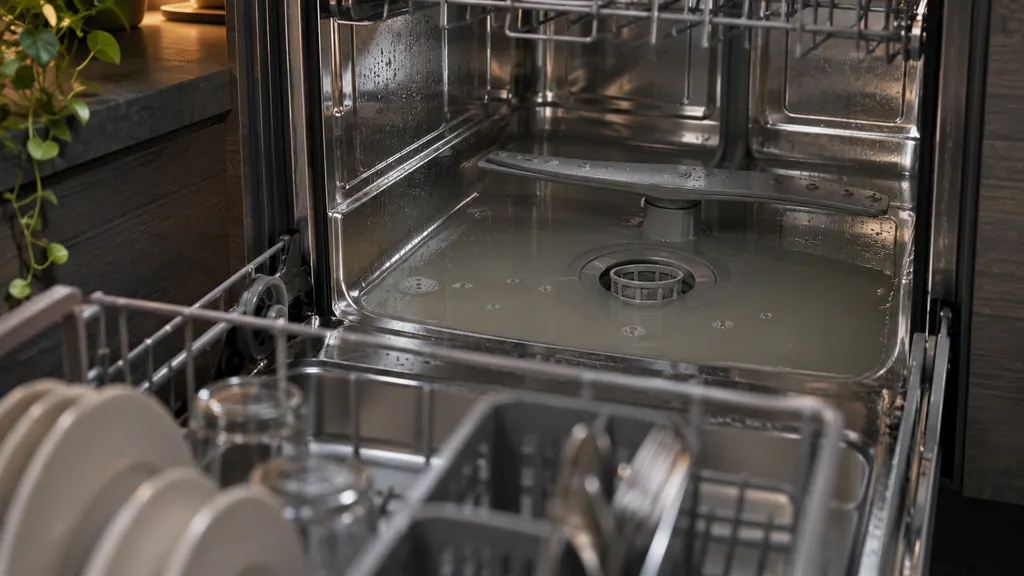
The two codes even share a likely cause. In the DBI786 care chapter, ASKO explains that if water is still in the dishwasher after a program has finished, something may be blocking the drain pump, and that this produces one message or the other. That's why the first steps are the same. 1
BLDC is shorthand for a brushless DC motor; the manual uses the letters without spelling them out. Our glossary entry on the brushless drain pump explains what the part does and where it sits. 1
The F11 page and the F68 page give a quick summary of each code. This guide is the longer read: how the two relate, what order to work in, how older models differ, and which look-alike codes need a different response.
How are F11 and F68 different?#
F11 describes the result: water that didn't go out. F68 names the drain pump itself. On the DBI786 the first steps are identical, so the difference matters most when you describe the problem to a technician. 1
Neither code tells you the pump has failed. The DBI786 table starts both with things you can do from inside the tub, and only sends you to the service center if the problem persists. Here is how the two line up on the two manuals we follow. 12
| F11 | F68 | |
|---|---|---|
| What it's about on the DBI786 | Water outlet 1 | The BLDC drain pump 1 |
| On the older DBI675 | Listed; refers you to the standing-water checklist 2 | Not listed 2 |
| First step | Clean the coarse and fine filters 1 | The same 1 |
| Next steps | Run any program, check the drain pump, check the hose 1 | The same 1 |
| If it persists | Contact the service center 1 | The same 1 |
Because the steps match, it's tempting to lump the codes together. Don't. Write down which one you actually saw and how often. It's information a technician can use even though your own steps were the same.
What should I do first when F11 or F68 appears?#
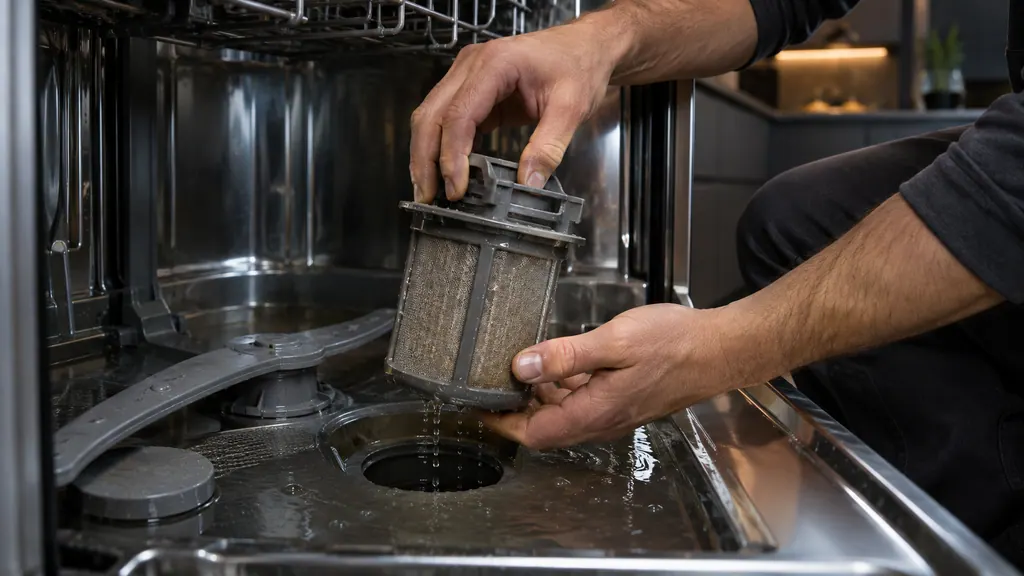
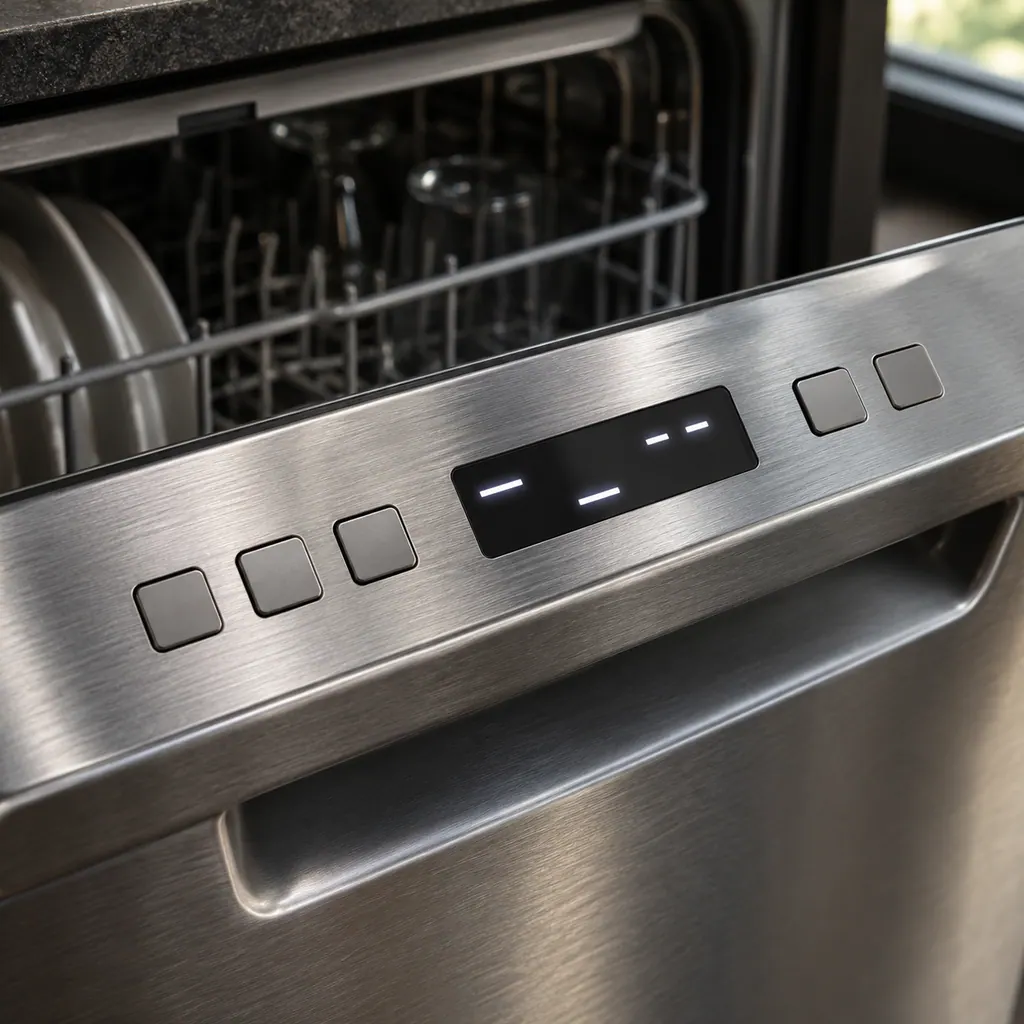
Photograph the display, then clean the coarse and fine filters and run any program. If the code comes back, clear the drain pump through its stop and check the drain hose for kinks. That's the order the DBI786 table gives. 1
- 1
- 2
- 3
- 4
- 5
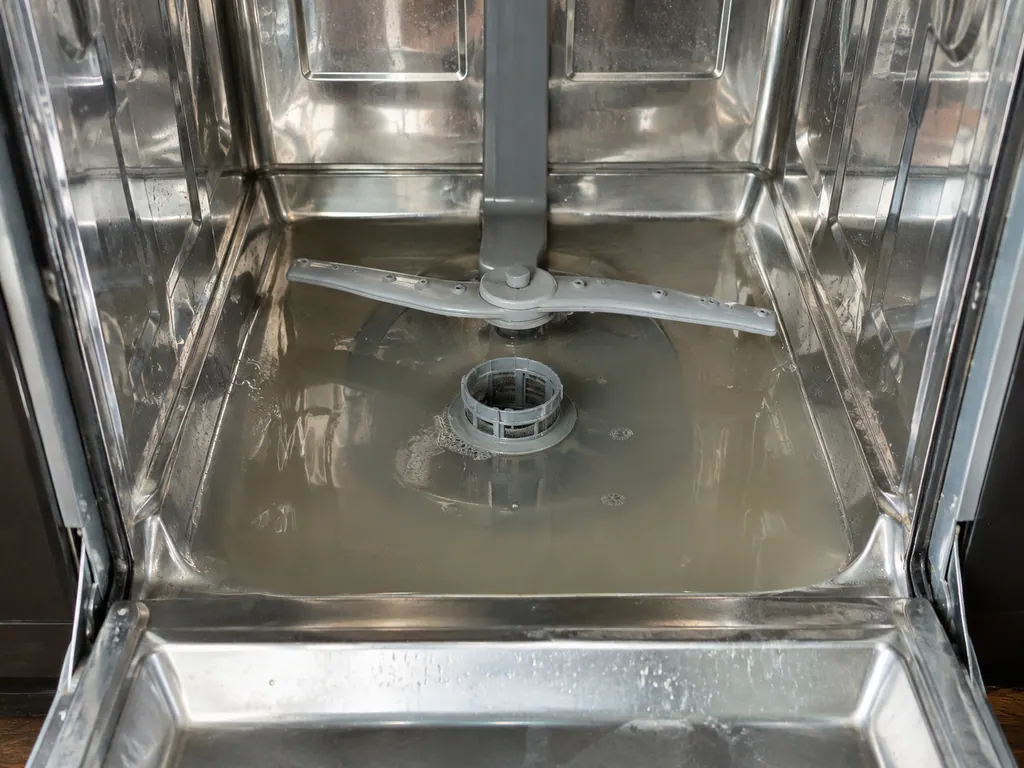
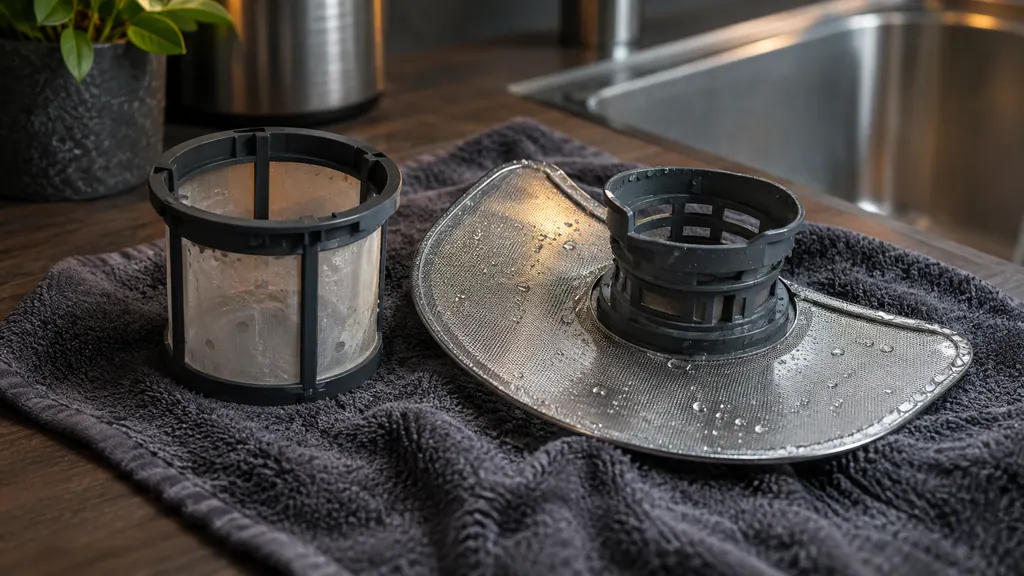
Our dishwasher not draining guide goes deeper into each of these checks, including the sink end of the hose. For the filters on their own, see how to clean the filters.
Why does the DBI675 show F11 but not F68?#
Its error table simply doesn't include F68. On the DBI675, F11 is the drain code, and the table sends you to its checklist for water left above the filters, then to Customer Care if the problem persists. 2
That checklist covers the same ground as the DBI786 steps, with two small differences. You confirm the filter handle sits locked in its stop position, and the pump stop on the right of the bottom drain is colored rather than yellow. The rest is the same: clogged filters, debris in the pump, a kinked hose or a blocked one. 2
The DBI675 pump section also has a warning sign the DBI786 doesn't repeat. If the dishwasher still won't start after you clean the pump and you hear a whirring sound, that whirring tells you the overflow protection has tripped. Close the water supply, unplug and phone Customer Care. 2
If your ASKO is neither of these models, look the code up in its own manual before you act. Numbers and labels don't always match across models. F52 is a good example: the DBI786 calls it a water level message, while the DBI675 labels it "Clean the filters". 12
Which codes look similar but mean something else?#
F10 and F54 are overfill messages, F52 is a water level message, and F56 is about the circulation pump, not the drain pump. Some share steps with F11 and F68, but F54 starts with closing the water, so read the number carefully. 1
| Code | What it's about on the DBI786 | First step |
|---|---|---|
| F10 | First overfill stage | Unblock the drain pump 1 |
| F52 | Water level | Clean both filters, then run a program 1 |
| F54 | Second overfill stage; the overflow guard | Close the water supply valve, then unplug and call 1 |
| F56 | Circulation pump | Run any program; call if it persists 1 |
F56 and F68 both mention a pump, which is where people mix them up. They are different pumps with different first steps: F56 starts with a plain test program, while F68 starts with the filters. 1
F10 is the closest cousin. It also sends you to the drain pump, but it's about water rising too high rather than water failing to leave. Our F10 and F12 guide explains it, and the guide to reading and clearing codes covers the full DBI786 list. 1
When do F11 and F68 need a technician?#
When the code comes back after you've cleaned the filters, run a test program, cleared the pump and checked the hose. At that point the DBI786 says to contact the service center. Testing the pump motor, its wiring or the controls is technician work. 1
Call sooner if the pump stop is cracked or won't seat, if the pump wheel won't turn by hand, or if you'd need to pull the dishwasher out to follow the hose. Those are the points where an owner check turns into a repair.
The technician agrees the price with you before any work starts. The exact cost is confirmed after the on-site diagnostic. Repairs covered by the manufacturer's warranty go through ASKO itself. We give a warranty on our workmanship. If the code keeps returning, book a visit and have your photo of the display ready.
Sources#
- DBI786IXXLSSOF.U dishwasher user manualASKO / Gorenje Group · Document 879712en · pp. 6, 25, 33, 35–36, 38–39, 45, 53–54
- DBI675 dishwasher operating instructionsASKO / Gorenje Group · Document 843099en · pp. 28–29, 33