Inside the appliance
Drain pump. In plain English.
The drain pump pushes used water out of your ASKO dishwasher and into the drain hose at the end of a cycle. If water is still standing above the filters when a program ends, a blocked pump is one of the first things to check.
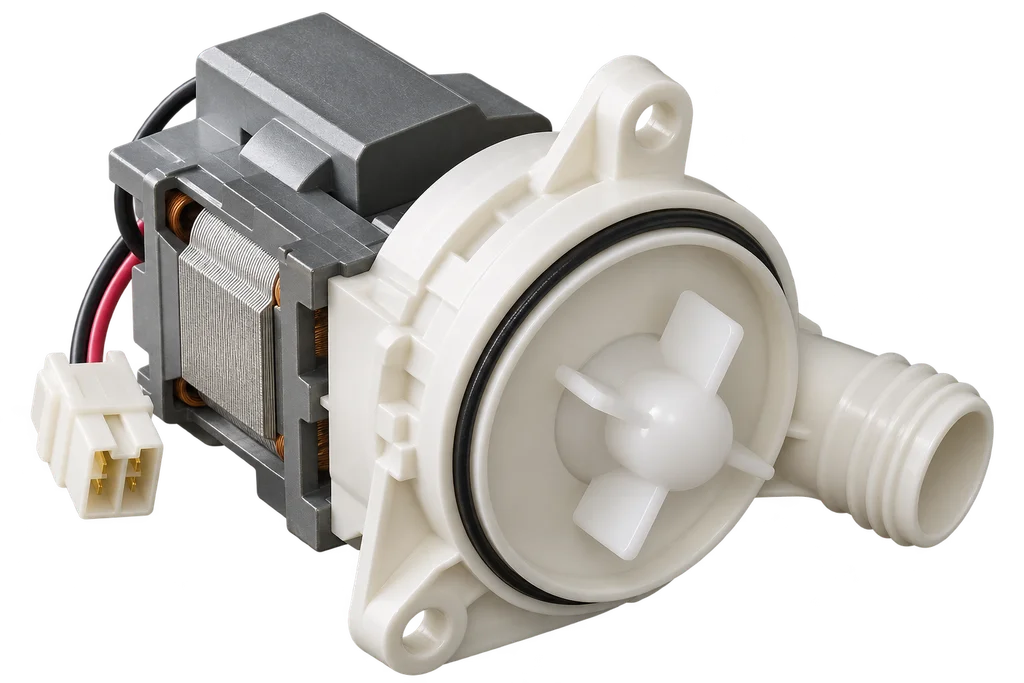
Where it fits.
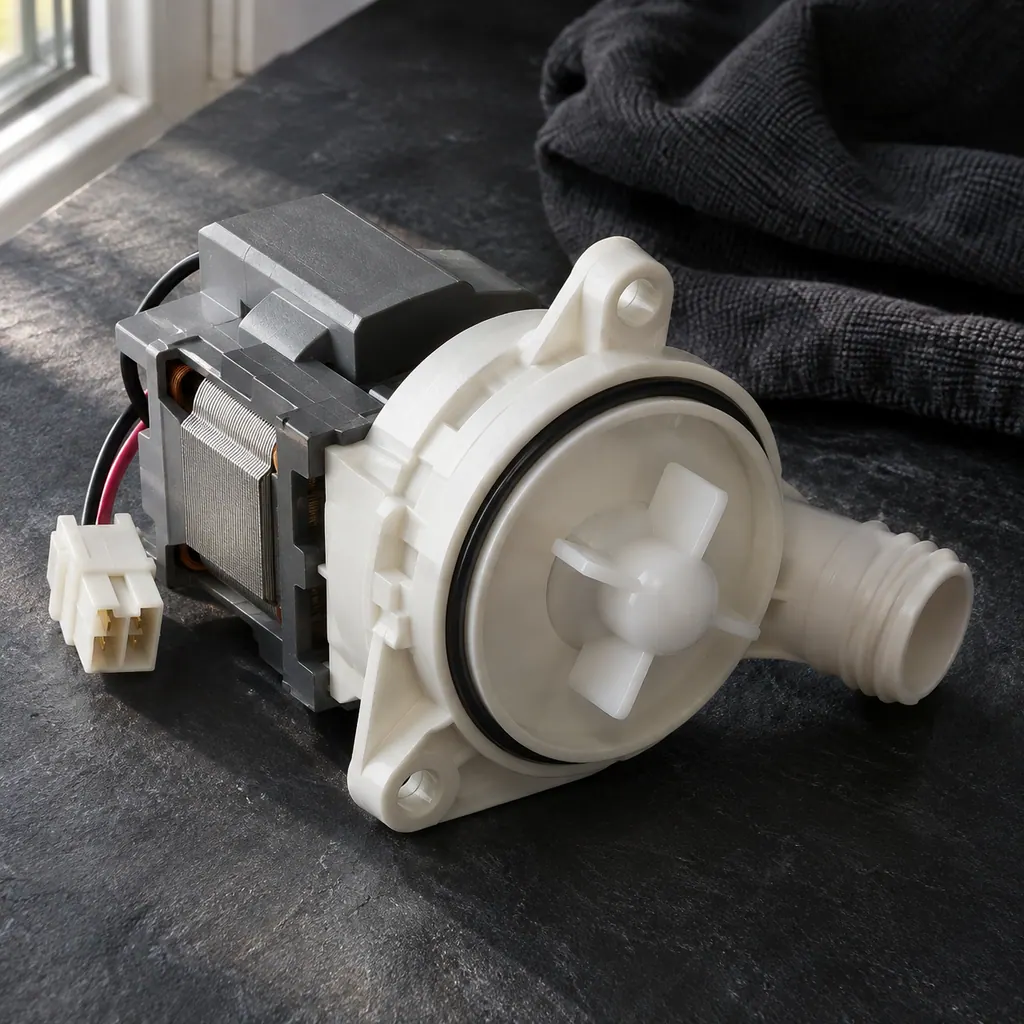
Drain pump in the appliance
It sits below the filters at the bottom of the tub. On the DBI786 and DBI675 you reach its pump wheel by lifting out both filters and pulling the drain pump stop on the right side of the bottom drain (yellow on the DBI786).
The picture illustrates the component type. It does not identify a compatible replacement for your model.
What changes when this system needs attention.
Drain pump concerns can appear alongside a change in performance or a recurring code. Testing is needed before deciding whether the component is responsible.
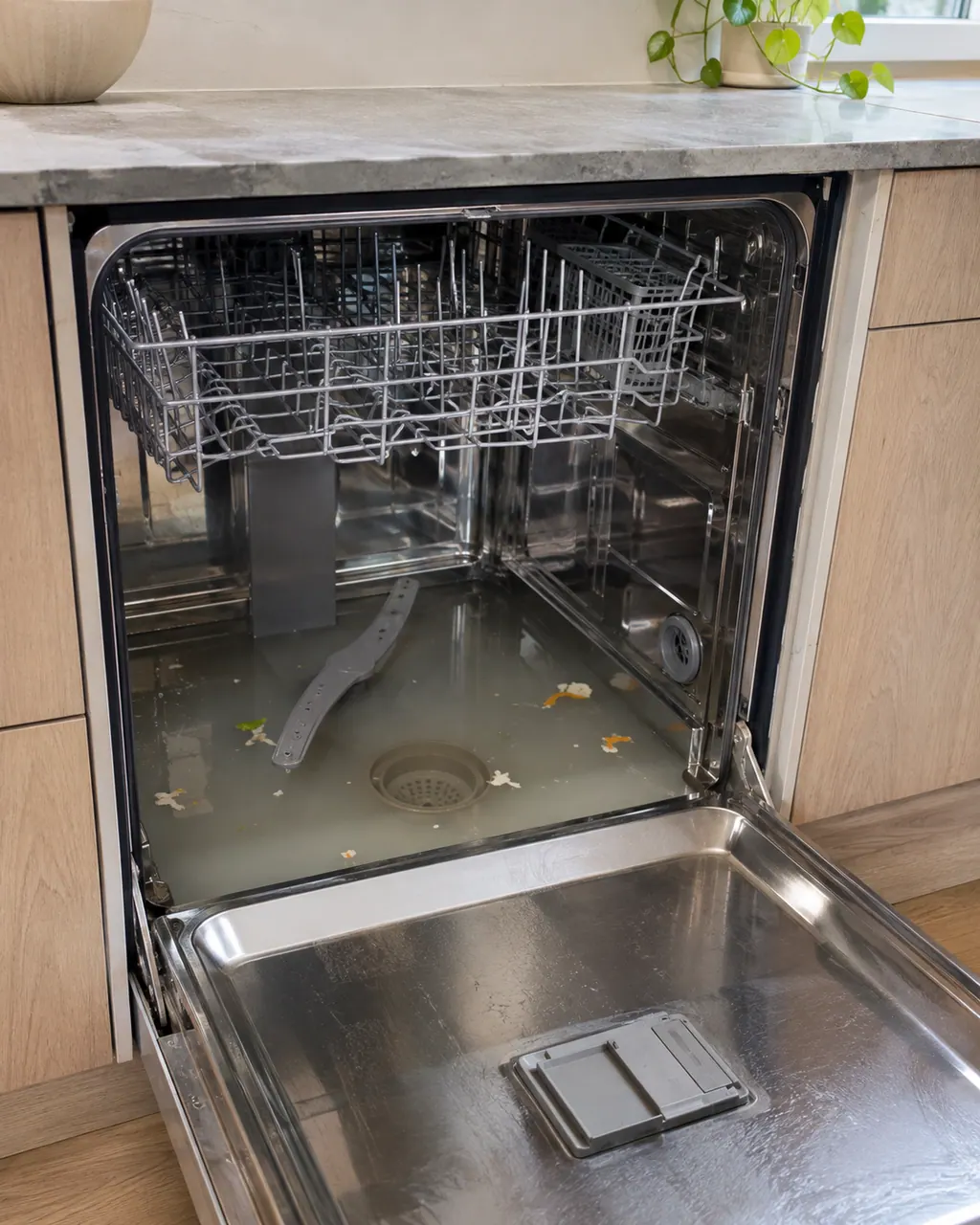
Owner care, within the model instructions.
Switch off and unplug before owner-accessible checks. Watch for standing water and sharp debris. Do not touch a wet plug or electrical area, remove service panels, or go beyond your model’s owner instructions.
- 1
Switch off and unplug
Turn the dishwasher off and pull the plug before you reach into the drain area. Broken glass can collect here, so work slowly.
- 2
Lift out the filters and bail the water
Take out the coarse filter, then the fine filter. Scoop the standing water out of the tub with a cup or sponge.
- 3
Turn the pump wheel by hand
Pull out the drain pump stop (pliers help on the DBI786). Turn the wheel behind it with your fingers and lift out anything caught there.
- 4
Put everything back in order
Refit the drain pump stop first, then the fine and coarse filters, and plug the dishwasher back in. A missing pump stop can itself leave water in the tub.
Cleaning or replacement?
Leave internal testing to a technician.
Book a visit if water still stands in the tub after you have cleared the pump wheel, or if F11 or F68 comes back. Testing the pump motor, its wiring and the control is a technician’s job.
Arrange a diagnosticSee the neighboring components.
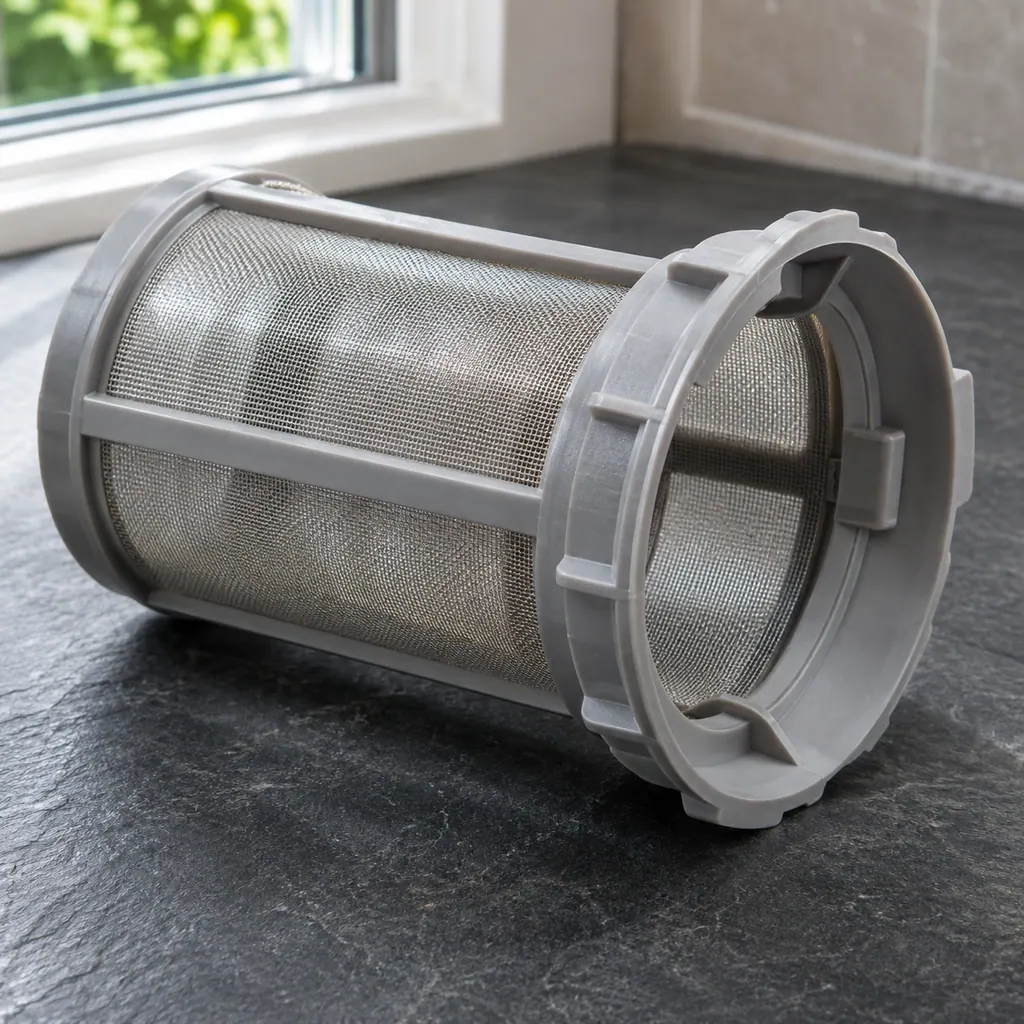
Coarse filter
Catches larger pieces of food before they reach the drain system.
Fine filter
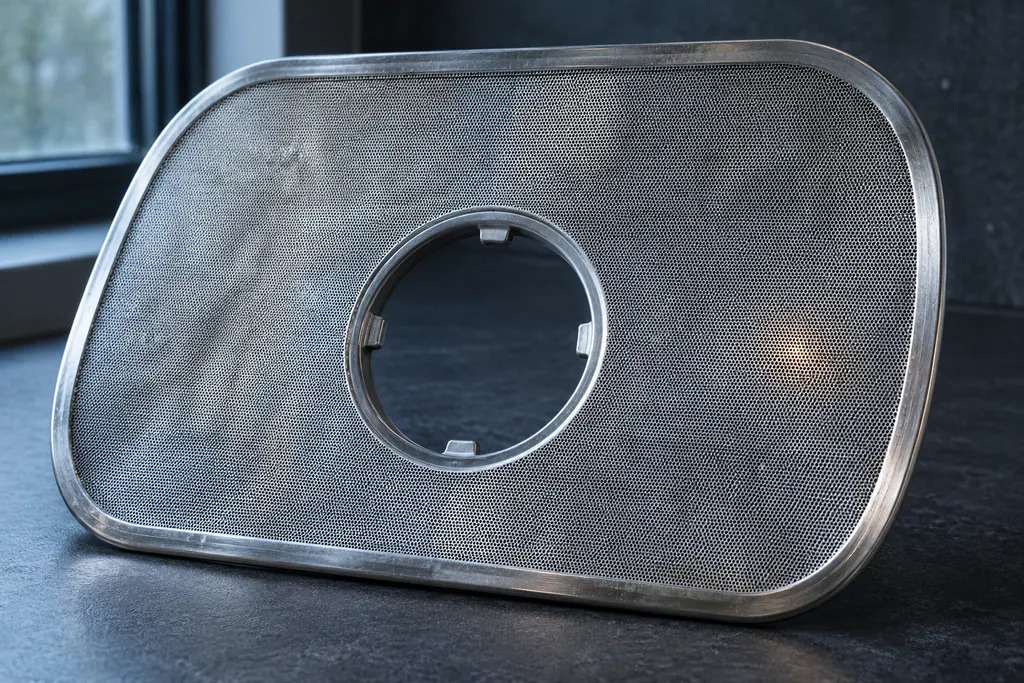
The fine filter sits under the coarse filter and catches the smaller particles. Your ASKO rinses most of that debris away during each wash, but the filter still needs a hand clean from time to time.
Brushless drain pump
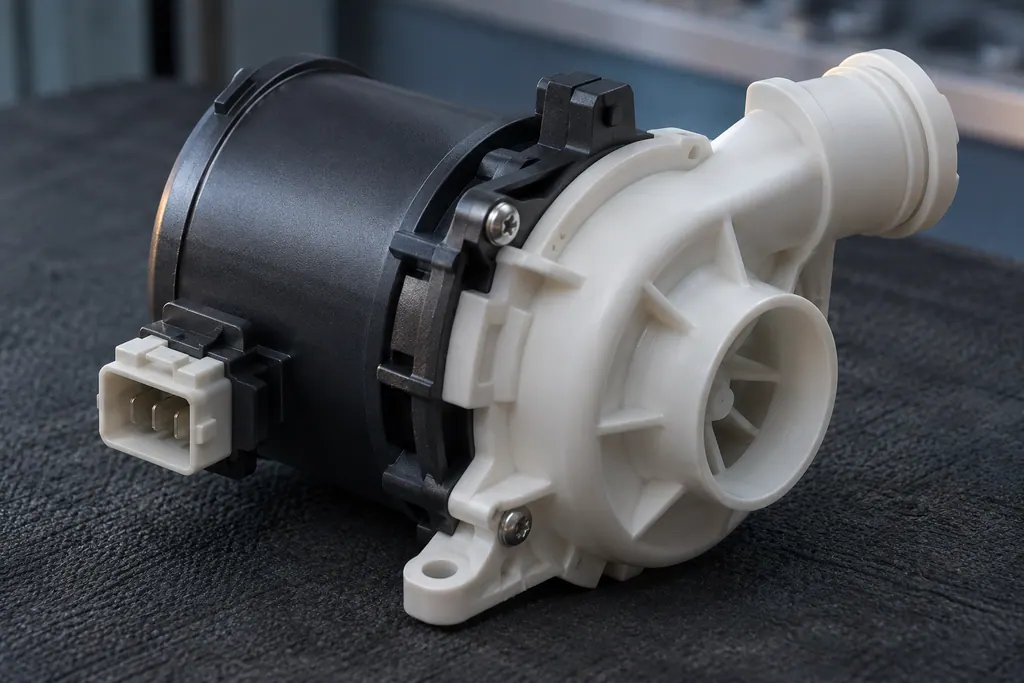
A brushless drain pump is a drain pump driven by a brushless (BLDC) motor. On the ASKO DBI786 it has its own code, F68, and the manual treats it like F11: filters, pump wheel and drain hose come first.
Sources and model boundaries.
These references support the Drain pump guidance. Read the manual that matches your model.
- Asko DBI786IXXLSSOF.U User Manual, Troubleshooting (PDF on the Gorenje Group document server, linked from us.asko.com)
- Asko DBI675IXXLS.U / DBI675THXXLS.U / DBI675PHXXLS.U Operating Instructions, Troubleshooting (PDF on the Gorenje Group document server, linked from us.asko.com)
Use the instructions for your exact model. See how we research these pages.
How do I know my ASKO dishwasher’s drain pump is blocked?
The usual sign is water sitting above the filters after a program has finished. On the DBI786 it often comes with F11 or F68 on the display. Clogged filters and a kinked hose look the same, so check those as well.
Is it safe to clear the drain pump myself?
Yes, within limits. Both manuals let you remove the pump stop and turn the pump wheel by hand once the dishwasher is unplugged. Everything below the tub floor, including the motor and wiring, stays closed.
Can I pour drain cleaner into the dishwasher?
No. The DBI786 and DBI675 manuals say never to use anti-freeze, Draino, CLR or other chemical cleaners in the dishwasher. Clear the pump wheel by hand instead.
Is the drain pump the same as the circulation pump?
No. The circulation pump moves water around during washing, and the drain pump empties the tub. The DBI786 gives them separate codes: F56 for the circulation pump, F11 and F68 for draining.
What if I forget to put the pump stop back?
The manuals list a missing drain pump stop as a reason water stays in the tub. Check it is back in place on the right of the bottom drain before you start the next cycle.
Code / symptom / part / service
Connect the message to the next step.
F10
F10 means the water in your dishwasher rose past the first overfill level. ASKO’s first step is to clear the drain pump. If F10 keeps coming back after that, book a technician.
Dishwasher not draining
The DBI786 manual traces water left above the filters to four things you can check yourself: clogged or loose filters, debris in the drain pump, a missing drain pump stop, and a kinked or blocked drain hose. Unplug the dishwasher before you start.
Dishwasher repair
Arrange a model-specific diagnostic at the appliance.
Find your metro
Office details and the access information to include.