On this page
- ASKO sets no fixed interval: clean the filters as often as your use of the dishwasher demands. 12
- The fine filter unlocks with a ring turned counterclockwise and locks clockwise to its stop. 12
- Never run the dishwasher without both filters in place. 12
- Check the drain pump stop on the right of the bottom drain before you finish. 12
- If F52, F11 or F68 returns after a clean, the problem lies beyond the filters. 1
How often should I clean my ASKO dishwasher filters?#
ASKO doesn't set a fixed schedule. Empty the coarse filter whenever scraps collect in it, and clean both filters at regular intervals that suit how often you run the dishwasher. A household that runs it daily will get there sooner. 12
The manuals put it in exactly those terms: clean the filters "when necessary", at intervals that depend on how often the dishwasher is used. So instead of a calendar date, use a quick look. Lift the coarse basket after a few loads and see how full it is. That tells you your own rhythm. 12
The DBI786 helps with a reminder. One of the text messages its display can show is "Clean the filters", and it points you to the care chapter of the manual. If you see it, do the full routine below. 1
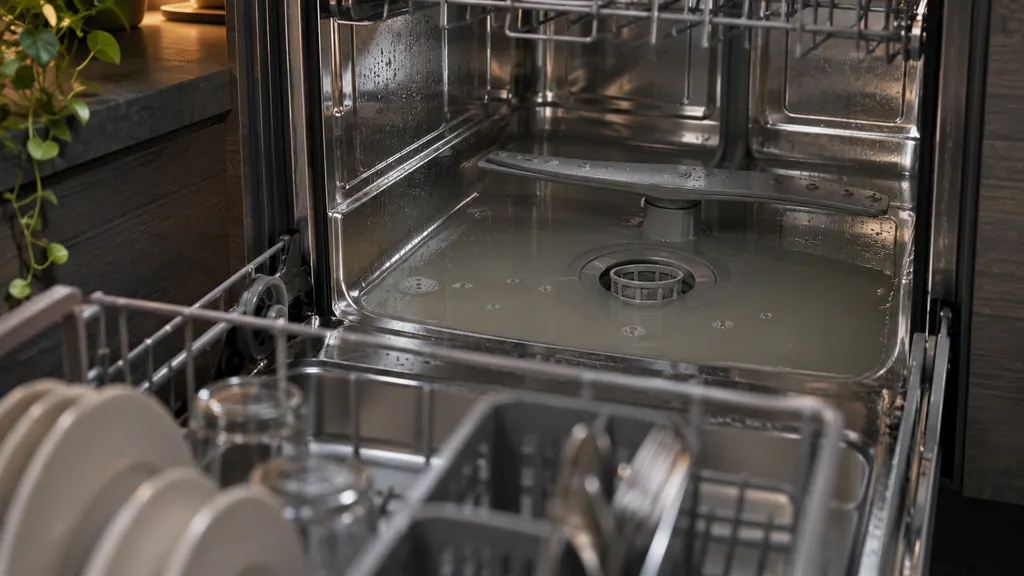
There are other hints too. Water sitting above the filters after a program, food left on the dishes, or an F52 message are all reasons to check the filters now, not at the next routine clean. 12
What do the coarse and fine filters do?#
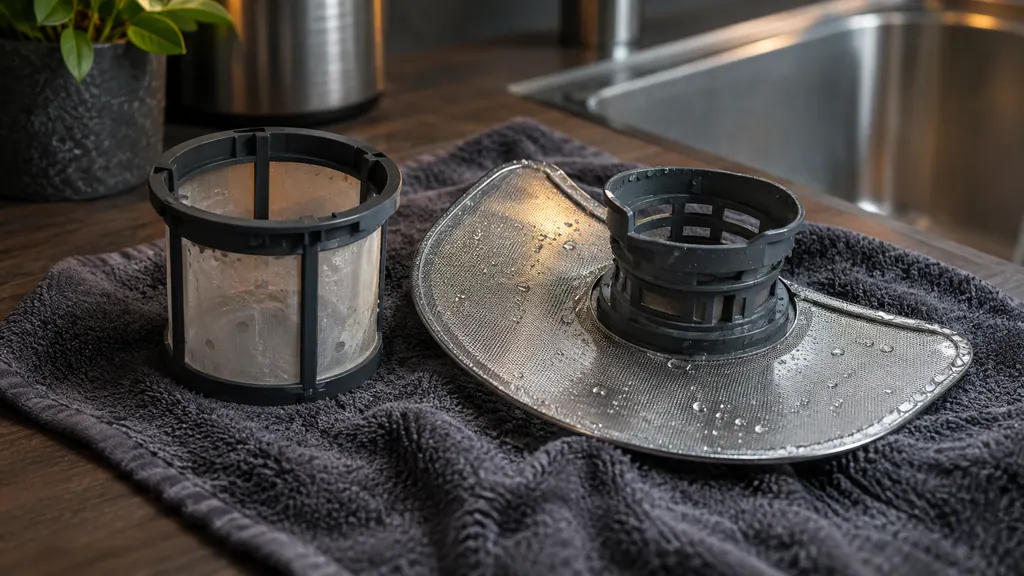
The coarse filter is a basket that catches larger food scraps that can't get past the drain pump. The fine filter sits below it and traps smaller debris, which the dishwasher rinses off during each wash. Both have to be in place whenever the dishwasher runs. 12
Think of them as two layers. The basket stops the big pieces, and the fine filter handles what slips through. Each wash rinses the fine filter, but that doesn't make it maintenance-free: ASKO still lists it for cleaning when necessary, on the same kind of rhythm as the basket. 12
Right next to them, on the right side of the bottom drain, sits the drain pump stop. It's yellow on the DBI786 and colored on the DBI675. It isn't a filter, but it lives in the same spot and it has to be in place when you finish. You only take it out to clear the drain pump. 12
How do I clean the filters, step by step?#
Switch off and unplug, lift out the coarse filter and empty it, then turn the fine filter's ring counterclockwise and lift it out. Clean it, refit it with the ring turned clockwise to its stop, press the coarse filter in until it clicks and check the pump stop. 12
Have a small bowl or bag for scraps and a towel nearby in case there's water in the bottom of the tub. Slide the lower basket out so you can see the filters clearly. The whole job takes a few minutes once you've done it once.
- 1
- 2
- 3
- 4
- 5
- 6
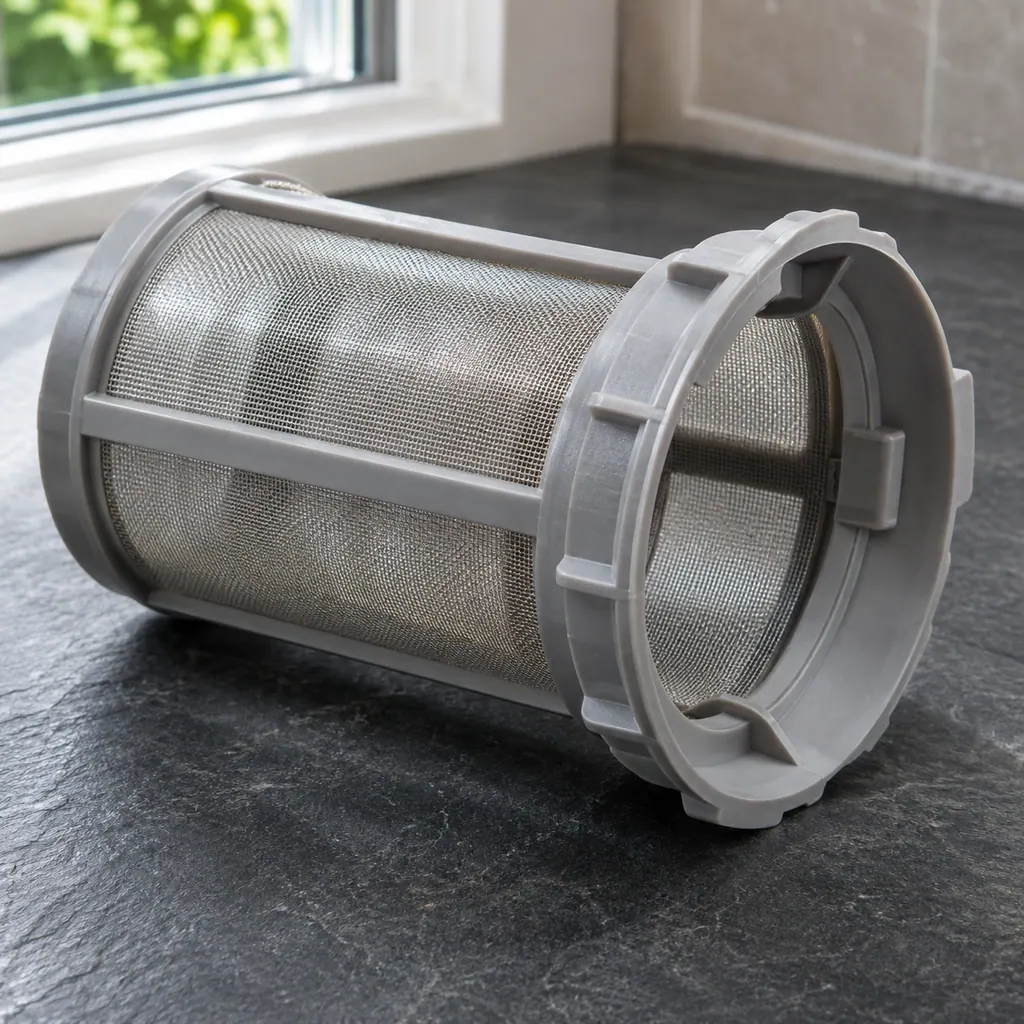
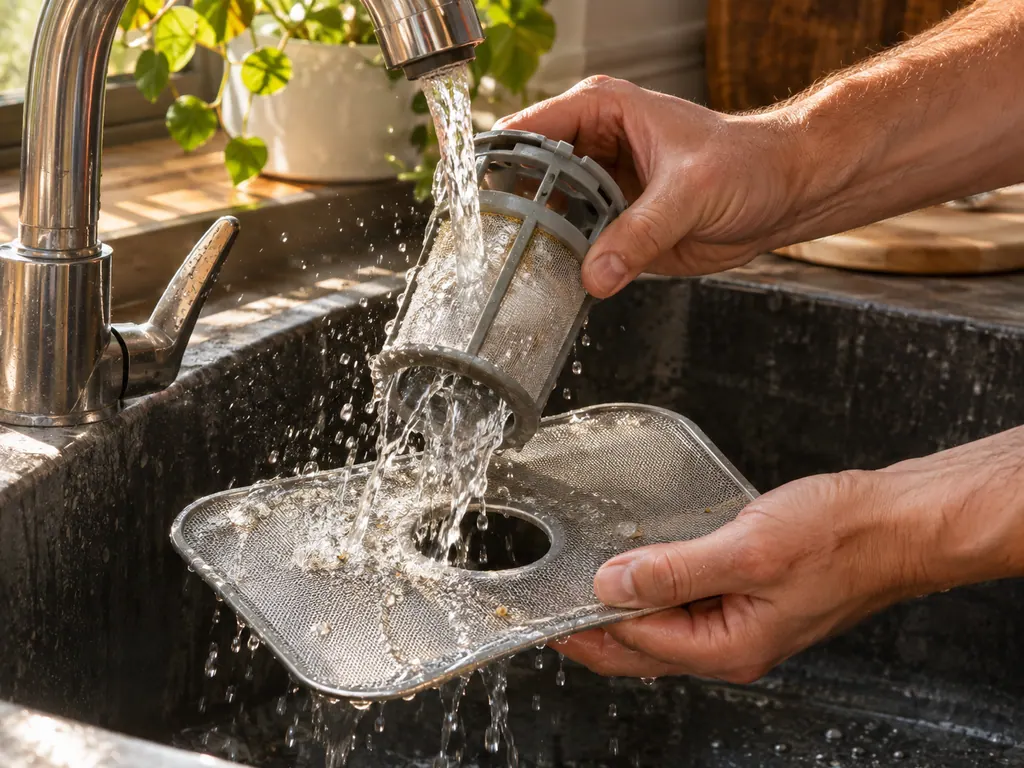
Both manuals add a note worth taking seriously: wash results may suffer if the filters are fitted wrong, and the dishwasher must never run without them. Don't leave a filter to drip-dry on the counter and start a load in the meantime. Put both back as soon as they're clean. 12
What happens if the filters are dirty or not fitted right?#
Dishes can come out dirty, water can stay above the filters, and the display may show F52, F11 or F68. ASKO's troubleshooting tables list clogged filters, badly fitted filters and a missing pump stop under both poor cleaning and standing water. 12
| What you notice | Filter-related cause in the manual | Where to go next |
|---|---|---|
| Food left on the dishes | Clogged or badly fitted filters, or the pump stop missing | Dishes not getting clean 12 |
| Water above the filters after a program | Clogged or badly fitted filters, or debris at the pump | Dishwasher not draining 12 |
| F52 on the display | Water level message on the DBI786; "Clean the filters" on the DBI675 | Clean both filters; on the DBI786, run a program 12 |
| F11 or F68 on the DBI786 | Drain messages, which a blocked drain pump can cause | F11 and F68 explained 1 |
F52 deserves a closer look. On the DBI675, its label literally reads "Clean the filters", and the table says to clean both and call Customer Care if it persists. The DBI786 calls it a water level message and adds a test program after the clean. Either way, the filters come first. Our F52 page has the short version. 12
For F11 and F68, cleaning the filters is only the first of several steps. If the message returns after a test program, the DBI786 moves on to the drain pump and the drain hose. 1
Where do filters fit in the rest of the care routine?#
They're one part of a short list. The others are the spray arms, the door seal and, in hard-water homes, limescale. Whatever else you clean, lock the filters back in before the next program: ASKO says never to run without them. 12
Our cleaning and descaling guide covers the spray arms, the seal and the Self-cleaning program. If white deposits keep coming back, the water softener guide explains how to set the softener for your water.
One habit also keeps the coarse basket emptier. Both manuals ask you to scrape large food scraps off plates before loading instead of rinsing them under the tap. ASKO gives that as an energy and water tip, but every scrap that goes in the trash is one less in the filter. 12
When should I call a technician?#
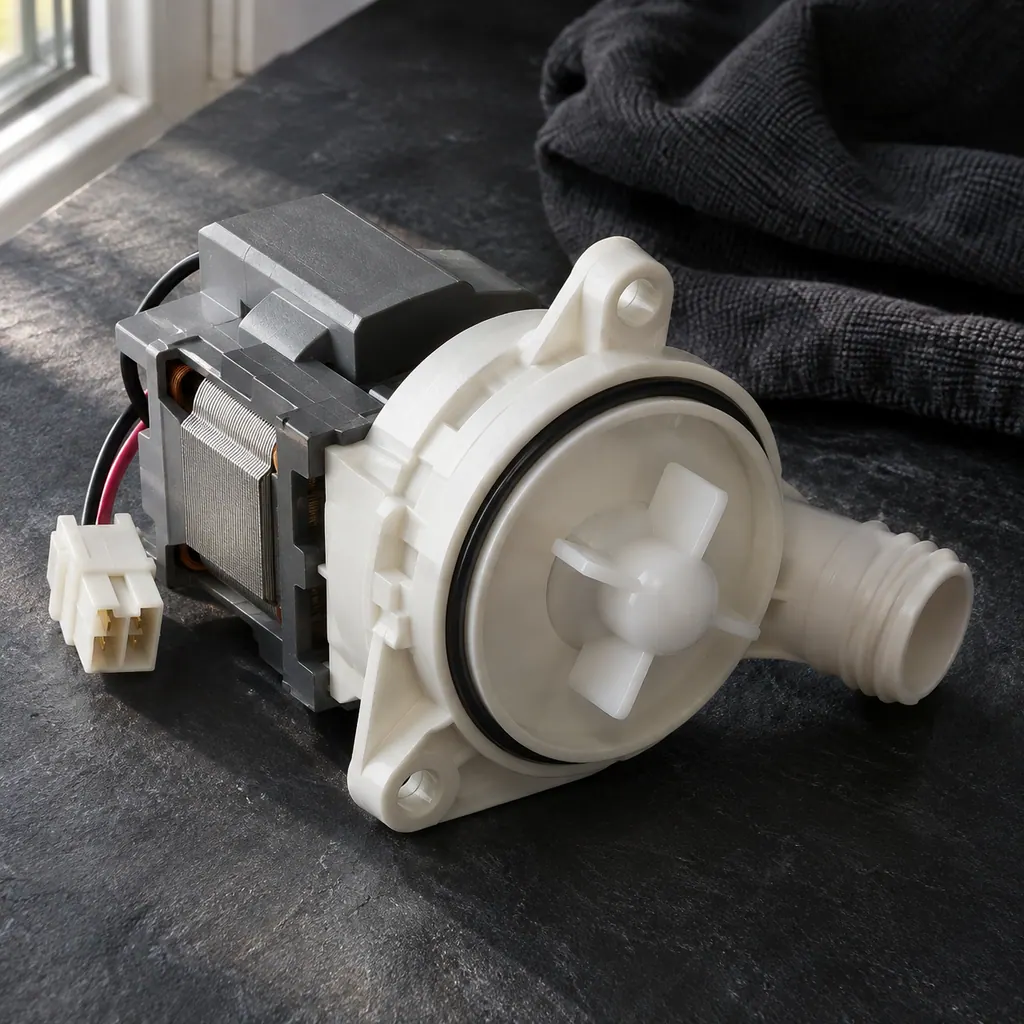
Call if a filter or its locking ring won't come out or won't lock back in, if the pump stop is cracked or missing, or if F52, F11 or F68 comes back after a careful clean. Those point to something past the filters. 12
Don't force a ring that won't turn, and don't run the dishwasher with a filter that won't seat. Both manuals say to keep the filters in place, and a loose one can leave you chasing a second problem that isn't really there. 12
The technician agrees the price with you before any work starts. The exact cost is confirmed after the on-site diagnostic. Repairs covered by the manufacturer's warranty go through ASKO itself. We give a warranty on our workmanship. When you're ready, book a visit.
Sources#
- DBI786IXXLSSOF.U dishwasher user manualASKO / Gorenje Group · Document 879712en · pp. 3, 5, 11, 35–36, 38–39, 42, 45
- DBI675 dishwasher operating instructionsASKO / Gorenje Group · Document 843099en · pp. 4, 9, 25–26, 28–29, 31, 33