What it means
F11 means your ASKO dishwasher couldn’t pump the water out. Clean the coarse and fine filters first, then clear the drain pump and check the drain hose. All three are owner jobs in the manual, done with the power off.
ASKO dishwasher F11 / Drain
F11 means your ASKO dishwasher couldn’t pump the water out. Clean the coarse and fine filters first, then clear the drain pump and check the drain hose. All three are owner jobs in the manual, done with the power off.
Also shown as Fault F11
F11 means your ASKO dishwasher couldn’t pump the water out. Clean the coarse and fine filters first, then clear the drain pump and check the drain hose. All three are owner jobs in the manual, done with the power off.
Unplug the dishwasher before your hands go near the filters or the pump.
Water is still standing in the tub after you’ve cleaned the filters, cleared the pump and checked the hose, or F11 keeps returning.
Your check-list / saved on this device
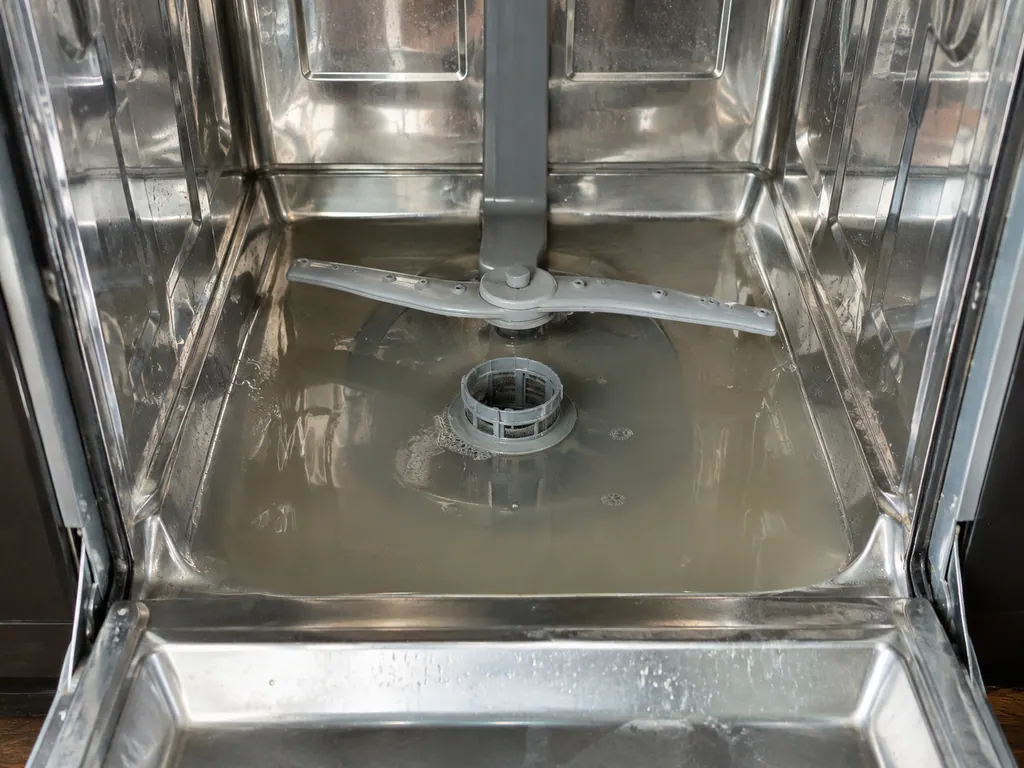
Switch off, pull the plug and scoop the standing water out with a cup or a sponge. Put a towel on the floor in front of the door.
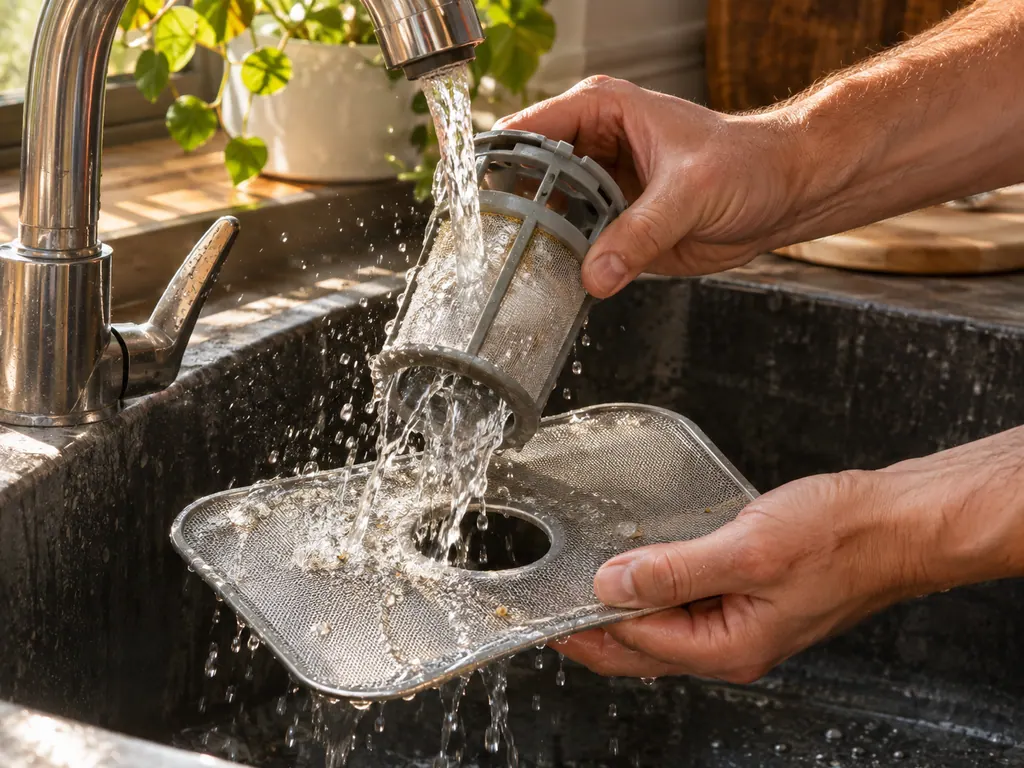
Lift out the coarse filter and the fine filter and rinse them under the tap. Refit them so they sit flat, plug back in and run any program to see whether the water now drains.
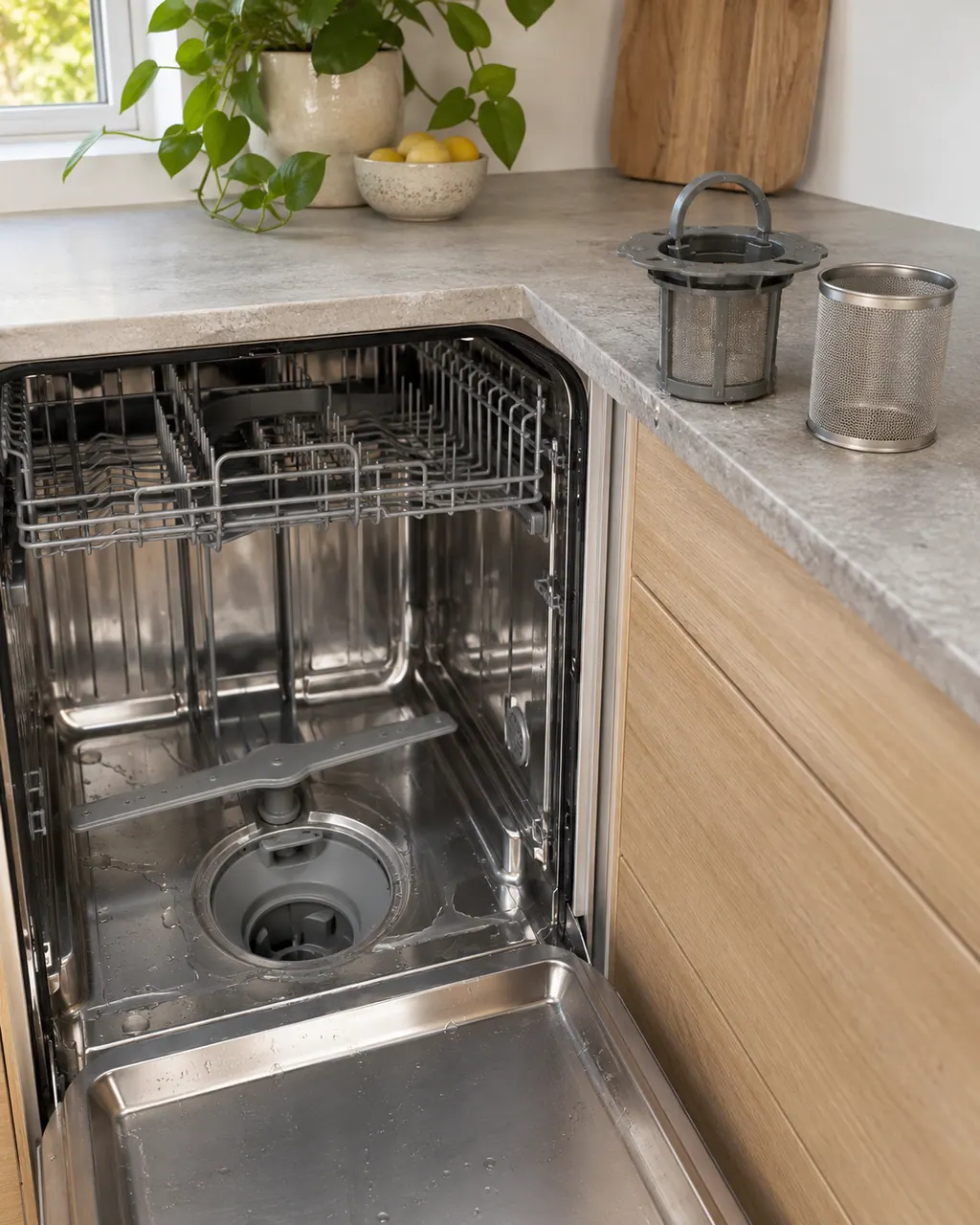
If water is still sitting there, unplug again. On the DBI786, pull the yellow pump stop at the bottom right of the drain, turn the pump wheel by hand and take out any glass or debris. Push the stop back in before you restore power.
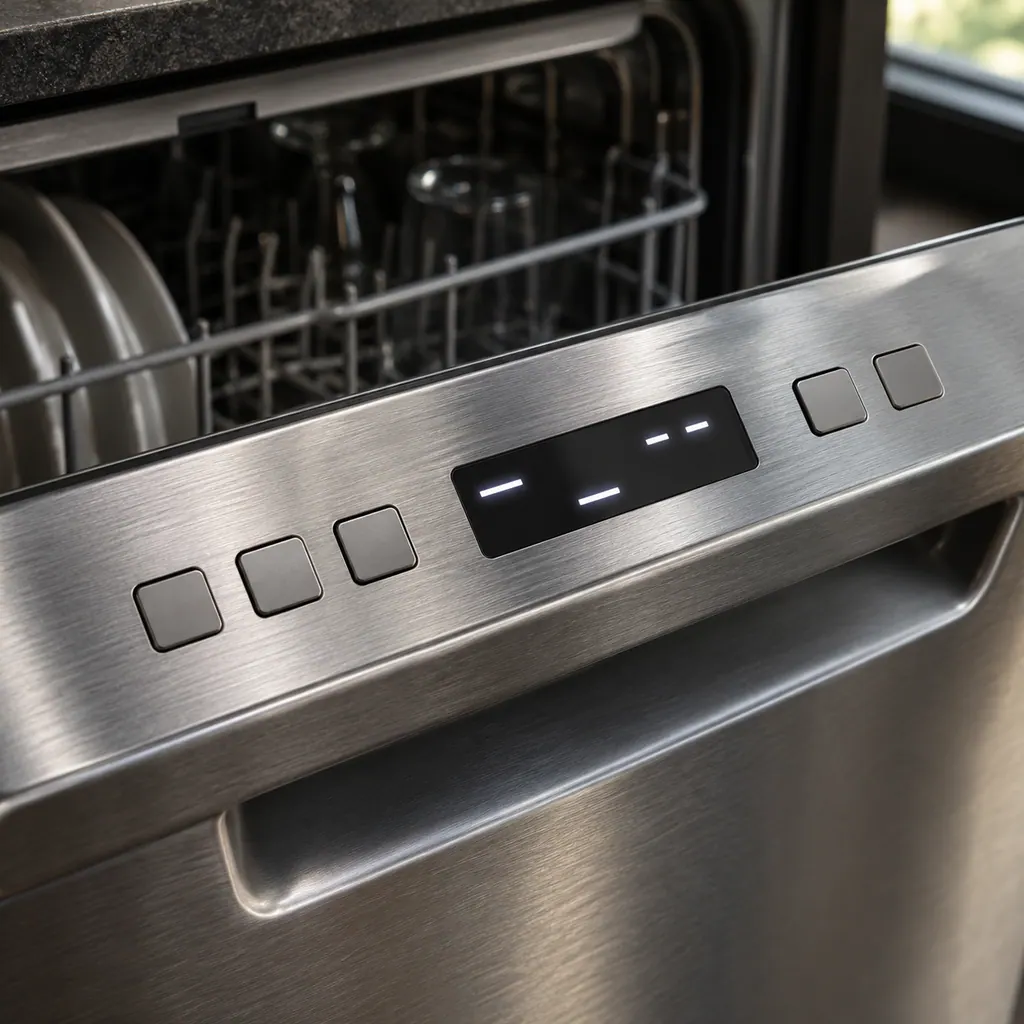
Follow the hose under the sink and look for kinks, sharp bends or a clogged end. If you’d have to pull the dishwasher out to see it, leave that part to a technician.
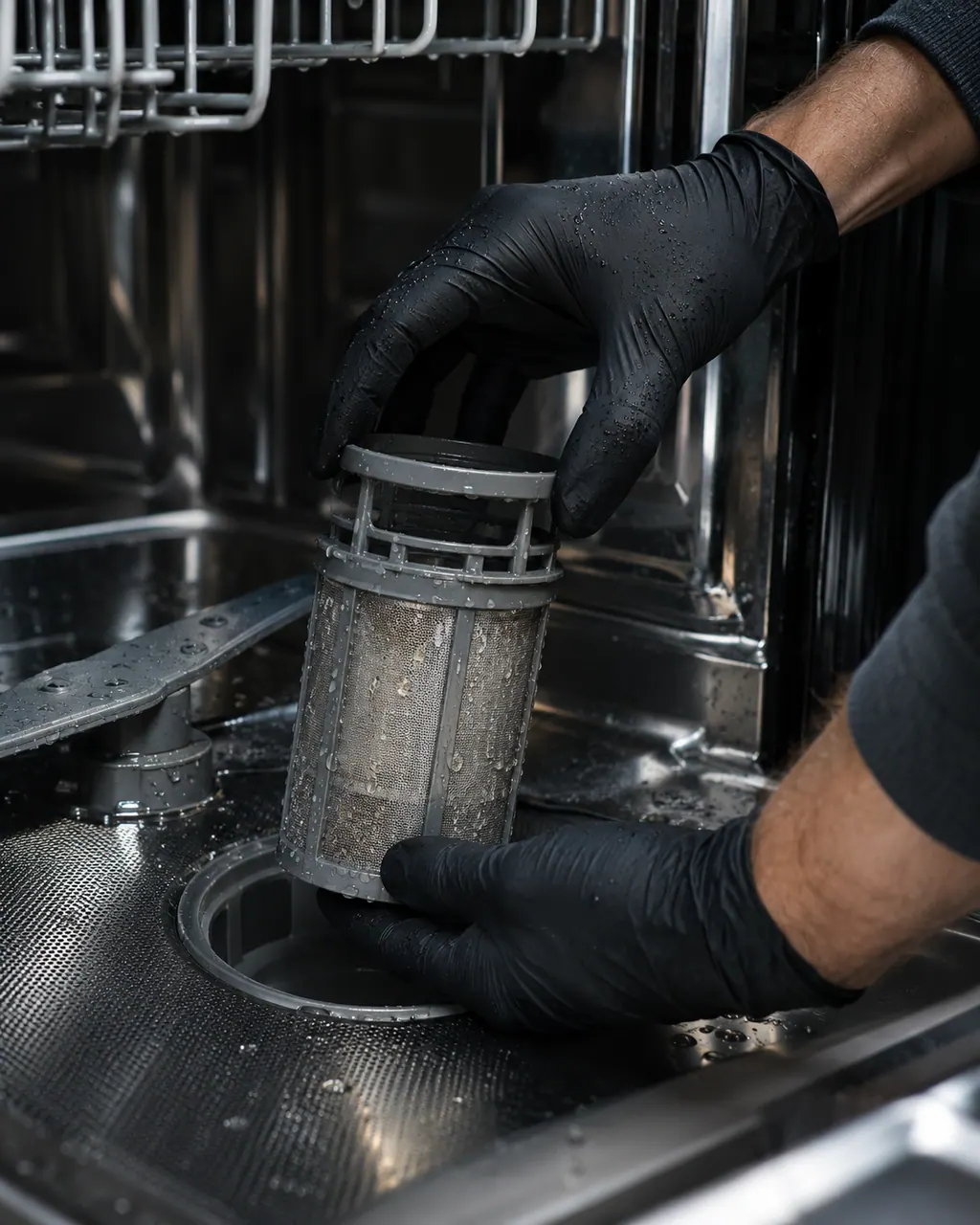
If the tub still holds water after all of this, or F11 comes straight back, it’s time for a technician. Testing the pump, its wiring and the controls needs their tools.
Schematic. Layouts vary by model. Select an outlined part to see its photo and the matching check.
Component reference
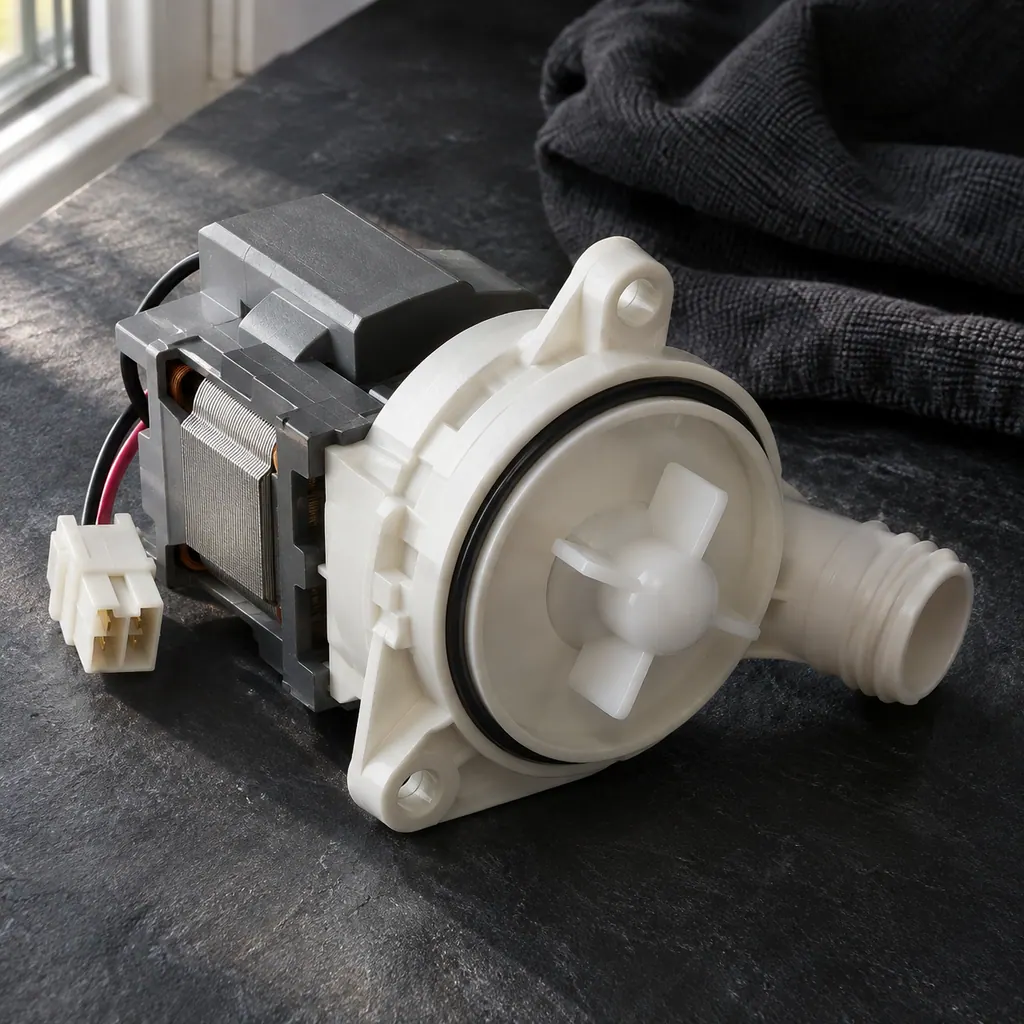
The drain pump pushes used water out of your ASKO dishwasher and into the drain hose at the end of a cycle.
Read the definition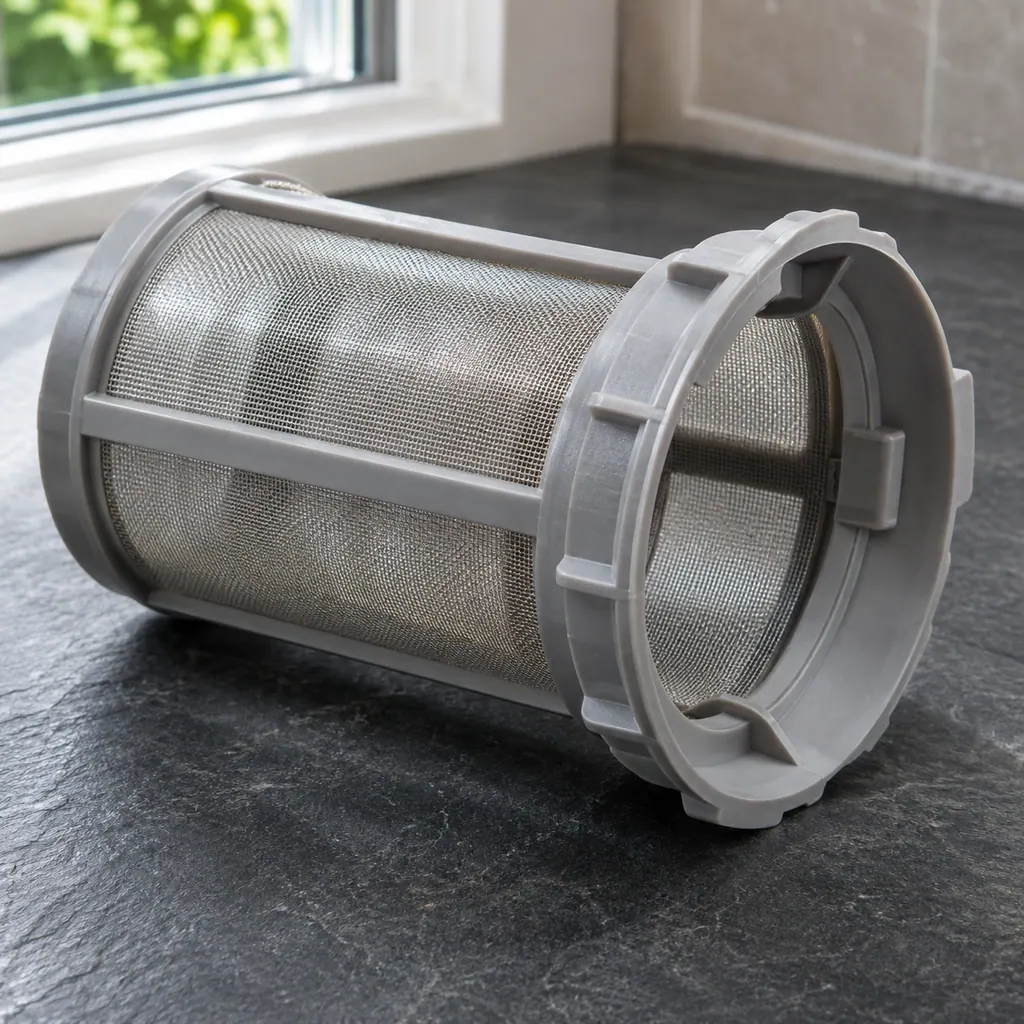
Component reference
The coarse filter catches the larger food scraps that can’t pass through the drain pump.
Read the definition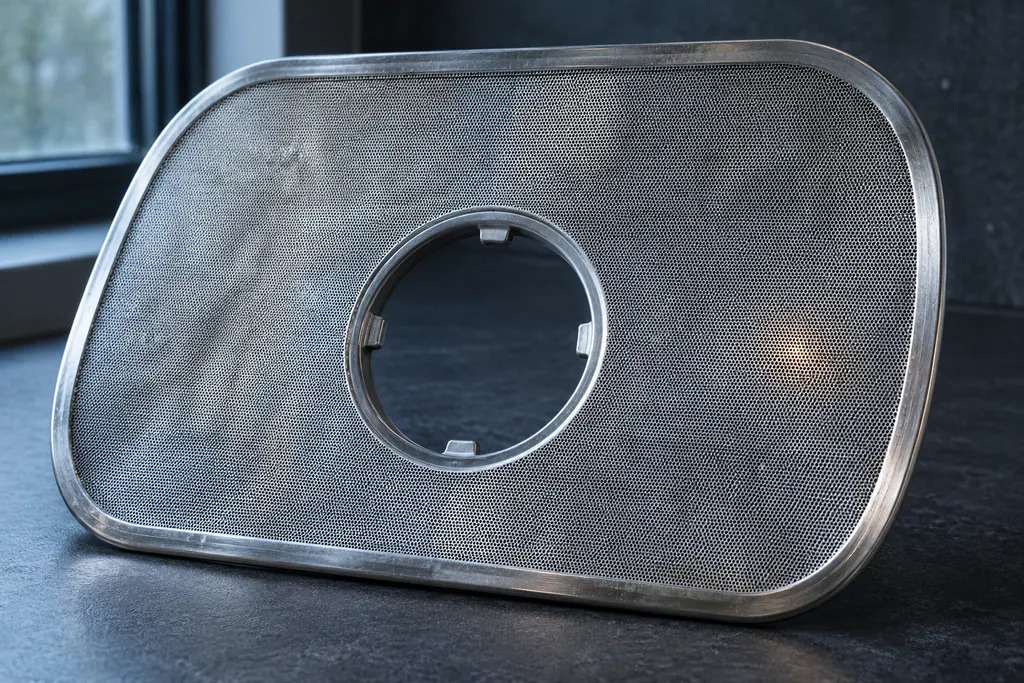
Component reference
The fine filter sits under the coarse filter and catches the smaller particles.
Read the definition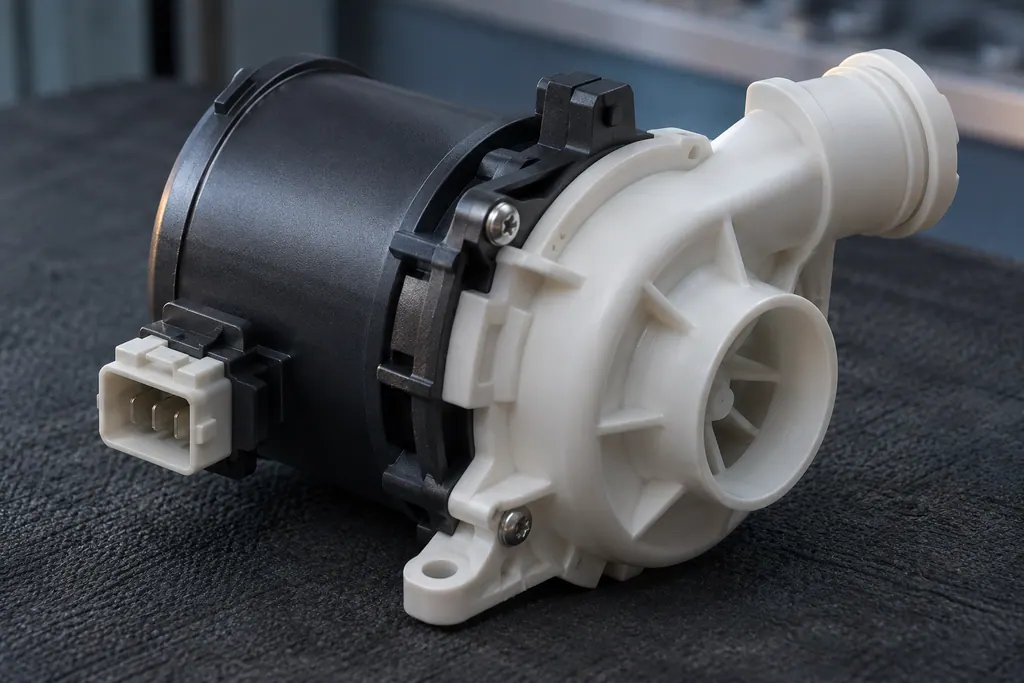
Component reference
A brushless drain pump is a drain pump driven by a brushless (BLDC) motor.
Read the definition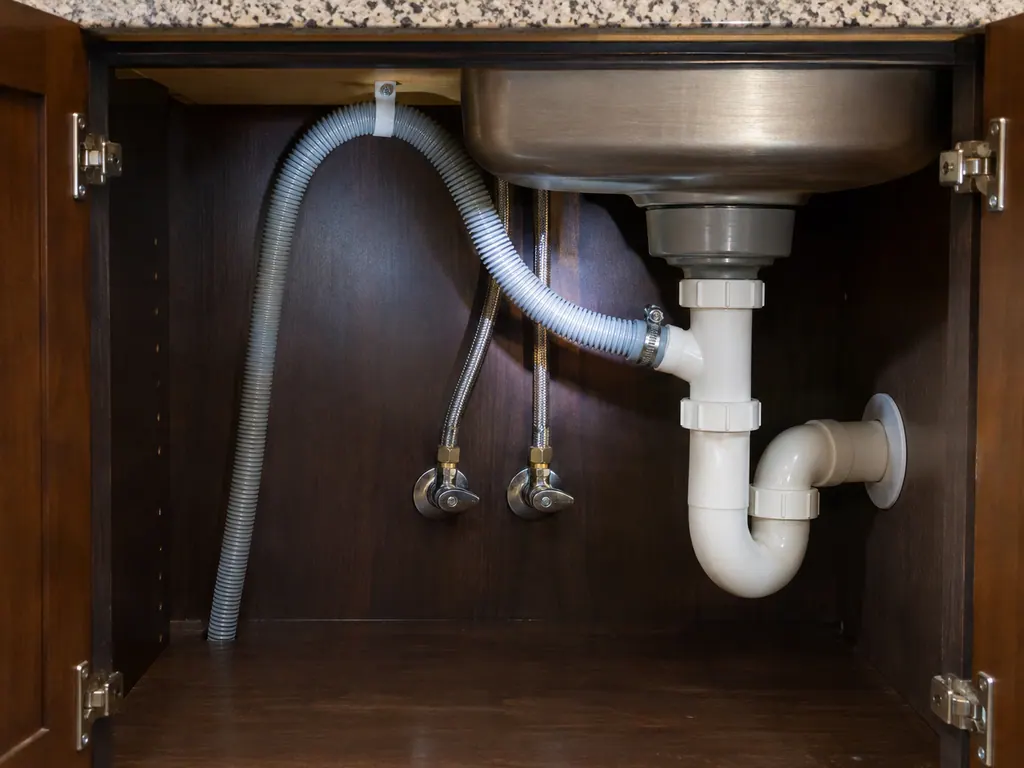
Component reference
The drain hose carries dirty water from the dishwasher to your sink drain or another household drain.
Read the definitionThe message clears when you press any button, but the water stays until you remove the cause. Clear it, do the checks, then run a program and watch the tub empty.
Read the supporting manualThe manual lists a missing yellow pump stop as one reason water stays above the filters. If you cleared the pump recently, make sure the stop is pushed fully back in.
Read the supporting manualManufacturer document
ASKO / Gorenje Group
Document 879712en / pp. 38–39, 45
On the DBI786 and DBI776, F11 and F68 share the same starting checks. The DBI675 manual points F11 to its table entry for water left above the filters.
F11 says the water didn’t drain. F68 points at the brushless drain pump itself. On the DBI786 you start both with the same filter, pump and hose checks, and neither code tells you which part has failed.
Clean filters rule out only the first cause. A missing pump stop, debris on the pump wheel, or a kinked or blocked drain hose can all leave water behind. If those are fine too, book a diagnostic.
No. Turn it off and pull the plug first, every time. If the water is too deep or the steps for your model aren’t clear, stop and call.
Not on its own. The code reports a drainage problem, not a broken part. A technician tests the pump before anything gets replaced.
Code / symptom / part / service
F10 means the water in your dishwasher rose past the first overfill level. ASKO’s first step is to clear the drain pump. If F10 keeps coming back after that, book a technician.
The DBI786 manual traces water left above the filters to four things you can check yourself: clogged or loose filters, debris in the drain pump, a missing drain pump stop, and a kinked or blocked drain hose. Unplug the dishwasher before you start.
Moves used water out of the dishwasher.
Arrange a model-specific diagnostic at the appliance.
Office details and the access information to include.