On this page
- Clean both the coarse and the fine filter, and lock them back in before you test. 12
- The drain pump stop has to go back in after you clear the pump. 12
- Keep every part of the drain hose within 37 3/8 inches of the dishwasher's base. 12
- F52 is a water level message, not another name for F11. 1
- For F54, close the water supply valve before you unplug. 1
Why is there water left in my ASKO dishwasher?#
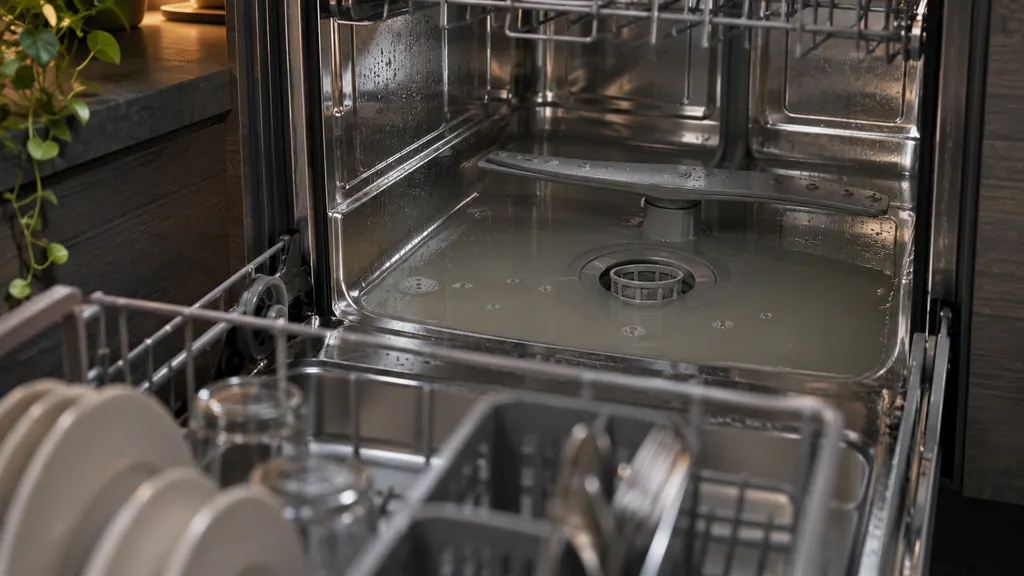
Usually something in the drain path is blocked or loose: clogged filters, filters that aren't seated, debris at the drain pump, a missing pump stop, or a kinked or blocked drain hose. Standing water alone doesn't mean a part has failed. 12
Both ASKO manuals describe this problem the same way: water left above the filters once a program has finished. That's the thing to look for. And if your DBI786 is brand new, don't panic at a little water inside: ASKO runs a test on each one before it ships, and the installation pages say a little water can be left over from that. 1
Next, make sure the program really ended. If someone opened the door mid-wash, the display reads "Program paused" and the water from that stage is simply still there. Press Start/Stop and close the door within four seconds to let the program carry on and drain. 12
This guide follows two ASKO manuals: the DBI786 user manual and the older DBI675 operating instructions. The drain parts sit in the same places on both, and where the details differ, the model is named. If you own another model, keep its manual open for the pictures. 12
Match what you see to the next check#
Several causes leave the same puddle, so work down the table from the top. The manuals don't say which cause is most common, and we won't guess. Note which step made a difference: it's exactly what a technician will ask. 12
| What you see | What the manuals point to | What you can do | When to call |
|---|---|---|---|
| Water above the filters | Clogged filters, or filters not fitted right | Clean both filters and lock them back in | Water is still there after the filters are clean 12 |
| Water still there after filter care | Debris in the drain pump, or the pump stop missing | Clear the pump through its stop, as your manual shows | The stop won't come out or go back, or the water stays 12 |
| Water won't leave the machine at all | A kinked or blocked drain hose | Look along the visible hose for kinks and sharp bends | Checking further means pulling the dishwasher out 12 |
| F11 or F68 on the DBI786 | A drain message | Filters, a test program, the pump, then the hose | The code returns after those steps 1 |
| F52 on the DBI786 | A water level message | Clean both filters and run a program | It keeps coming back 1 |
Keep notes as you go#
Write down the exact message, whether the program finished, and whether water sat above the filters. Then add each step you've tried, especially whether the filters and the pump stop came out and went back in. Those notes save a technician from redoing your work and save you from repeating a step that didn't help.
How do I check and clean the filters?#
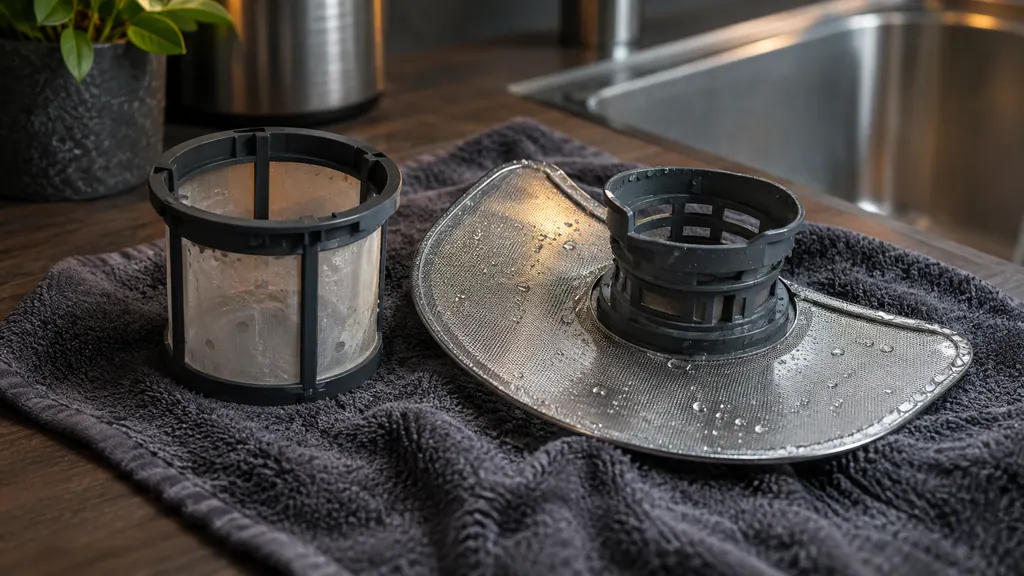
Lift out the coarse filter and empty it. Turn the fine filter's ring counterclockwise and lift it out to clean it. Refit it with the ring turned clockwise to its stop, then press the coarse filter in until it clicks. Never run the dishwasher without them. 12
The two filters do different jobs. The coarse filter catches bigger scraps that can't get past the drain pump. The fine filter sits underneath, and the dishwasher rinses it during each wash, but it still needs a proper clean when debris builds up. Doing only the coarse one leaves half the check undone. 12
- 1
- 2
- 3
- 4
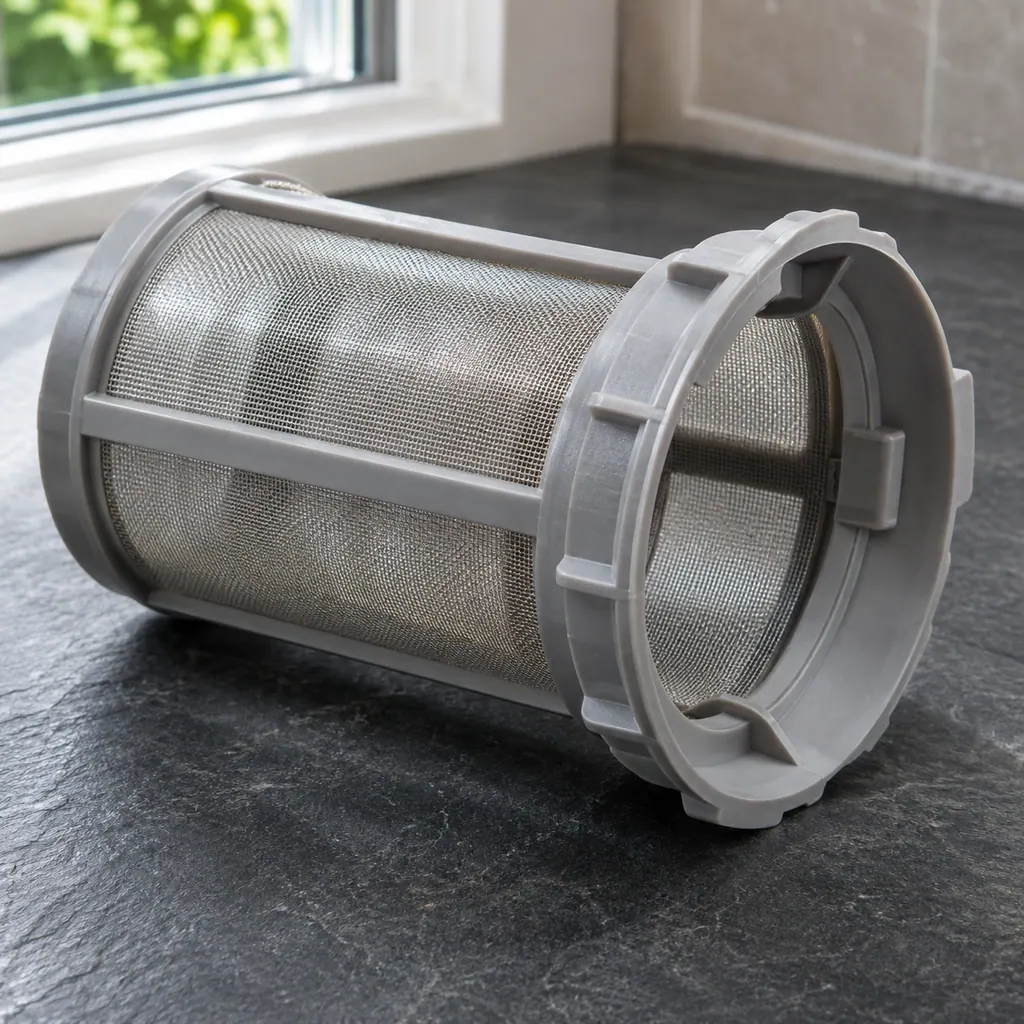
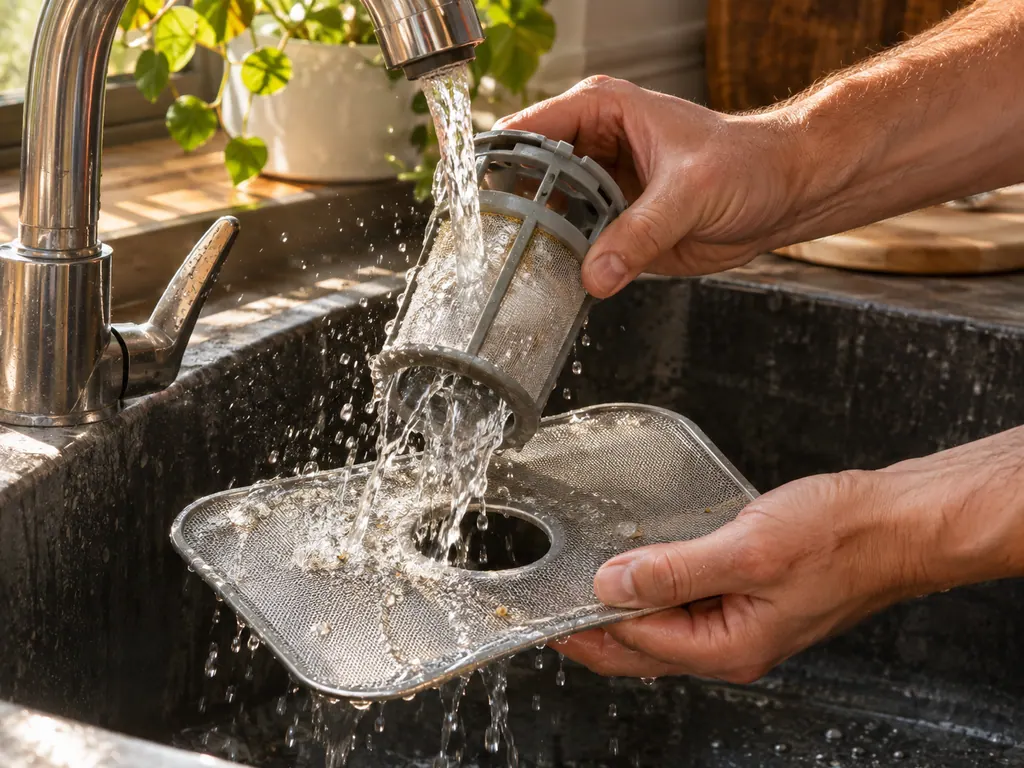
Don't run the test with a filter still on the counter. Putting the filters back properly is part of the fix, since both manuals list badly fitted filters as a reason water stays behind. If the ring won't reach its stop or the parts don't match your manual's picture, stop rather than force them. 12
For more on routine filter care, see our guide to cleaning the dishwasher filters.
Is the drain hose installed correctly?#
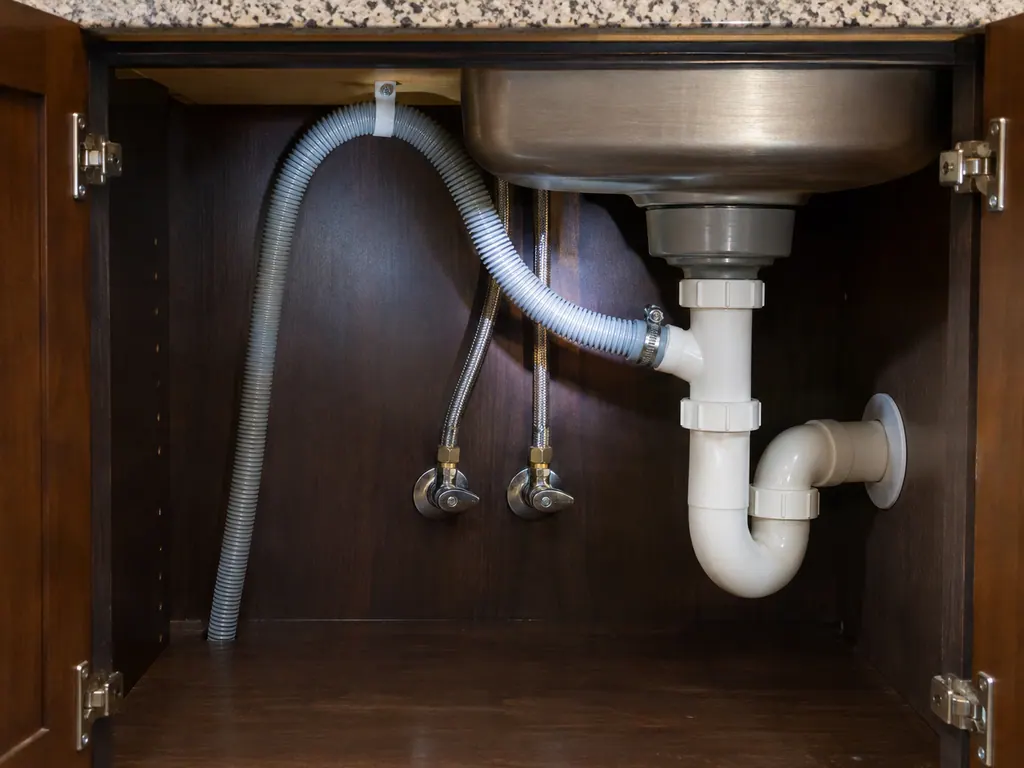
It should run without kinks or sharp bends, and no part of it may rise higher than 37 3/8 inches above the dishwasher's base. Compare your setup with your own installation pages, because the two manuals ask for different connection sizes. 12
The DBI786 allows the hose to be extended by up to 87 inches, as long as the total stays under 177 inches, and any joints need an inside diameter of at least 9/16 inch. The DBI675 sets the same height and length limits, asks for at least 1/2 inch, and says a new hose without joints is the better choice. 12
Look only where the hose is already in view, usually in the sink cabinet. A kink behind a row of cleaning bottles is easy to spot. If checking further means sliding the dishwasher out, loosening a hose clamp or changing the sink connection, leave it to a professional: the DBI786 says water, drain and electrical connections should be made by a qualified professional. 1
Air gaps and high loops#
The DBI786 manual says the dishwasher comes with a built-in air gap and high-loop drain line, so no external air gap is needed unless your local building code requires one. That statement covers this model. If you're unsure what your code asks for, or what your model has, ask the installer. 1
The sink end of the hose#
Both manuals list a blocked drain hose as a cause of standing water. Their check is to loosen the hose where it ends, look for debris inside it, and ask whether the cone-shaped part of the drain boot was cut to the full size of the fitting it attaches to. 12
If the dishwasher drains through a garbage disposer, the manuals mention the disposer only for odors and send you to its maker's cleaning instructions. They give no steps for the disposer itself, so we don't either. Tell the technician about any recent work at the sink, such as a new disposer. 12
What do F11 and F68 mean?#
Both are drain messages on the DBI786. F11 says water didn't leave the tub, and F68 points to the BLDC drain pump. The manual gives them one shared action: clean the filters, run a program, check the pump, then check the hose. 1
The DBI786 connects the two directly. Its pump section explains that when water is still in the dishwasher after a program, something may be blocking the drain pump, and that this produces one message or the other. So clearing debris is a fair first step for both, and neither code alone means a new pump. 1
The older DBI675 lists F11 but not F68. For F11 it sends you to the same standing-water checklist this guide follows. The F11 page and F68 page give the short version, and our F11 and F68 guide compares the pair. 2
F52 is a separate water level message. Its first steps overlap, since you clean both filters and, on the DBI786, run a program. But it isn't F11 under another number. Photograph whatever code you see, because pressing any button clears it. 12
Should I inspect the drain pump myself?#
Yes, through the pump stop your manual shows, and only with the dishwasher off and unplugged. ASKO lists this as an owner step. Testing the pump's motor or wiring is a job for a technician. 12
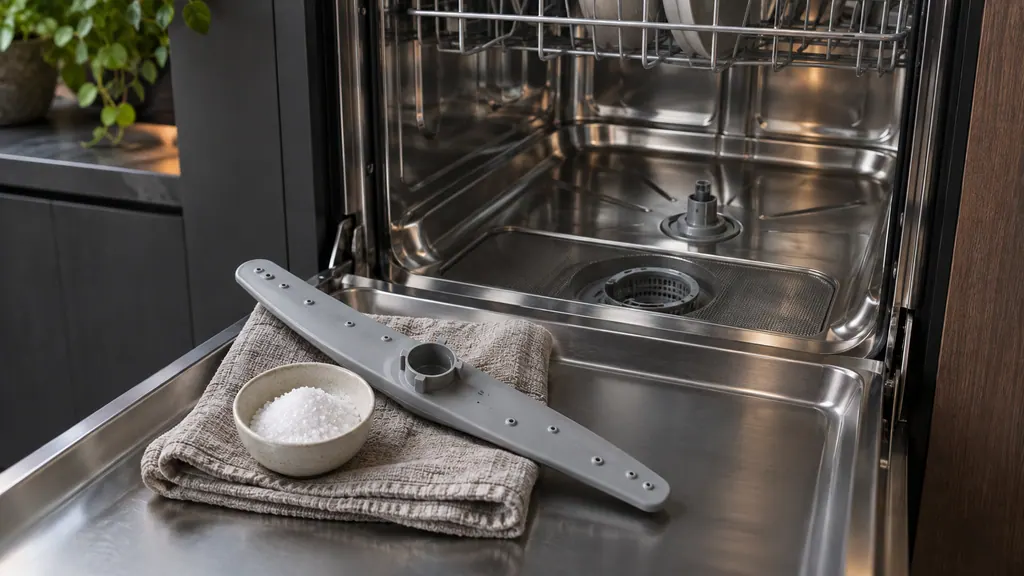
Here is the DBI786 sequence in brief. With both filters out, scoop the water from the tub. Pull out the yellow drain pump stop on the right of the bottom drain, with pliers if it's stiff. Turn the pump wheel behind it by hand, lift out anything sharp such as glass, then refit the stop and the filters and plug in. 1
The DBI675 works the same way with a colored stop. Its manual adds one warning sign: if the dishwasher still won't start after you clean the pump and you hear a whirring sound, that means the overflow protection has kicked in: turn off the water, pull the plug and call Customer Care. 2
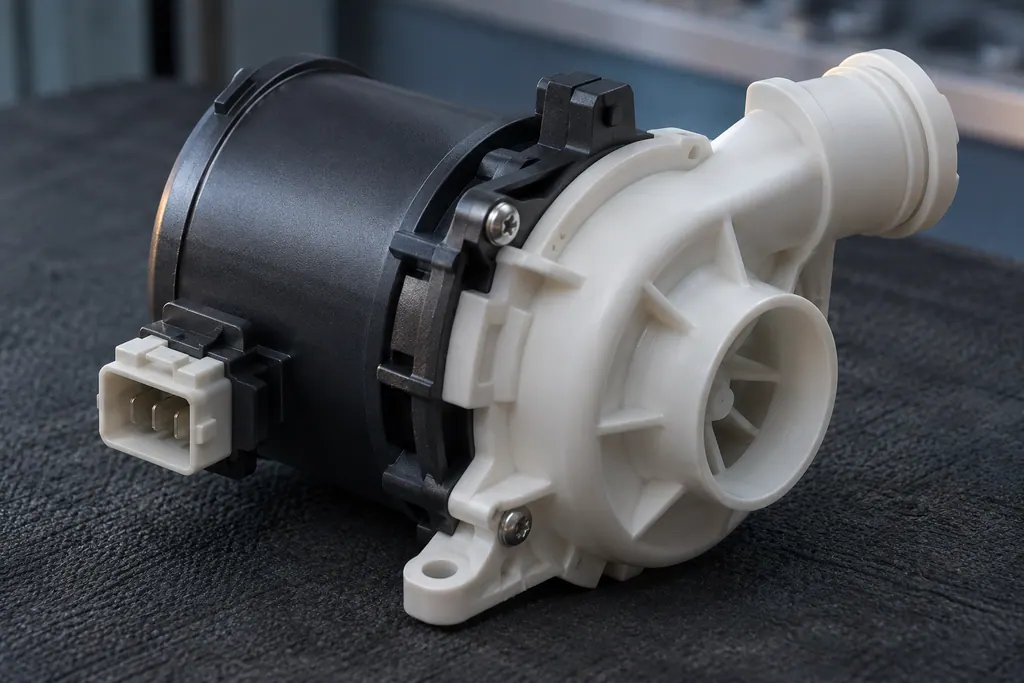
The stop is easy to forget. Both manuals list a missing pump stop as a cause of standing water and remind you to put it back. If it's cracked, won't seat or has gone missing, stop there and book a visit. Finding a shard of glass is good news, but it doesn't prove the rest of the drain is clear. 12
When should I stop and call a technician?#
Call when water still sits above clean, correctly fitted filters, when F11 or F68 comes back, or when the next step means pulling the dishwasher out or opening panels. F40 and F54 mean close the water supply valve and call right away. 12
What a technician checks#
The manuals name the places to look: how the filters sit, debris at the pump, the pump stop, the route of the hose and its far end. A technician checks each of these on your actual installation and can test the parts behind the panels. A matching code or a photo of a pump can't settle that from a distance. 12
ASKO's safety pages say to cut the power before any servicing and to leave repairs to a qualified technician. Decisions about replacing a part come after that diagnostic, not before. 12
The technician agrees the price with you before any work starts. The exact cost is confirmed after the on-site diagnostic. Repairs covered by the manufacturer's warranty go through ASKO itself. We give a warranty on our workmanship. When you're ready, book a visit, or contact the team if you have a question first.
Sources#
- DBI786IXXLSSOF.U dishwasher user manualASKO / Gorenje Group · Document 879712en · pp. 5–6, 25, 35–36, 38–39, 45, 49–50, 53–54
- DBI675 dishwasher operating instructionsASKO / Gorenje Group · Document 843099en · pp. 4, 20, 25–26, 28–29, 33, 38–39