On this page
- Run Self-cleaning with no dishes and two tablespoons of citric acid in the manual detergent compartment. 12
- Never put anti-freeze, Draino, CLR or other chemical cleaners in the tub. 12
- Blocked spray-arm holes come clear with a needle; refit every arm firmly afterward. 1
- If you mostly use low-temperature programs, a hot program or Self-cleaning once or twice a month helps against odor and grease. 1
- On the DBI786, F41 calls for a Self-cleaning run with citric acid before anything else. 1
How do I clean the inside of my ASKO dishwasher?#
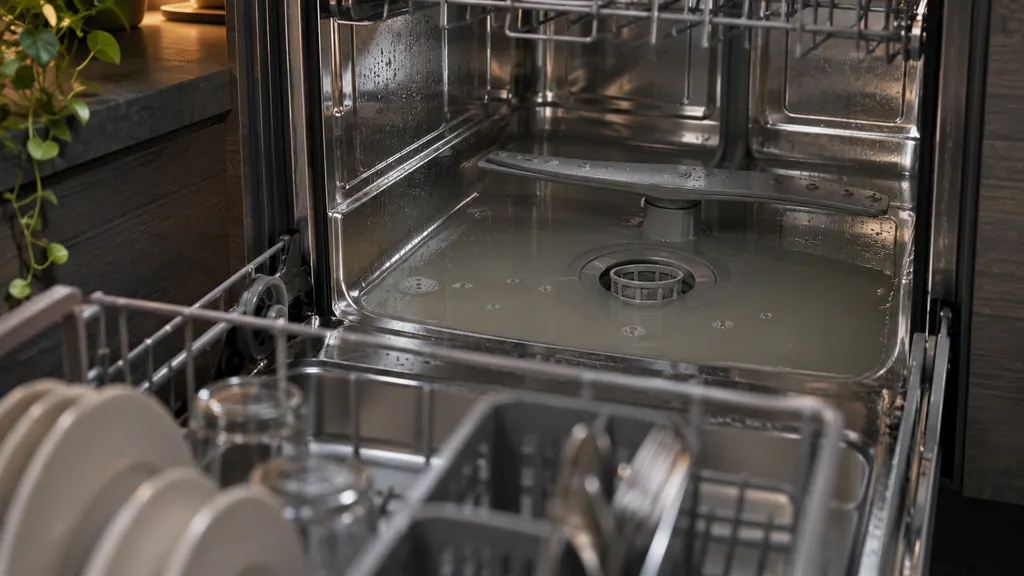
Mostly, you don't have to. The stainless-steel tub stays clean through regular use. Your job is the parts water can't reach on its own: the door edges and seal, the spray-arm holes, the filters and, in hard-water homes, limescale. 12
That makes cleaning a short list rather than a weekend project. Each item below takes a few minutes, and none of them needs special tools beyond a cloth, a brush and a needle.
This guide follows two ASKO manuals: the current DBI786 and the older DBI675. The steps are nearly the same on both. Where they differ, the model is named. If your dishwasher is a different model, its own care chapter has the final word on part shapes and program names.
The newer DBI786 even tells you when to act. Its display can show Clean the filters or Run Self-cleaning, and both messages point you to the care chapter in the manual. 1
What to clean, and how#
Here is the whole routine in one place. The table lists what ASKO says to use on each part and what to check before you call it done. 12
| Part | How to clean it | Before you finish |
|---|---|---|
| Door sides and door seal | Slightly damp cloth, done regularly | Brush the seal at the lower front edge too 12 |
| Control panel (DBI786) | Dry or slightly damp cloth, a little dish soap if needed | No strong or abrasive cleaners 1 |
| Display and buttons (DBI675) | Dry or slightly damp cloth only | Switch off at the main power switch first 2 |
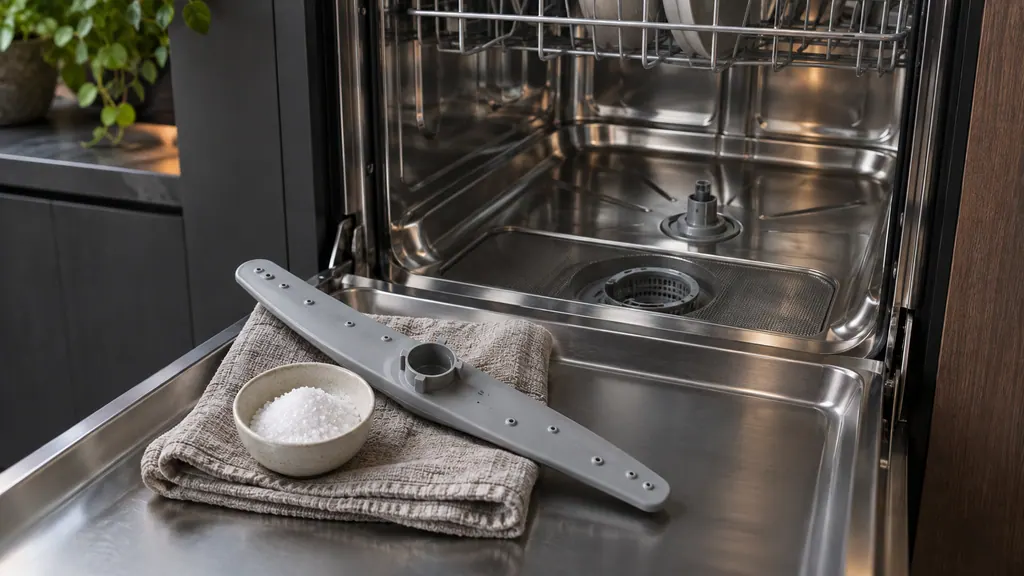
| Spray arms and spray pipes | Needle or similar to clear holes and bearings | Every arm back firmly in place 12 |
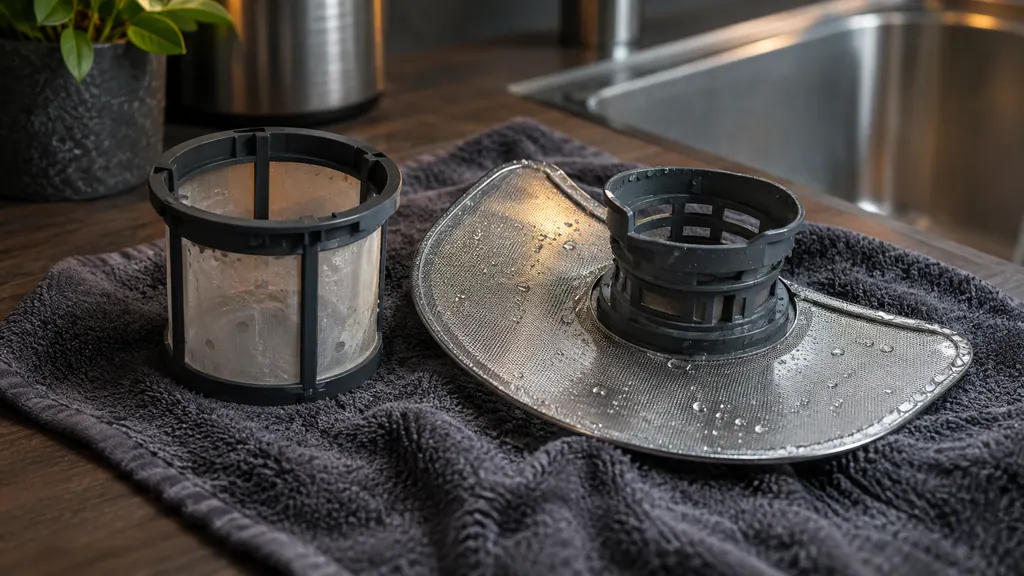
| Coarse and fine filters | Empty and rinse when needed | Both locked in, pump stop in place 12 |
| Auto dose compartment (DBI786) | Lift out, clear the dispensing hole, rinse in hot water | Compartment refitted before use 1 |
| Stainless-steel tub | Kept clean by normal use | Descale only if limescale builds up 12 |
The door and seal#
Open the door and wipe both sides of it with a slightly damp cloth. Do the same along the door seal. The strip of seal at the lower front edge of the tub collects grime, so go over it with a cleaning brush. 12
The control panel#
On the DBI786, a dry or slightly damp cloth is enough, with a little dish soap for sticky marks. Strong or abrasive cleaners can damage the surface. The DBI675 is stricter: no cleaning products at all on its display and buttons, and switch it off at the main power switch first so you don't start anything by accident. 12
The automatic dosing compartment#
If your DBI786 uses Auto dose, lift the gel compartment out now and then. Check that the dispensing hole isn't blocked and rinse the compartment in hot water. Put it back before the next wash: ASKO says the dishwasher must not run without it. 1
The filters#
The filters catch food so it never reaches the drain pump, and they need emptying when they fill up. Our filter cleaning guide walks through both of them. For this routine, just remember to lock the fine filter and the coarse filter back in before running Self-cleaning. ASKO says never to run the machine without them. 1
How do I clean the spray arms?#
Pull out the basket that holds the arm, release the arm, and clear blocked holes and bearings with a needle or something similar. Look at the underside, since that's where the holes are. Then put each arm firmly back in place. 12
Clogged spray arms are one of the reasons ASKO lists for dishes coming out dirty. If you're dealing with that, our page on a dishwasher not cleaning covers the other causes too. 1
Each arm comes out a little differently. Don't force one the way you released another.
- 1
- 2
- 3
- 4
Before you close the door, spin each arm by hand. ASKO's troubleshooting table suggests this when you hear rattling, and it's a quick way to catch an arm that isn't seated or a tall pan in the way. 1
How do I descale an ASKO dishwasher?#
Empty the dishwasher, put two tablespoons of citric acid in the manual detergent compartment and run the Self-cleaning program. ASKO also says special dishwasher cleaners from stores will work. 12
Limescale is a hard-water problem. It shows up as a chalky white layer inside the tub and on the parts. If you see it, your softener setting is worth a look as well. Our water softener guide explains how to match it to your water. 1
Running Self-cleaning#
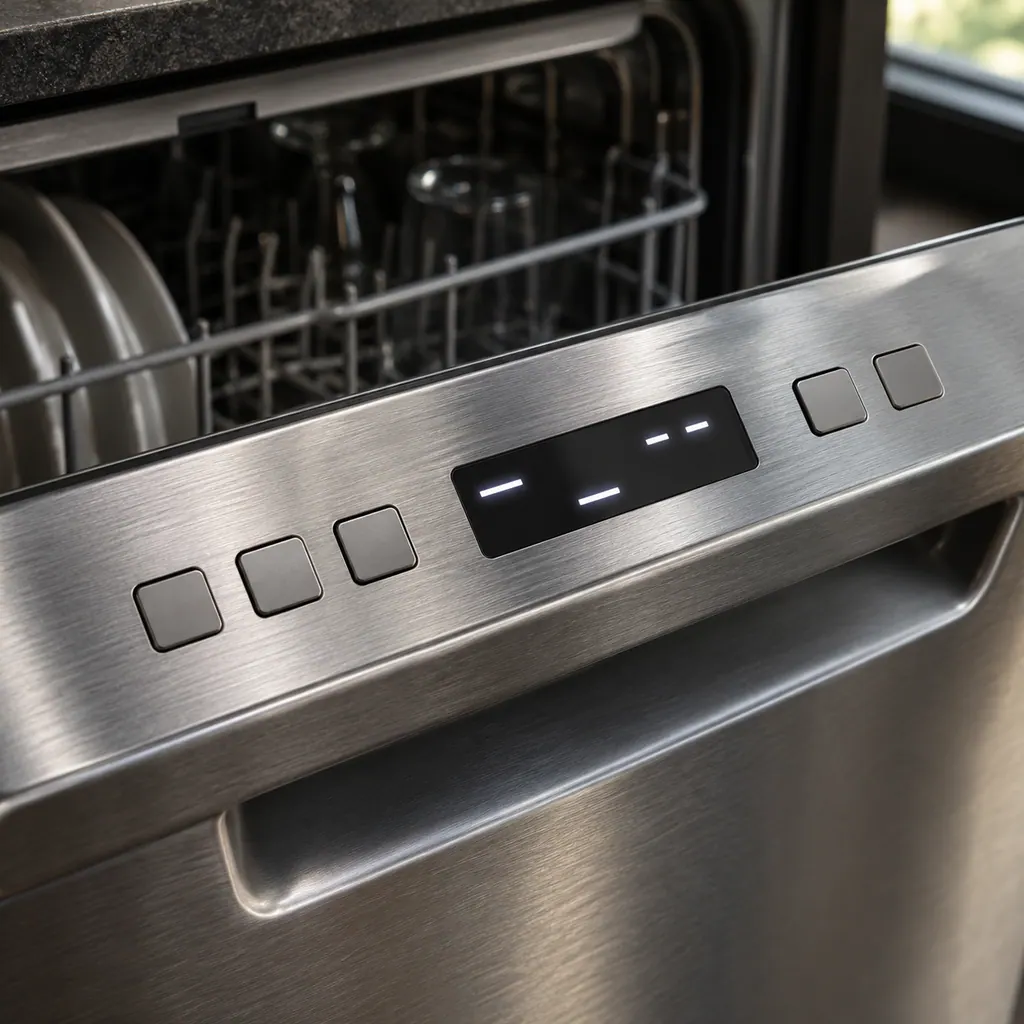
The Self-cleaning program is designed to sanitize the tub, the spray arms and the spray pipes. You can run it with ordinary dishwasher detergent for a routine clean, or with citric acid when you're removing limescale. Either way, the machine must be empty. 12
On the DBI786, put the citric acid in the manual detergent compartment. Auto dose does not dispense gel during Self-cleaning, so the gel tank won't help here. The DBI675 manual simply says to put it in the detergent compartment. 12
If Self-cleaning doesn't appear in the DBI786 program list, it may have been hidden. Open Settings, go to Select programs and switch it back on. 1
When to run it#
ASKO doesn't set a calendar for descaling. Run the citric-acid clean when limescale appears. For odor and grease, the DBI786 manual is more specific: if you mostly use low-temperature programs, run a hot program or Self-cleaning once or twice a month. 1
Why does my ASKO dishwasher smell?#
ASKO names three causes: dirt around the seals and in the corners, long stretches of low-temperature programs, and a connected garbage disposer. Scrub the seals, run a hot program or Self-cleaning, and clean the disposer as its maker directs. 1
For the seals and corners, ASKO suggests a dish brush and a low-foaming cleaner. Get into the bottom corners of the tub and along the lower edge of the door. 1
Grease is a related problem. If you see greasy deposits in the tub, choose a program with Heat boost, which washes at a higher temperature. Running Self-cleaning once or twice a month also helps. 1
The DBI786 also has an Anti-odor program for dirty dishes left waiting in the machine. On both models, Rinse and hold rinses the dishes while you wait for a full load, which keeps smells down too. 12
What does F41 have to do with descaling?#
On the DBI786, F41 is a heater message, and ASKO's first step is to run Self-cleaning with citric acid. If the code comes back, turn off the water supply valve, unplug the dishwasher and arrange service. 1
The descaling run is the one step ASKO gives you for this code. The F41 code page explains the message in more detail. If it keeps returning after a clean run, the next checks involve the heating element and its wiring, and they belong with a technician. 1
When should I call a technician?#
Call when a care step doesn't fix the problem: F41 returns after a citric-acid run, a spray arm won't lock back in place, or limescale and odor come back soon after a full clean. Those point to a part, not a dirty machine. 1
A technician can test the parts you can't reach from inside the tub. You can book a visit or read about our dishwasher service.
The technician agrees the price with you before any work starts. The exact cost is confirmed after the on-site diagnostic. Repairs covered by the manufacturer's warranty go through ASKO itself. We give a warranty on our workmanship.
Sources#
- DBI786IXXLSSOF.U dishwasher user manualASKO / Gorenje Group · Document 879712en · pp. 3, 5, 10, 22, 31, 34–39, 42, 45
- DBI675 dishwasher operating instructionsASKO / Gorenje Group · Document 843099en · pp. 9, 18, 25–28