On this page
- Close the water supply valve first; with F54, unplugging before the valve is closed can let water out. 1
- F54 and F40 both mean keep the water off and contact service. 12
- Use only dishwasher detergent: hand dish soap foams and stops the dishwasher working properly. 12
- Hoses, connections and leveling are installation work for a qualified professional. 12
What should I do first if my ASKO dishwasher is leaking?#
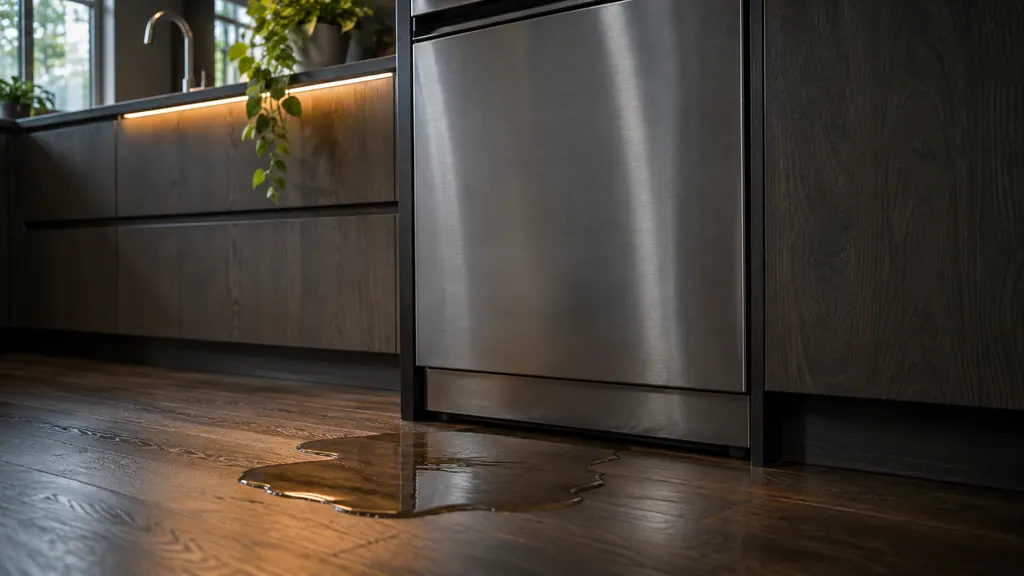
Turn off the dishwasher's water supply valve, then look at the display. If it shows F54, don't unplug the dishwasher until the valve is closed. Once the water is off, switch off, unplug and dry the floor. 1
The water supply valve is the shutoff on the pipe that feeds the dishwasher, often under the sink. Both ASKO manuals say it must be easy to reach so you can shut the water off. If you have never found yours, now is the time. 12
Once things are safe, take a photo of where the water is and write down the display message. You will use both below, and a technician will want them too.
What do F54, F40 and F10 mean?#
All three are water messages on ASKO dishwashers. F54 means the overflow guard has tripped. F40 reports inlet valve leakage. F10 is a first overfilling message. F54 and F40 both mean keep the water off and call for service. 12
F54, "Overfilling water 2". ASKO's overflow guard watches the water level. If it rises above normal, the guard pumps the water out and shuts off the supply. Turn off the valve, then contact service. See the F54 page. 12
F40, "Inlet valve leakage". This message concerns the valve inside the dishwasher that lets water in. The action in both manuals is the same as F54: turn off the water supply valve and call. There's no owner check to try first. See the F40 page. 12
F10, "Overfilling water 1". Here the DBI786 manual does give you a first step: clear the drain pump, using the same procedure as for standing water. If the message returns, contact service. See the F10 page. 12
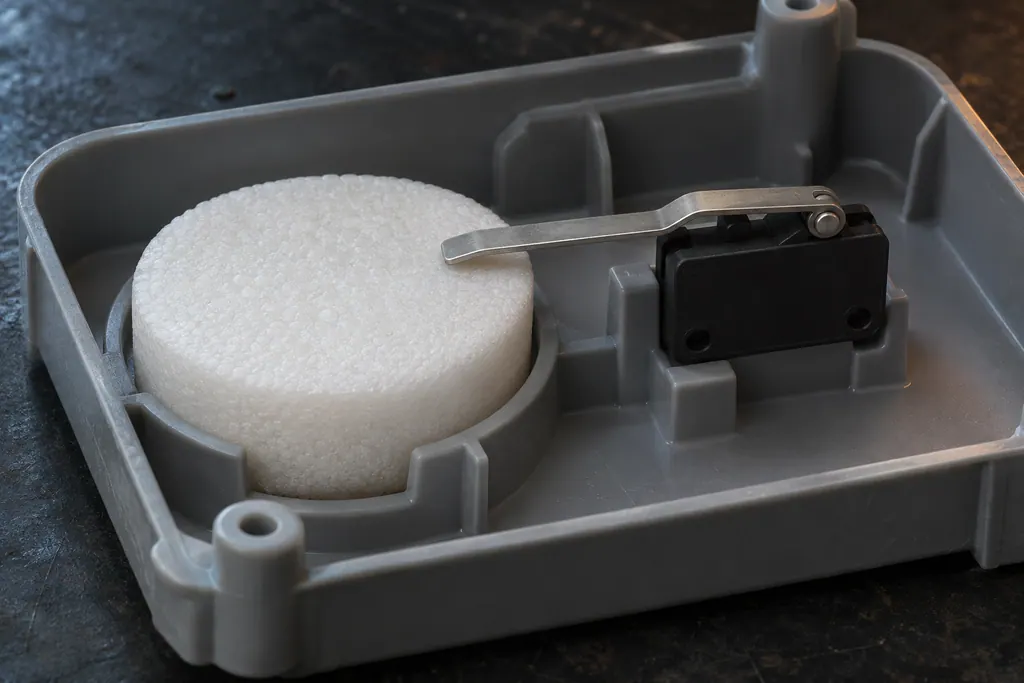
On the older DBI675, the overflow protection can also announce itself by sound. If the drain pump keeps whirring after you switch the dishwasher off, the manual says the overflow protection has been triggered. Shut off the water, unplug the dishwasher and call service. 2 Don't switch it back on to see whether the noise stops.
Where is the water coming from?#
Look at where it first appears. Water at the front edge can come from the door seal, foam or unloading drips. Anything underneath or behind is near the hoses and connections, which are a professional's job. 12
| Where you see water | Possible reason | What you can do |
|---|---|---|
| Drips on the floor after unloading | Water falling from the upper basket | Unload the lower basket first 1 |
| Along the bottom edge of the door | Food or dirt on the door seal | Clean the seal as described below 12 |
| Foam at the door, or a sudsy tub | Hand dish soap used instead of dishwasher detergent | Use dishwasher detergent only 12 |
| Under the dishwasher with F54 on the display | The overflow guard has tripped | Valve off, then call service 12 |
| Behind the dishwasher at the connections | Inlet or drain hose connection | Valve off, then call a professional 12 |
Small things count. ASKO suggests unloading the lower basket first, so drops from cups in the upper basket don't land on the dishes below. A few drops on the open door after unloading are not a leak. 1
Can I check the door seal myself?#
Yes. Open the door and wipe the sides of the door and the seal with a slightly damp cloth. Clean the part of the seal along the lower front edge with a brush. Both manuals recommend doing this regularly. 12
Food scraps and grease build up on the lower seal, where you can't see them easily. Look along the whole length while you clean. Also check that the door closes freely, with nothing in the baskets pressing against it. 12
Sharp items can also damage the seal. The DBI786 safety instructions ask you to place knives and other sharp items so they're not likely to damage the door seal. If you see a cut or a torn section, don't keep running washes; book a visit. 1
Is the detergent foaming?#
Use only dishwasher detergent. Both manuals warn that hand dish soap makes foam that stops the dishwasher working properly. If someone used it by mistake, tell the technician.
Both manuals also list heavy foaming as a reason to lower the rinse aid setting, and say rinse aid can be diluted 50:50 with water if your water is very soft. 12
While you're there, wipe up any spills. After topping up rinse aid, the manual asks you to wipe away spilled rinse aid around the compartment, and to close the lid firmly. Also wipe off excess salt after filling the salt compartment. 1
Could the installation be the cause?#
It can. Both manuals ask for a drip tray under the dishwasher, the supplied inlet hose only, a clamped drain hose and watertight connections. Water, drain and electrical connections are work for a qualified professional. 12
Here's what the installation chapters require, so you know what to ask about:
- A test run with Rinse and hold before the dishwasher is fixed in place, checking that it fills, drains and that no connection leaks. 12
- Only the inlet hose supplied with the dishwasher. Old or spare hoses must not be reused. 12
- A drain hose attached with a hose clamp, with no kinks. 12
- A check that all connections are watertight once the water has been turned on and the pressure has settled. 12
- Feet adjusted so the front feet still touch the floor after the dishwasher is fastened. 1
If your dishwasher is new, a little water inside when it arrives isn't a sign of a leak. The DBI786 instructions explain that every dishwasher is tested before delivery and some water may remain. 1
When should I call a technician?#
Call for any active leak, for F54 or F40, or if water keeps appearing after the seal and detergent checks. Keep the water supply valve closed until the technician arrives, and don't run test washes. 12
Hose connections, the inlet valve and the overflow system all sit behind panels or under the dishwasher. The DBI786 manual says power must be disconnected before servicing and that repairs should be done by a qualified technician. Don't pull a built-in dishwasher out yourself. 1
To lower the risk while you're away, both manuals recommend closing the water supply valve before a long trip. 12
A leak is worth acting on quickly, and the terms are simple. The technician agrees the price with you before any work starts. The exact cost is confirmed after the on-site diagnostic. Repairs covered by the manufacturer's warranty go through ASKO itself. We give a warranty on our workmanship. With the water off, book a visit or read about our dishwasher service while you wait.
Sources#
- DBI786IXXLSSOF.U dishwasher user manualASKO / Gorenje Group · Document 879712en · pp. 4–6, 9–10, 20, 25–26, 31, 37, 39, 49–50, 52–54, 56
- DBI675 dishwasher operating instructionsASKO / Gorenje Group · Document 843099en · pp. 5, 16, 20, 24, 27–30, 35, 39