On this page
- Scrape plates instead of rinsing them; it saves energy and water. 12
- Cutlery goes handles down, except knives, spread out so spoons don't stack. 12
- Keep silver away from stainless steel, which can discolor it. 12
- The middle basket or its inserts lift out to make room for tall items below. 12
- A full load with tilted cups and enough rinse aid dries best. 12
How should I load my ASKO dishwasher?#
Put glasses, cups and bowls in the upper basket and plates, pots, serving dishes and the cutlery basket in the lower one. Face every dirty surface in and down, don't stack dishes in or on each other, and tilt anything hollow so water runs off. 12
That's ASKO's whole approach in a few lines. The manuals explain why it matters: careful loading gives the spray a clear path to every surface, which means better washing and drying with the least energy and water. 12
Start before the dishes even reach the racks. Scrape large scraps into the trash, but skip rinsing under the tap. ASKO says rinsing under running water first only adds to the energy and water you use. 12
This guide follows the DBI786 user manual and the DBI675 operating instructions. The DBI786 has four levels: a top cutlery tray, an upper basket, a middle basket, and a lower basket with a cutlery basket. The DBI675 has upper, middle and lower baskets plus the cutlery basket. Both manuals say basket shapes can vary by configuration, so check yours against your own diagrams. 12
What goes in each basket?#
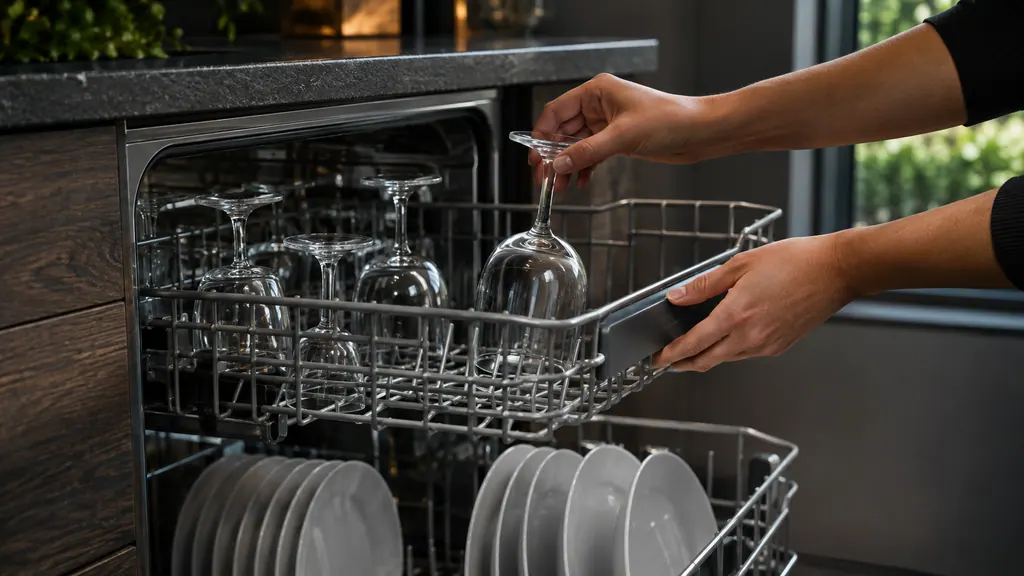
Glasses, cups, bowls, side plates and saucers go up top. Plates, serving dishes, pots and the cutlery basket go below. The middle basket takes low items, ladles and whisks, and on the DBI786 the top tray holds cutlery and small utensils. 12
| Basket | What goes in it | Watch out for |
|---|---|---|
| Top cutlery tray (DBI786) | Cutlery, ladles, whisks and other utensils | Tall items can block the top spray arm 1 |
| Upper basket | Glasses, cups, bowls, side plates and saucers; wine glasses on the wine glass shelf; knives in the knife stand on the right | Soiled sides face down 12 |
| Middle basket | Low items on the spray-pipe insert; ladles, whisks and serving cutlery in the utensil insert | Lift it out when you need height below 12 |
| Lower basket | Plates, side plates, serving dishes, pots, and cutlery in the cutlery basket | Large bowls shouldn't cover other dishes 12 |
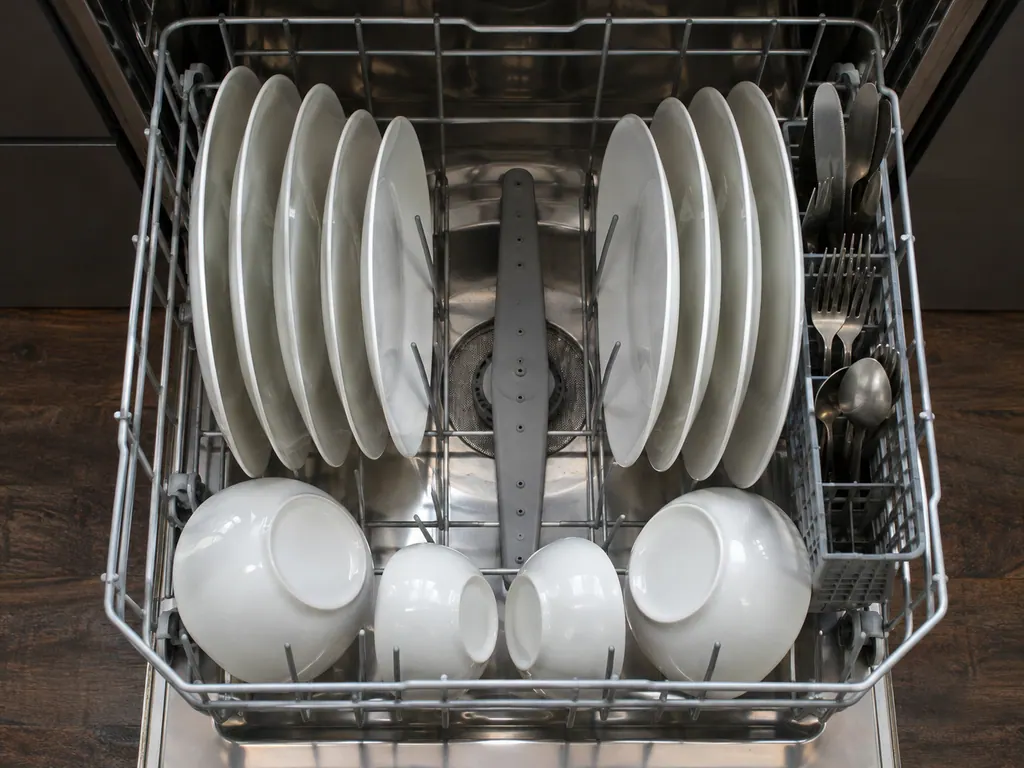
Small items can fall through the wire. ASKO says to put them in the top cutlery tray on the DBI786, or the cutlery basket on the DBI675, so they stay put. 12
Cutlery and knives#
Stand forks and spoons in the cutlery basket with their handles down, and spread them out so the spoons don't stack together. Knives are the exception. The fold-down section in the middle of the basket holds small pieces, such as the shafts of electric whisk attachments. 12
Sharp knives need a bit more thought. ASKO's safety pages say to load them handles up to reduce the risk of cuts, and to place sharp items where they won't damage the door seal. The DBI675 says pointed items go points down in the cutlery basket or flat in other baskets. The knife stand on the right of the upper basket is the simplest home for them. 12
Where the cutlery basket sits matters too. Both manuals say it works best in the middle at the front of the lower basket, where a spray zone is aimed at it. The DBI675 calls that nozzle Power Zone Cutlery. 12
How do I fit large plates, pots and tall items?#
Raise the upper basket for very large plates, fold down or move the plate supports in the lower basket, or lift out the middle basket's inserts or the whole middle basket. The DBI786 lower basket adjusts for plates from 9 3/4 to 11 3/4 inches across. 1
Moving the upper basket#
To raise it, pull it out, grip both sides and lift. To lower it again on the DBI786, pull it out and push in the two locking handles while holding the sides. The DBI675 works the other way: you pull its locking handles out. The typical-load diagrams in both manuals assume the upper basket is in its lowest position. 12
The top cutlery tray on the DBI786#
The tray can be raised for more room underneath: pull it out, then pull the two locking handles forward on each side. Lowering it only works when the upper basket is in its lowest position. Pull the tray out and slide the handles down and back. 1
Pots, pans and stoneware#
The plate supports in the lower basket fold down to make loading pots and bowls easier. At the back right, they push together to make room for stoneware or a large pan; on the DBI675, half of the tines there fold down instead. On the DBI675, ASKO recommends that back-right spot for pots and pans, where two rear nozzles called WideSpray aim at them. 12
Both models have a vase and bottle holder. The DBI786 adds two adaptable power zones, which can be opened for pots and pans or for vases and bottles. They're off by default, and off is also the setting that gives the lower spray arm more pressure. 12
Which dishes shouldn't go in an ASKO dishwasher?#
Keep out hand-painted glass, antiques, very fragile pieces and porcelain decorated on top of the glaze (it feels rough). Be careful with crystal, silver, copper, tin, aluminum, wood, plastic and handmade items, and look for a "Dishwasher safe" mark. 12
The reason is simple: some materials can't take the heat, and others are damaged by dishwasher detergent. When you're not sure, the maker's marking settles it. 12
| Item | What ASKO says |
|---|---|
| Crystal and glass | Use the Crystal program and a small amount of detergent, and keep pieces from touching 12 |
| Silver | Keep it away from stainless steel, which can discolor it 12 |
| Mixed metals | Separate silver, stainless steel and aluminum to avoid marks and tarnish 1 |
| Aluminum | It can lose its shine, though good-quality aluminum pans can still go in 12 |
| Cutlery with glued handles | Some glues aren't dishwasher safe, and the handles can loosen 12 |
| Plastic | Only if it's marked dishwasher safe; otherwise check the maker's advice 12 |
Food can mark metal too. ASKO lists mustard, mayonnaise, lemon, vinegar, salt and dressings as things that can spot stainless steel if they sit too long. If you won't run the dishwasher right away, rinse those off or use the Rinse and hold program. 12
Our programs guide explains the Crystal and Plastic programs and when to use the half-load options.
How do I load for better drying?#
Run a full load, tilt cups and other hollow items so water runs off them, especially plastic, and keep the rinse aid topped up. On the DBI786, turn on Automatic door opening. On the DBI675, use Extra Dry or open the door a little at the end. 12
Unloading matters as much as loading. Let the dishes cool inside first, because hot porcelain is more fragile. Then empty the lower basket before the upper one, so drips from the cups and glasses up top don't land on the dry plates below. 12
If you hear rattling during a wash, a dish may have shifted or a spray arm may not be turning. ASKO's fix is to check that the dishes sit securely and spin the spray arms by hand. It's worth doing that spin before you close the door, too. 1

Forgot a plate? You can open the door mid-wash; the dishwasher stops by itself. Add the plate, press Start/Stop and close the door within four seconds. On the DBI786, skip it if the status light is red, since dishes added at that stage may not come out as clean. 12
When is a loading problem really a repair problem?#
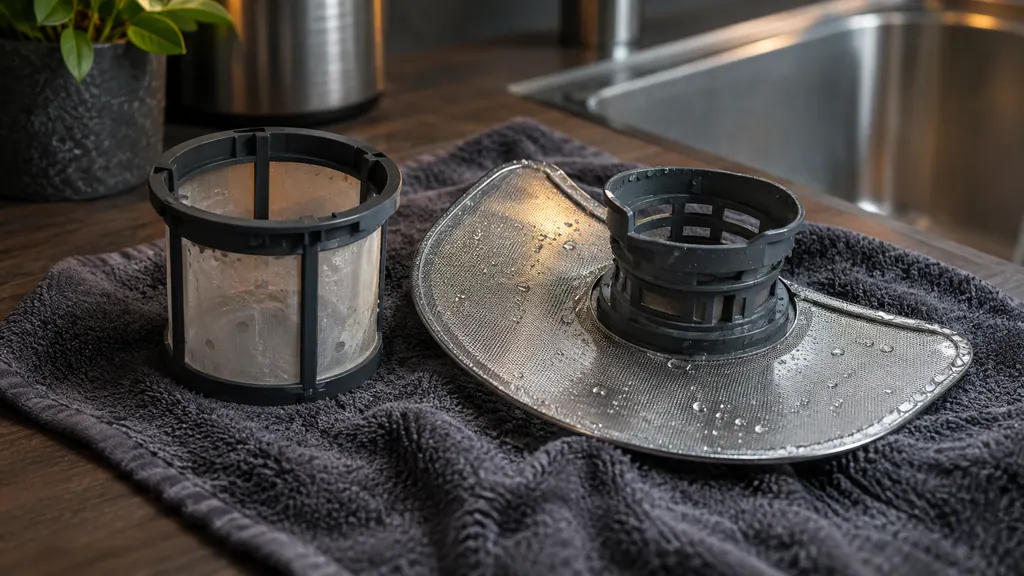
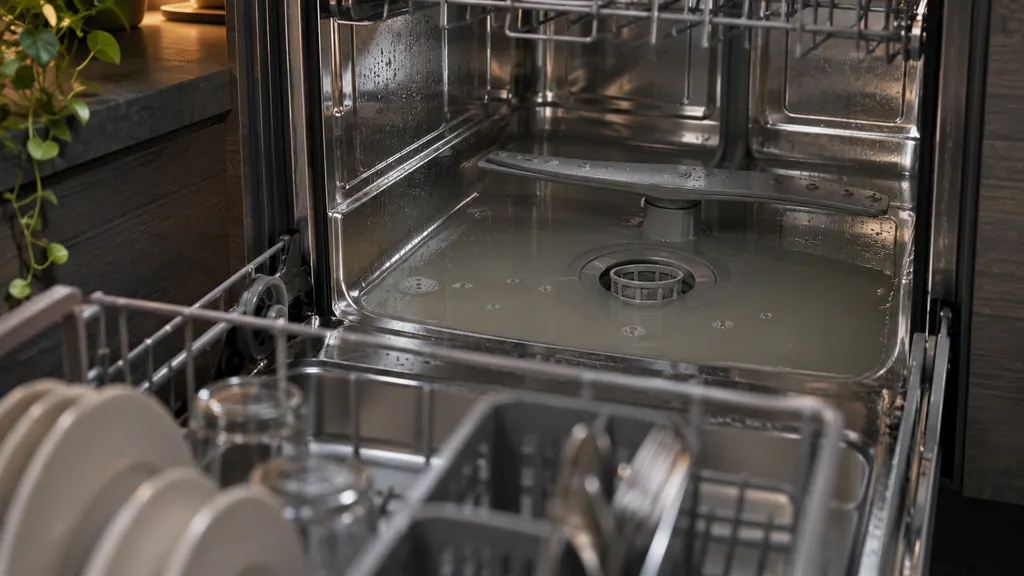
When dishes still come out dirty or wet after you've followed the loading rules, cleaned the filters and checked the rinse aid, or when the door won't close even though the baskets sit correctly. Then something other than loading is at work. 12
If the door won't shut, look at the baskets first. ASKO's tables say each one should sit horizontally, the water connector on the middle basket should line up with its spray pipe, and no dish should stop a basket from sliding all the way in. 12
If dishes come out dirty, the DBI786 table lists poor loading alongside blocked spray arms, clogged or loose filters and the wrong detergent dose. Our guide to dishes not getting clean works through those in order, and the detergent and rinse aid guide covers dosing. If F52 appears, start with the filters. 1
The technician agrees the price with you before any work starts. The exact cost is confirmed after the on-site diagnostic. Repairs covered by the manufacturer's warranty go through ASKO itself. We give a warranty on our workmanship. If loading isn't the answer, book a visit.
Sources#
- DBI786IXXLSSOF.U dishwasher user manualASKO / Gorenje Group · Document 879712en · pp. 4, 11–19, 22–23, 25–26, 39–40, 42–44, 46
- DBI675 dishwasher operating instructionsASKO / Gorenje Group · Document 843099en · pp. 4, 9–14, 20, 29, 31, 34