On this page
- Spray arms that can't turn, or have blocked holes, head ASKO's list of causes for dirty dishes. 12
- Loose filters or a missing drain pump stop can spoil the results even when they look clean. 12
- Far too much detergent is as bad as far too little, and detergent is perishable. 12
- A white coating points to hard water: set the water softener and keep the salt topped up. 1
Why is my ASKO dishwasher not cleaning dishes?#
ASKO's manuals point to a spray arm that can't turn or has blocked holes, dirty or loose filters, or a load that shields dishes from the water. Wrong detergent dosing or too gentle a program are the other causes ASKO lists. 12
The "dishes are not clean" rows in the DBI786 and DBI675 troubleshooting tables cover all of these. Nearly every one is something you can fix without tools. Work through the checks below in order, then run a normal load and compare. 12
First, look closely at what's wrong. Food stuck on the dishes points one way; spots, streaks or a white film point another. If it's mostly spots and film, you can jump to the section on rinse aid, salt and hard water.
Are the spray arms turning freely?#
Turn each spray arm by hand with the baskets loaded. If a plate, pan handle or tall utensil catches it, move the item. If an arm turns but cleaning is still poor, its holes or bearings may be blocked. 12
The DBI786 has four sets of spray parts: a top spray arm under the cutlery tray, an upper spray arm under the upper basket, spray pipes in the middle basket, and a lower spray arm. The DBI675 manual covers the upper and lower arms and the middle spray pipes. The holes are on the underside of each arm. 12
- 1
- 2
- 3
- 4
- 5
- 6
Are the filters clean and locked in?#
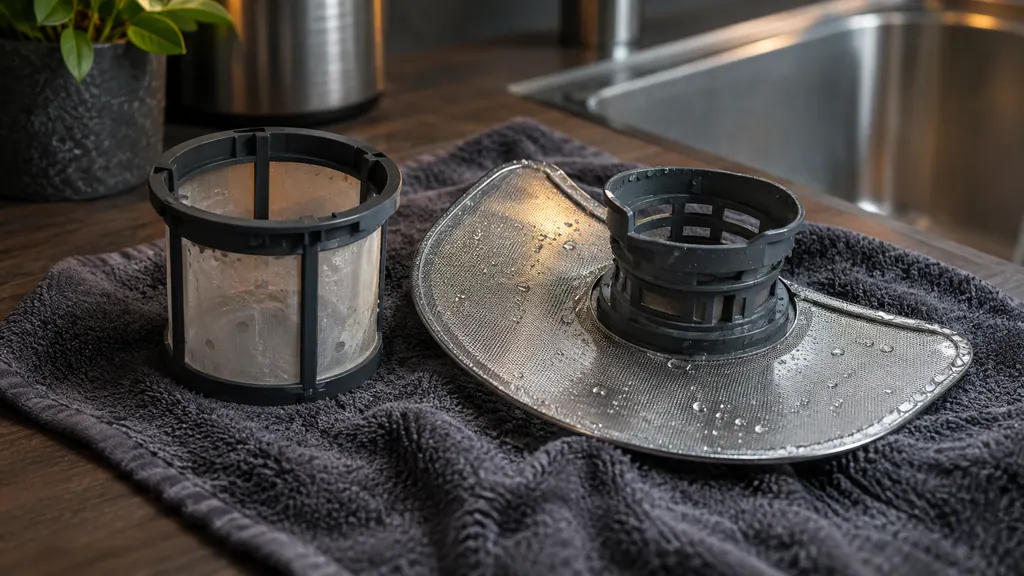
Clean both the coarse and fine filters, then make sure they're locked back in place. On the DBI786, a loose filter or a missing yellow drain pump stop can spoil the wash even when everything looks clean. 1
The coarse filter catches larger food scraps. Lift it out by its handle, empty it and press it back until it clicks. The fine filter sits under it: turn its locking ring counterclockwise, lift it straight up, clean it and turn the ring clockwise to its stop. Check that its edges seal. 1
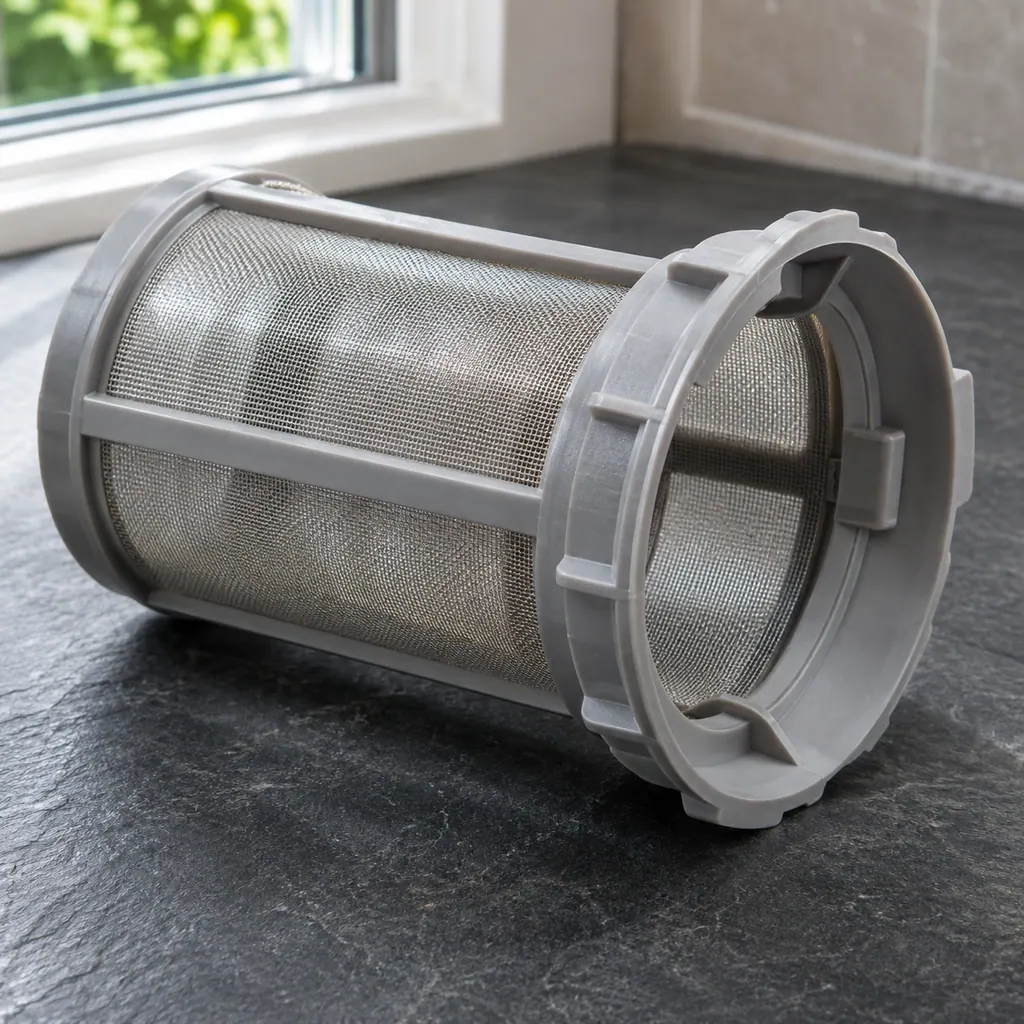
Then look at the right side of the bottom drain. The DBI786 has a yellow drain pump stop there, and the DBI675 a colored one. If it's missing, put it back; both tables list a missing stop as a reason dishes come out dirty. On the DBI675, also check that the filter handle is locked in its stop position. 12
For a step-by-step version with photos, see our guide to cleaning the dishwasher filters.
Is the load blocking the water?#
It can be. ASKO's rules are simple: dirty surfaces face in and down, nothing nested inside anything else, and cups tilted so water runs off. Large bowls mustn't cover other dishes, and tall glasses don't belong in the basket corners. 12
- The top cutlery tray. Keep tall objects out of it; they can block the top spray arm. 1
- The upper basket. Glasses, cups and bowls go here with soiled surfaces face down. 1
- The cutlery basket. Handles down, except knives. Spread the pieces out so spoons don't nest. On the DBI786, the basket cleans best at the middle front of the lower basket. 1
- Toppled glasses. Light items that tip over during the wash come out dirty. Load them securely. 12
- Adding dishes late. On the DBI786, a red status light means don't load more, because results may suffer. 1
The DBI786 also has two adaptable power zones in the lower basket. Leave them open for more water around pots, pans, vases or bottles. Turn them off for more pressure at the lower spray arm. 1
For more on loading, see our guide to loading your dishwasher.
Is the detergent or program the problem?#
Possibly. Too much or too little detergent both give poor results, so dose for your water hardness. Detergent is perishable, so avoid buying huge packs. For greasy, heavily soiled loads, choose a program with Heat boost. 12
Light and Quick pro aren't meant for burnt food, such as baked-on oven dishes. On the Time program, pick a time that suits how dirty the dishes are; the manual suggests 2:00 to 2:30 for heavily soiled ones. On the DBI675, the hotter option is called Intensive mode (Heat Boost). 12
Tablets have limits too. The DBI786 manual doesn't recommend them for programs shorter than 75 minutes; use powder or gel instead. Add detergent to a dry compartment, and make sure no dish blocks the lid from opening. 1
If you use Auto dose on the DBI786, the gel may not be dispensing. The troubleshooting table gives a five-second button test: the symbol flashes, the status light turns red, and you then check whether gel has come out. For tea, coffee and lipstick stains, add a bleach-containing detergent to the manual compartment. 1
What causes spots, film or a white coating?#
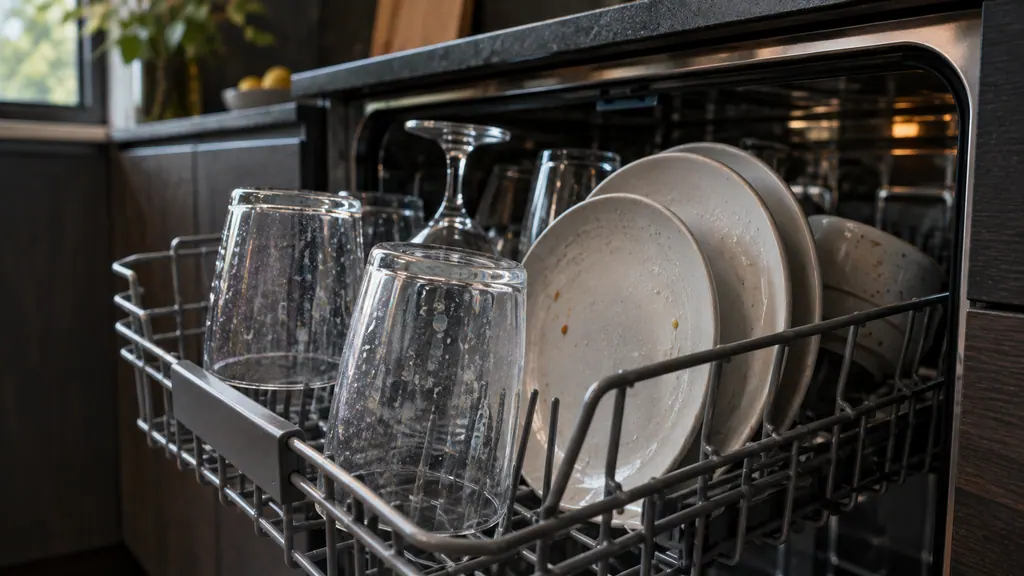
Look at rinse aid, salt and the water hardness setting first. Water marks mean more rinse aid; a sticky white or blue film means less. A chalky white coating points to hard water, so set the softener correctly and keep the salt topped up. 12
| What you see | Likely cause | What to do |
|---|---|---|
| Water marks on glasses | Rinse aid set too low | Raise the rinse aid setting 12 |
| Sticky white or blue film | Rinse aid set too high | Lower it; with very soft water, dilute the rinse aid 50:50 12 |
| Chalky white coating | Hard water, empty salt or wrong softener setting | Set Water hardness for your supply and fill with salt 1 |
| Spots with TAB on | All-in-one detergent not drying well | Change detergent, or turn TAB off and use salt and rinse aid 1 |
| Spots on stainless steel or silver | Acidic or salty food left too long, or metals touching | Use Rinse and hold; keep metals apart 12 |
| Grease inside the tub | Low-temperature programs for too long | Run Heat boost or Self-cleaning once or twice a month 12 |
The water softener matters most in hard-water areas. The DBI786 says water above 5 °dH (5.9 gr/gal) must be softened, and the dishwasher does that itself if the Water hardness setting matches your supply. Ask your local water utility for the figure. Never run it with an empty salt compartment in hard water. 1
One mark can't be fixed. Crystal etched by heat or too much detergent stays etched; ASKO says it can only be prevented. Wash crystal on the Crystal program with a small amount of detergent. 12
When should I call a technician?#
Call if dishes stay dirty after you've cleaned the spray arms and filters and checked the loading, detergent and settings. Call too if F52 keeps coming back after the filters are cleaned. Pumps, heaters and sensors are a job for a technician. 12
F52 is a water level message on the DBI786. The DBI675 calls it "Clean the filters". On both, the first step is to clean the coarse and fine filters; on the DBI786, you then run a program. If F52 returns, contact service. 12
If the dishes still come out dirty, we can take a look. The technician agrees the price with you before any work starts. The exact cost is confirmed after the on-site diagnostic. Repairs covered by the manufacturer's warranty go through ASKO itself. We give a warranty on our workmanship. To arrange it, book a visit or check what our dishwasher service includes.
Sources#
- DBI786IXXLSSOF.U dishwasher user manualASKO / Gorenje Group · Document 879712en · pp. 7–13, 17, 20–22, 25, 31, 35–37, 39, 42–45
- DBI675 dishwasher operating instructionsASKO / Gorenje Group · Document 843099en · pp. 17–18, 24, 26–27, 29, 31–33