Start from the symptom
ASKO dishwasher water not heating.
A lukewarm finish isn’t proof the heater has failed. Check which program you ran and read the display. If it shows F41, the manual asks you to run Self-cleaning with citric acid before anything else; if F41 comes back, the dishwasher needs service.
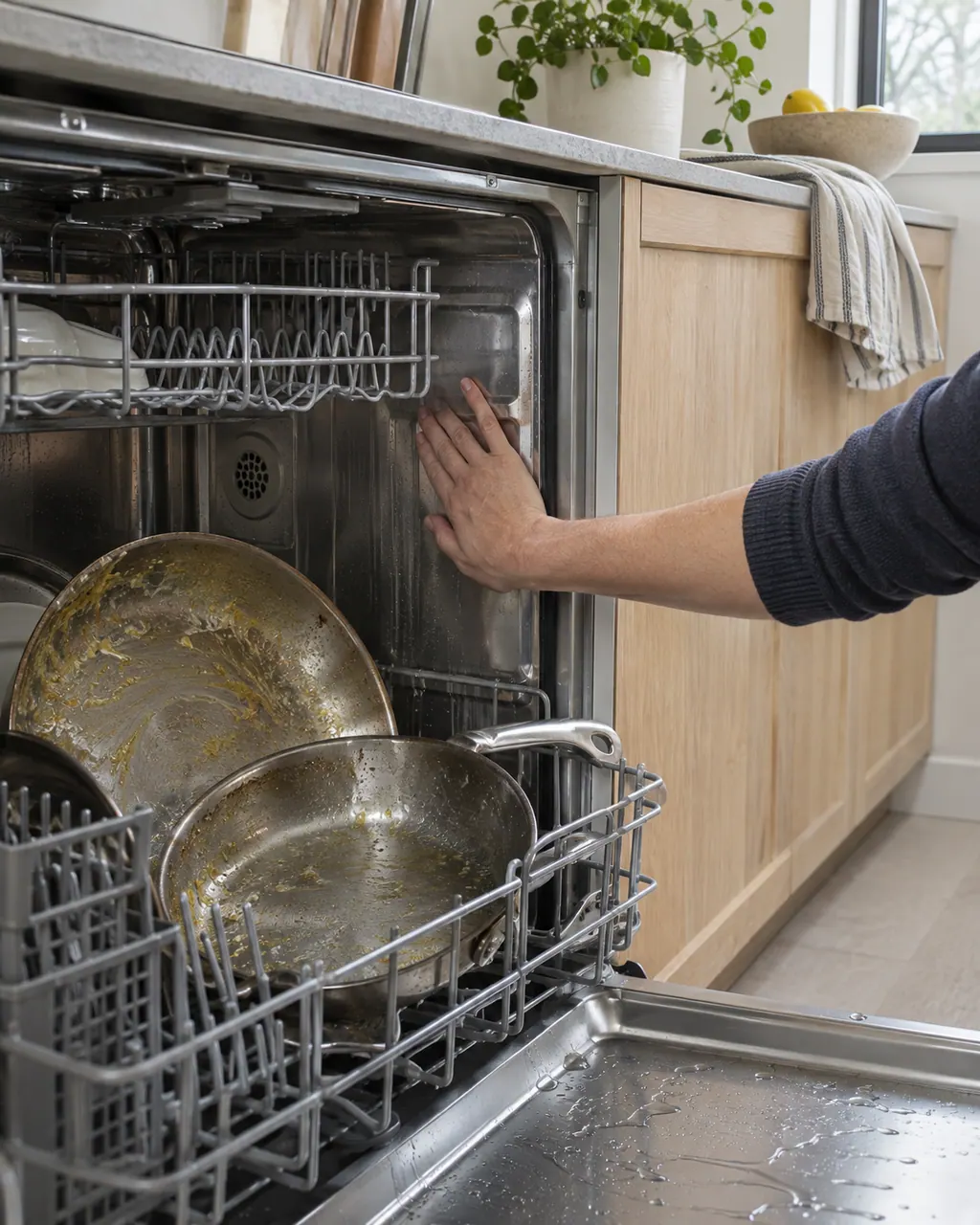
Start with safe observations.
Switch off and unplug before owner-accessible checks. Watch for standing water and sharp debris. Do not touch a wet plug or electrical area, remove service panels, or go beyond your model’s owner instructions.
- 1
Note the program you ran
Write down the program and options, and whether the cycle finished normally. Don’t open panels or touch parts inside to feel for heat.
- 2
Respond to F41
Put two tablespoons of citric acid in the detergent cup used for manual dosing, empty the racks and run Self-cleaning. If F41 shows again, close the water valve, pull the plug and book a visit.
- 3
Leave the heater to a technician
The heating element, its wiring and the controls sit behind panels. Testing them takes a technician, not another cycle at home.
Systems a technician may investigate.
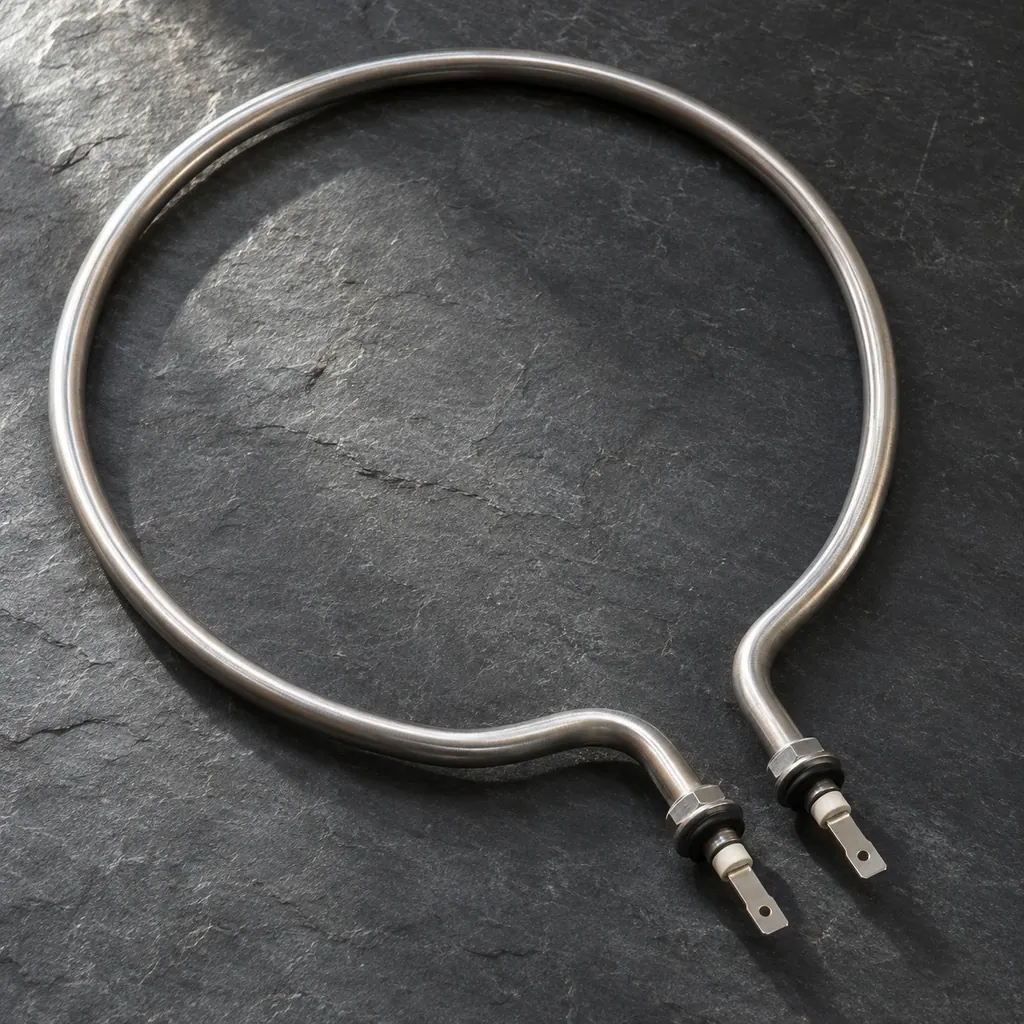
These parts relate to the symptom. The observation alone does not prove that any one has failed.
Read the related care guide.
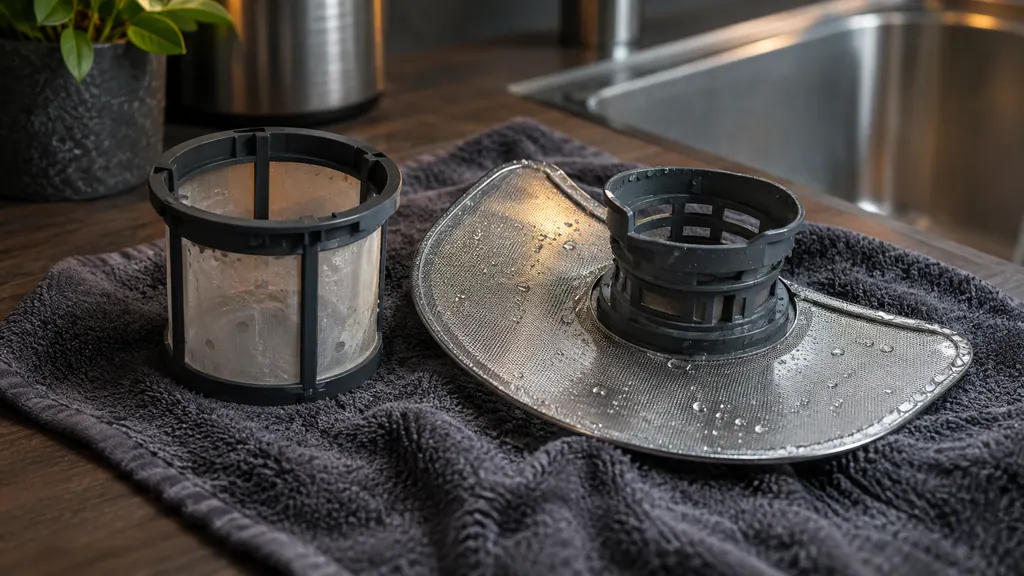
Get to know your dishwasher filters.
Lift out the coarse filter and empty it, unlock the fine filter with its ring and clean it, then lock both back in and check the pump stop. Here is the full routine, how often to do it and what dirty filters cause.
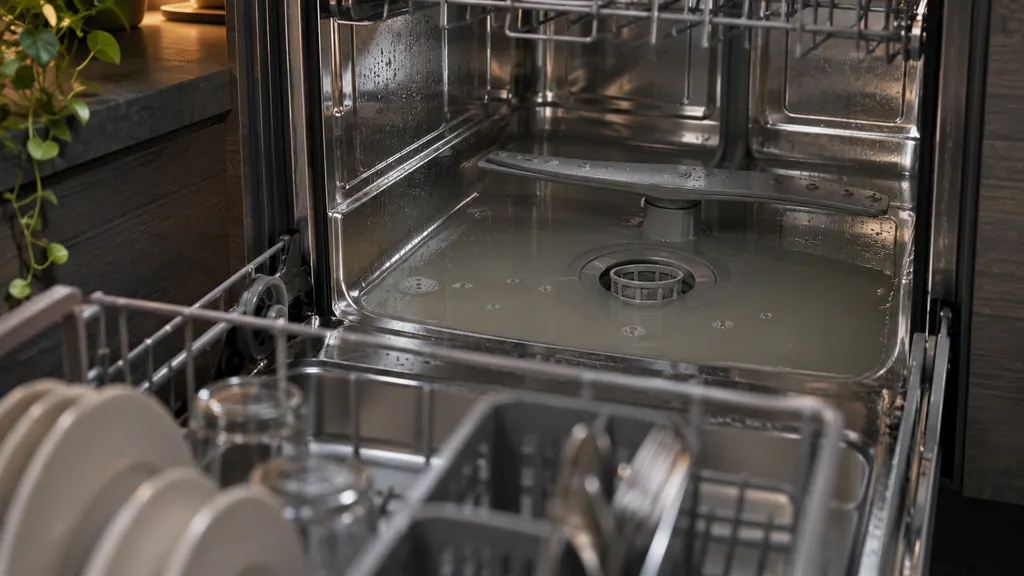
Water left in the dishwasher? Start here.
Water left above the filters usually means a clogged or loose filter, debris at the drain pump, a missing pump stop, or a kinked or blocked drain hose. Here is how to check each one, what F11 and F68 mean, and when to call.
When observation becomes a service request.
Leave internal testing to a technician.
Book a diagnostic if F41 comes back after Self-cleaning, or if loads keep finishing cold on programs that should run hot.
Arrange a diagnosticSources and model boundaries.
These references support the Dishwasher water not heating guidance. Read the manual that matches your model.
- DBI786 operating instructions
Use the instructions for your exact model. See how we research these pages.
Why do my dishes feel cool at the end of the cycle?
Programs run at different temperatures, and dishes lose heat quickly once the door opens. Compare with a program that uses Heat boost before you assume the heater has stopped working.
Is F41 the same as an old F1 code?
Don’t treat them as the same. F41 is the heater message in the DBI786 manual; an older dishwasher with a different display needs its own manual.
Why does the manual suggest Self-cleaning for F41?
ASKO lists Self-cleaning with citric acid as the first response to F41, before a service call. The manual doesn’t explain why, so treat it as a one-time step and book if the code returns.
Can I keep using the dishwasher with F41?
Not once it returns after Self-cleaning. At that point ASKO says to turn off the water supply and unplug the dishwasher until it has been checked.
Code / symptom / part / service
Connect the message to the next step.
F41
F41 is a heater error on the DBI786 and DBI776. ASKO’s first step is the Self-cleaning program with citric acid. If F41 comes back, turn off the water, unplug the dishwasher and book a technician.
Dishwasher not draining
The DBI786 manual traces water left above the filters to four things you can check yourself: clogged or loose filters, debris in the drain pump, a missing drain pump stop, and a kinked or blocked drain hose. Unplug the dishwasher before you start.
Heating element
A heating element turns electricity into heat. It warms the wash water in a dishwasher or washer and heats the cavity of an oven. A heating error tells you the heat isn’t right; it doesn’t prove the element itself has failed.
Dishwasher repair
Arrange a model-specific diagnostic at the appliance.
Find your metro
Office details and the access information to include.