Inside the appliance
NTC sensor. In plain English.
An NTC temperature sensor is a small probe whose electrical resistance drops as it warms up. The appliance’s electronics read that resistance to know how hot the water or air is, and use it to control heating.
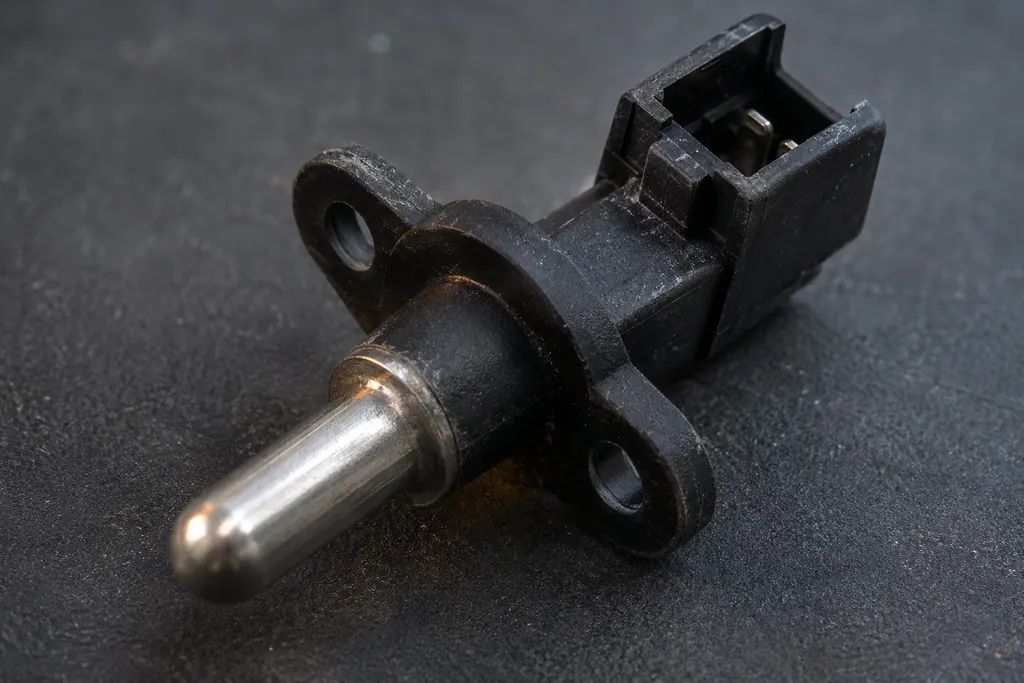
Where it fits.
NTC temperature sensor in the appliance
It sits in the water or air it measures, inside the appliance. Its exact position and test values differ between models, and you can only reach it with panels removed.
The picture illustrates the component type. It does not identify a compatible replacement for your model.
What changes when this system needs attention.
NTC temperature sensor concerns can appear alongside a change in performance or a recurring code. Testing is needed before deciding whether the component is responsible.
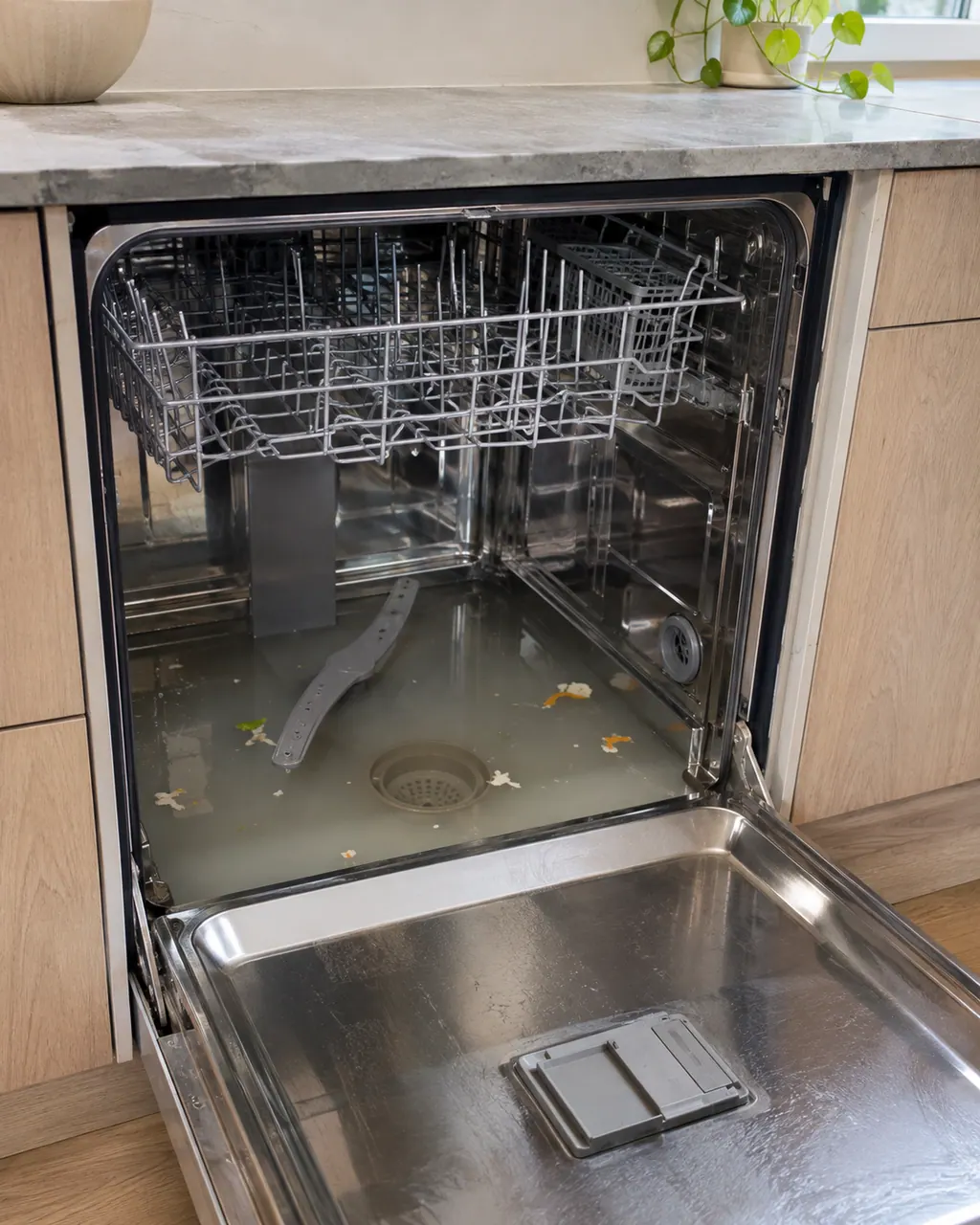
Dishwasher not draining
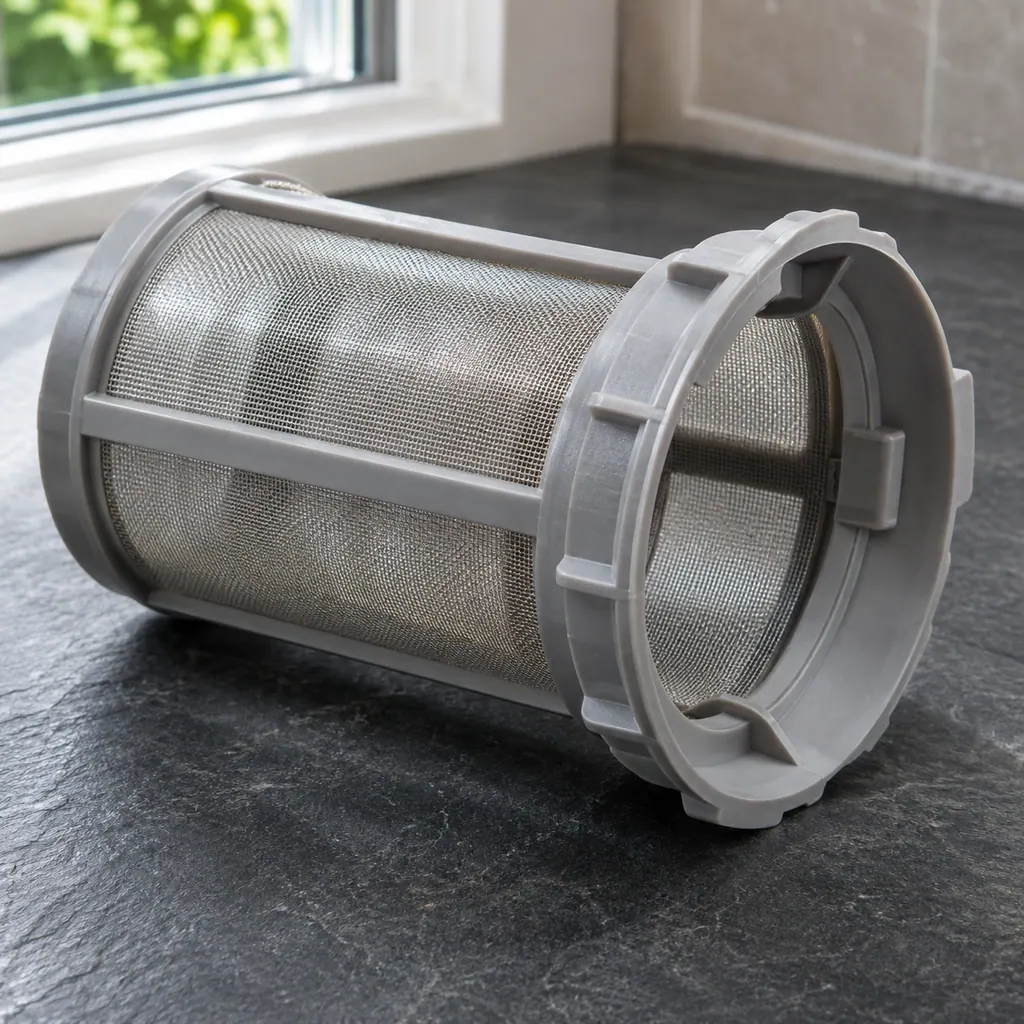
The DBI786 manual traces water left above the filters to four things you can check yourself: clogged or loose filters, debris in the drain pump, a missing drain pump stop, and a kinked or blocked drain hose. Unplug the dishwasher before you start.

Dishwasher leaking water
Close the water supply valve before anything else, then look at the display. F54 tells you the overflow guard has tripped; F40 tells you the inlet valve is letting water through when it should be shut. Either way, keep the water off and book service.
Owner care, within the model instructions.
Switch off and unplug before owner-accessible checks. Watch for standing water and sharp debris. Do not touch a wet plug or electrical area, remove service panels, or go beyond your model’s owner instructions.
- 1
Write down the code and program
Note the code, the program and the temperature you chose. On the WM86L washer, the temperature sensor message is E1.
- 2
Run the program once more
Repeat the program one time. If the same code shows again, stop there and book a visit rather than restarting over and over.
Cleaning or replacement?
Leave internal testing to a technician.
Book a visit if a temperature sensor code comes back after one repeat, or if the appliance heats far too much or too little. The sensor, its wiring and the control need testing with a meter before any part is ordered.
Arrange a diagnostic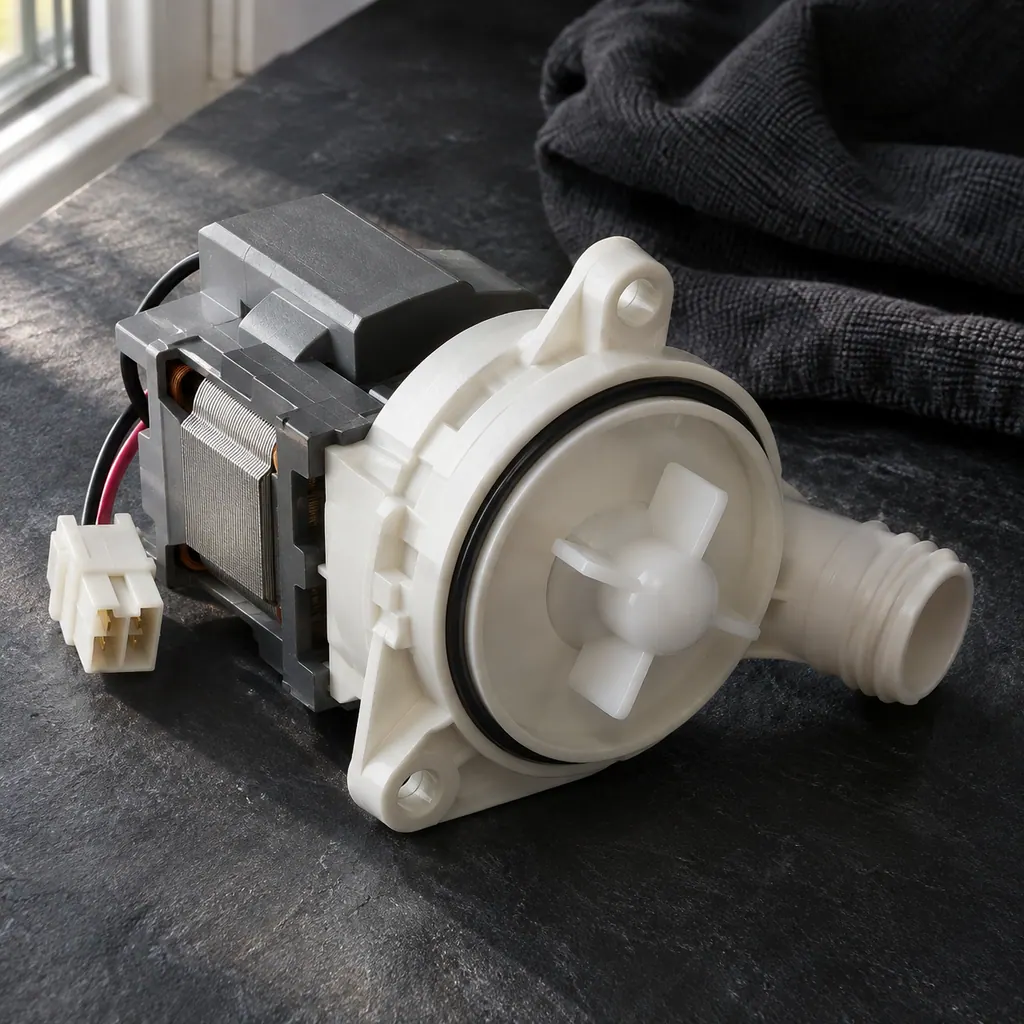
Sources and model boundaries.
These references support the NTC temperature sensor guidance. Read the manual that matches your model.
- WM86L washing machine instructions for use
Use the instructions for your exact model. See how we research these pages.
What does NTC stand for?
Negative temperature coefficient. It means the sensor’s resistance goes down as its temperature goes up, and that change is what the electronics measure.
What does E1 mean on an ASKO washer?
On the WM86L, E1 is listed as a temperature sensor failure, with a note that the inlet water may be too cold. Repeat the program; if E1 appears again, the manual says to call a service technician.
Can I test the sensor myself?
Not safely. It takes panels off and a resistance reading compared with the values for your model, and those values aren’t in the owner’s manual.
Does a sensor code mean the sensor is broken?
Not always. The wiring, the connector or the control can bring up the same message, and on the WM86L the first step is simply to repeat the program.
Code / symptom / part / service
Connect the message to the next step.
E1
E1 is a temperature sensor error on ASKO WM86L washers. The manual says the incoming water may be too cold, so run the program again. If E1 shows a second time, call a technician.
Dishwasher not draining
The DBI786 manual traces water left above the filters to four things you can check yourself: clogged or loose filters, debris in the drain pump, a missing drain pump stop, and a kinked or blocked drain hose. Unplug the dishwasher before you start.
Dishwasher repair
Arrange a model-specific diagnostic at the appliance.
Find your metro
Office details and the access information to include.