On this page
- Clean the door lint filter after every drying cycle, and never run the dryer without it. 1
- Clean the lower lint filter, foam filter and housing at least every 10 cycles, or every 30 with a self-cleaning system. 1
- Vacuum the foam filter; don't rinse it under water. 1
- Brush the heat exchanger fins gently, top to bottom, and wear gloves: the edges are sharp. 1
- Clogged filters can make the dryer cut out to cool down, which stretches drying times. 1
Which filters does an ASKO heat pump dryer have?#
Two. A lint filter sits in the door opening and catches fluff on every load. A lower lint filter, behind a cover at the bottom of the dryer, holds a foam filter and guards the heat exchanger of the heat pump. Both need regular cleaning. 1
This guide follows the US manual for ASKO T5HXL heat-pump dryers (T5HXLW.U and siblings). Their heat pump system, built around a compressor and a heat exchanger, warms the air. Water from the laundry goes into a condensate tank, or down a drain hose if you've connected one. 1
ASKO ships one manual with several dryer models, so a feature it describes may not be on yours. If your dryer's filters look different from the steps below, follow your own manual. 1
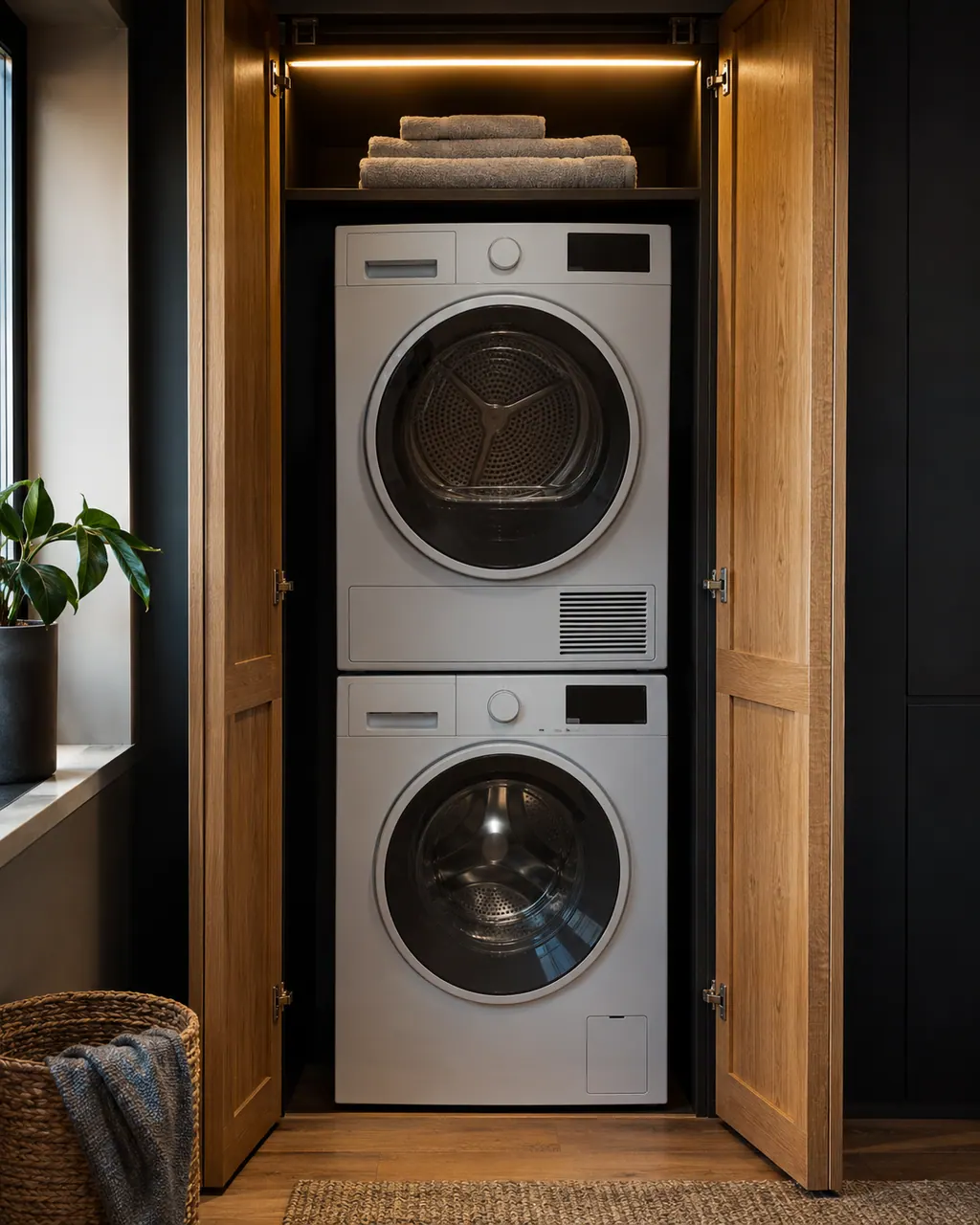
ASKO's parts diagram names the pieces you'll handle: the lint filter, the additional foam filter, the lower lint filter, the heat pump and the air vents. 1
How often should I clean the dryer filters?#
Clean the door lint filter after every drying cycle. Clean the lower lint filter, its foam filter and the mesh housing at least every 10 cycles, or whenever they need it. With a self-cleaning system, ASKO extends that to every 30 cycles. 1
| Filter | How often | How to clean it |
|---|---|---|
| Door lint filter | After every drying cycle | By hand or with a vacuum 1 |
| Lower lint filter and mesh housing | At least every 10 cycles, or 30 with a self-cleaning system | Peel off the lint layer; wipe the housing with a soft cloth 1 |
| Foam filter | With the lower lint filter | Vacuum with a soft brush attachment; never rinse 1 |
| Heat exchanger fins | When covered in dust | Soft brush attachment, gently, top to bottom 1 |
The dryer will prompt you. When you open the door, the display can remind you to empty the condensate tank and clean the filters. It may also show Clean lint filter or Clean lower lint filter. The reminders can be turned off under Cleaning reminder in the settings, but the filters still need the same care. 1
The settings menu also has a Machine status page with an entry for each filter and the tank. Scan its QR code for a how-to, then press Cleaned to log the job. 1
ASKO is direct about why this matters. Poorly cleaned filters reduce drying efficiency, raise energy use and can lead to overheating, mechanical damage and a higher risk of fire. 1
Empty the condensate tank at the same time#
The tank belongs in the same routine. ASKO says to empty it after every cycle: pull it out with both hands, tip it slowly over a sink and pour the water out through the drain opening, then slide it back in. If it overflows, the program pauses and the display asks you to empty it. With a drain hose running to a basin or floor drain, you can skip this. Never add chemicals or fragrance to the tank. 1
How do I clean the lint filter in the door?#
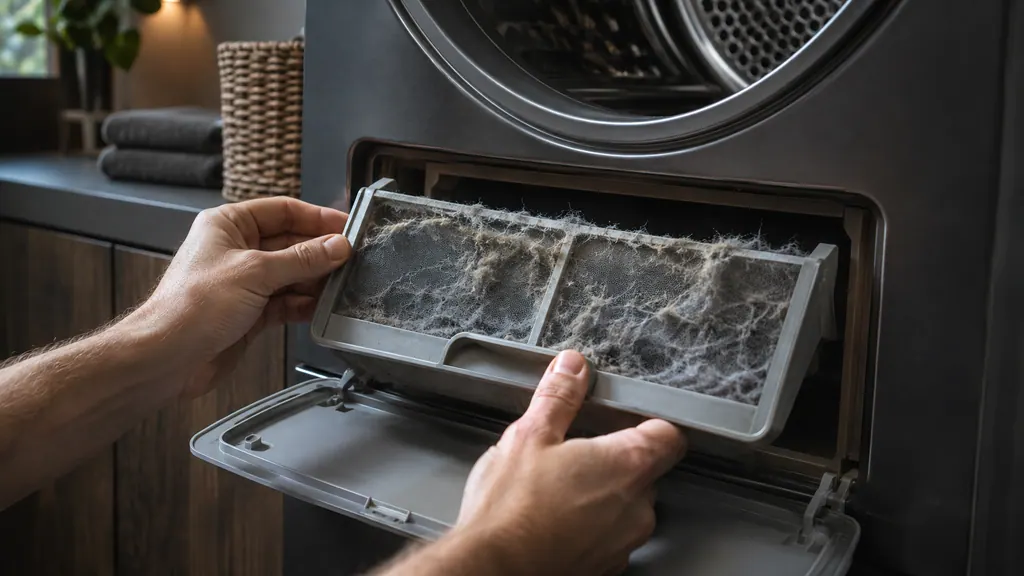
Pull the lint filter out of the door opening, lift the lint off by hand or with a vacuum, and push the filter back in until it's seated correctly. Do it after every load, and never run the dryer without the filter or with a damaged one. 1
Lint is mostly dust and fiber fragments from your clothes. It builds up fast, which is why ASKO asks for this after every cycle. 1
Every so often, also clean the slot the filter sits in and the housing around it. While you're there, wipe the door gasket if it needs it. 1
Keep the lint filter in place whenever you load or unload. Its slot is an open hole without it, and a sock or small garment can fall in. 1
How do I clean the lower lint filter and heat exchanger?#
Open the outer cover at the bottom, swing the filter handle up and pull the lower lint filter out. Vacuum the foam, peel the lint off the mesh, wipe the housing, then slide it all back in at an angle and close it. 1
Before you start, switch off the dryer and unplug it. Lay an absorbent cloth on the floor, because a little water may spill. 1
- 1
- 2
- 3
- 4
- 5
- 6
Make sure it's seated#
The lower filter has to sit correctly in its slot. If it doesn't, lint gets past it and can clog the heat exchanger inside the dryer, which is far harder to reach. 1
The heat exchanger is part of a sealed refrigerant circuit, and the refrigerant, R290, is combustible. ASKO's safety section says not to damage that circuit, so stick to the soft brush and never try to clean deeper into the unit. 1
Why the foam isn't rinsed#
Rinsing the foam sends microplastic fibers into the drain and, from there, into the groundwater. That's why ASKO says to vacuum it instead. 1
Why is my ASKO dryer taking so long?#
Clogged filters are the first thing ASKO checks. When the lint filter or lower filter is blocked, the dryer can overheat and switch off its compressor to protect itself, which stretches the drying time. Clean the filters, let the dryer cool and restart it. 1
The room matters too. Dust, heat and humidity around the dryer slow it down. A closed, cold or very small room can make the air overheat, so open a door or window to let fresh air in. 1
Keep the space around the dryer clean. ASKO says lint must not be allowed to collect around it, and the air exhaust and ventilation slits must stay clear. A long-pile carpet under the dryer can choke the airflow. 1
Our page on a dryer that takes too long goes through the other causes, including load size and sorting.
Sounds after cleaning#
Some sounds are normal. The manual lists buzzing and humming from the compressor and the pump moving water into the tank. On dryers with automatic heat exchanger cleaning, a click marks the start of that cycle and a whoosh of water follows. 1
Other filter-related checks#
If the door won't close, the filter may not be fully inserted. If water appears under the dryer, check the condensate tank and drain hose, then clean the door seals and the lower filter seals. 1
When should I call a technician?#
Call if drying stays slow after both filters are clean and the room is well ventilated, if the heat exchanger fins are bent or damaged, or if water is still under the dryer after you've checked the tank, hose and seals. 1
You can book a visit or read about our dryer service.
The technician agrees the price with you before any work starts. The exact cost is confirmed after the on-site diagnostic. Repairs covered by the manufacturer's warranty go through ASKO itself. We give a warranty on our workmanship.
Sources#
- ASKO T5HXLW.U / T5HXLT.U / T5HXLG.U (TD86) heat-pump tumble dryer instructions for useASKO / Gorenje Group · Document 948040en, US edition (PDF) · pp. 5–7, 9–10, 13, 18, 29, 33, 39, 41, 49–50, 52–53, 55–59, 61–63