On this page
- This ASKO dryer heats its air with a heat pump, so filter care comes first. 1
- Airing uses no heat, and every program ends with a cooling stage. 1
- Clean the door lint filter after every load and the lower filter at least every 10 cycles. 1
- A small, hot, cold or closed-in room makes drying take longer. 1
- An error code that comes back after a restart is a reason to call. 1
Why is my ASKO dryer not heating or drying?#
Clogged filters are the first thing to check. On ASKO's heat-pump dryer, dirty lint filters can make the compressor switch off to stop overheating, and drying slows down. A poorly placed dryer, the wrong program or under-spun laundry can do the same. 1
This guide follows the US manual for ASKO T5HXL heat-pump dryers (T5HXLW.U and siblings). They heat the air with a heat pump, a system built around a compressor and a heat exchanger. If your model is different, keep its own manual next to you as you go. 1
That changes where you look first. On these dryers, lint and a shortage of fresh air are listed before any service call, and both make the laundry come out damp or the cycle run long. 1
The dryer also has an automatic switch-off that cuts in when it gets too hot, and a clogged lint filter can trigger it. Clean the filter, let the dryer cool and try again. If it still won't start, that's the point to call. 1
Start by noting three things: the program you chose, how long it ran, and any message on the display. Those details point you to the right section below.
Is the program supposed to heat?#
Not always. Airing uses no heat at all, and every drying program finishes with a cooling stage that runs without the heater. A dryer that feels cool at the very end may be working exactly as designed. 1
The manual describes several moments when the drum turns but the air isn't warm:
- Airing. This program refreshes clothes and doesn't use a heater. 1
- The final cooling stage. Every drying cycle ends by cooling the laundry so you can take it out safely. 1
- Canceling. Holding Start/Pause for 3 seconds stops the program and starts the cooling stage. You can't pick a new program until cooling ends. 1
- Anti-crease. If you chose it, the drum keeps tumbling gently after drying ends, for up to 4 hours. 1
Two settings also stretch the drying time. The Low temperature (Delicate) mode changes the drying time, and so do the dryness levels (+, ++, +++). The Time program doesn't sense moisture, so laundry can still be damp when it ends. The manual's advice is simply to run it again. 1
How do I clean the dryer's filters?#
Clean the lint filter in the door after every load. Clean the lower lint filter, its foam insert and the mesh housing at least every 10 drying cycles. Then refit both properly before the next load. 1
- 1
- 2
- 3
- 4
- 5
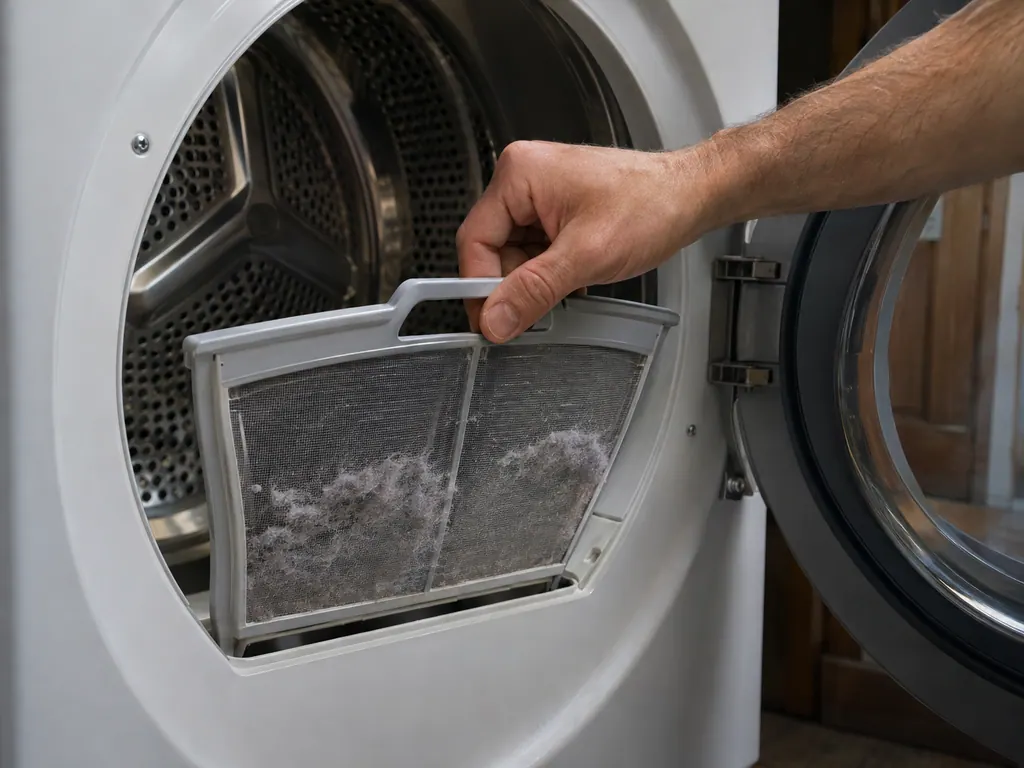
The cleaning interval changes on models that clean their own heat exchanger. With that self-cleaning system, the manual moves the lower filter cleaning to every 30 cycles, or sooner when needed. 1
After cleaning, give the dryer time to cool before you restart it. That is the manual's exact advice when drying time gets longer: clean the filters, wait for the appliance to cool down, then start again. 1
Does the room affect how well the dryer dries?#
Yes, a lot. ASKO's US manual asks for a well-ventilated room between 50 and 77 °F (10–25 °C). A very small room runs short of air, so drying takes longer. Below 32 °F (0 °C) the dryer may not work properly or may freeze. 1
A heat-pump dryer needs a steady supply of fresh air. The manual and the separate installation instructions cover the room in some detail:
| What you notice | What the manual points to | What to do |
|---|---|---|
| Long cycles in a laundry closet | Too little air, and the room heats up | Open a door or window; louvered closet doors help 1 |
| Slow drying in a cold garage or basement | The room is below the recommended range | Keep the room within 50–77 °F (10–25 °C) 1 |
| The dryer sits tight against a wall | Not enough clearance, so it may overheat | Leave at least 1 in (25 mm) behind and 1 5/8 in (40 mm) above 1 |
| Built in under a counter | Warm air from the back can't escape | Add a gap in the toe space or ventilation gaps; expect longer drying 1 |
| Laundry on a rug or long-pile carpet | Air can't circulate under the dryer | Keep the toe-kick ventilation and the front air intake clear 1 2 |
Keep the area around the dryer clean and cool as well. The manual names dust, heat and humidity as things that extend drying time. It also warns against putting the dryer next to a refrigerator, because the warm air makes the fridge's compressor run constantly. 1
Is the laundry ready for the dryer?#
Spin the wash at 800 rpm or faster before drying, and don't overload the drum. Under-spun laundry, too much or too little in the drum, and mixed fabrics of different weights all leave clothes damp. 1
Higher spin speeds save energy and shorten drying time, according to the manual. If your washer offers a choice, use the fastest spin the care labels allow before moving the load across. 1
Load size matters in both directions. Each program has its own maximum, given as a full, half or quarter load, and the dryer's full load is printed on the rating plate inside the door. Set the Load option (Full, Medium or Low) to match what is actually in the drum. 1
Mixed loads dry unevenly. Thick towels and thin shirts in one cycle won't finish together, so sort by type and thickness. For bedding that rolls into a ball, fasten buttons and zips first and use the Bedding/Towels program. 1
Empty the condensate tank#
A full condensate tank pauses the program, and the display asks you to empty it. Pull the tank out with both hands, pour it into a sink and slide it back. If your dryer drains to a hose instead, this warning doesn't appear. 1
When should I call a technician?#
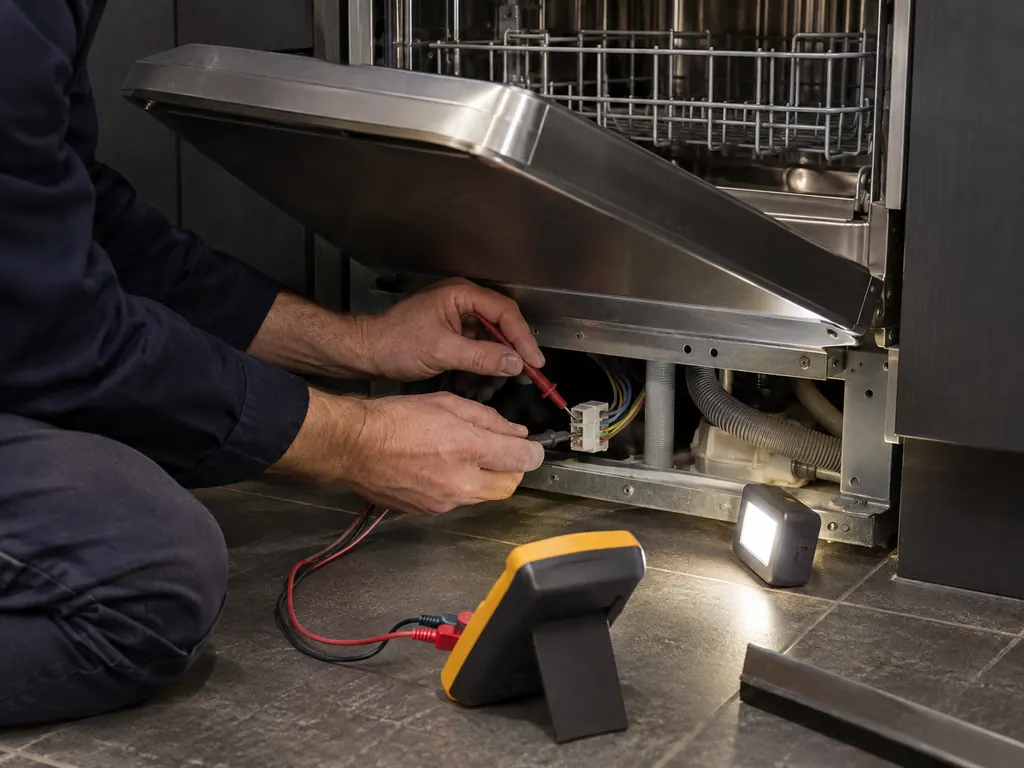
Call if drying is still poor once the filters are clean and the room, load and program are right. Call too if an error code comes back after a restart. The heat pump, sensors and wiring are a job for a technician. 1
When an error occurs, the display shows Error and a number. Press and hold OK to read a short description, and write the code down. Then switch the dryer off, wait one minute, switch it on and run the program again. If the code returns, the manual tells you to call for service. 1
On these dryers, E1.1, E1.2 and E1.3 are thermistor errors, meaning a temperature sensor has reported a problem. Codes from E0 to E9 in the dryer's table all call for service rather than an owner fix. Don't use a washer or dishwasher code chart to read them. 1
Repairs on this dryer should only be carried out by an adequately trained person, the manual says. Don't remove panels or try to reach the heat pump yourself. 1
If the dryer still won't dry, a visit is the next step. The technician agrees the price with you before any work starts. The exact cost is confirmed after the on-site diagnostic. Repairs covered by the manufacturer's warranty go through ASKO itself. We give a warranty on our workmanship. Book a visit when you're ready, or see what our dryer service covers.
Sources#
- ASKO T5HXLW.U / T5HXLT.U / T5HXLG.U (TD86) heat-pump tumble dryer instructions for useASKO / Gorenje Group · Document 948040en, US edition (PDF) · pp. 10–11, 13, 17–18, 21, 26, 38, 44–45, 47, 49, 56–63
- ASKO T5HXLW.U / T5HXLT.U / T5HXLG.U / T7HXLW.U (TD86) heat-pump tumble dryer installation instructionsASKO / Gorenje Group · Document 949444en, US edition (PDF) · pp. 4, 6–7, 9